
Ensuring your baby’s car seat is at the correct recline angle is not optional—it’s a critical safety requirement. A proper recline keeps a newborn’s airway open and provides optimal crash protection. This guide explains the why, how, and how-to-fix for achieving the perfect angle every time.
Key Takeaways
- Recline is Vital for Breathing: A proper recline angle prevents a newborn’s heavy head from flopping forward and blocking their airway, which is a serious risk.
- Follow Manufacturer & Vehicle Manuals: The correct angle (usually 30-45 degrees) is specific to your car seat model and your car’s seats. Always check both guides.
- Use Built-in Indicators: Most infant seats have a recline level or angle indicator. This is your primary tool for achieving a correct installation.
- Pool Noodles/Towels are Sometimes OK: For certain seats in certain vehicles, using a rolled towel or a pool noodle under the seat base is a manufacturer-approved method to achieve the right angle.
- Recline Changes with Growth: As your baby gains head control, the seat can be made more upright, following the manufacturer’s guidelines for each stage.
- Get a Professional Check: A Certified Child Passenger Safety Technician (CPST) can inspect your installation, check the angle, and give you peace of mind.
Your Baby Car Seat Should Be Reclined: Here’s Why and How
Welcome, parents and caregivers. You have the car seat. You read the manual. You wrestled it into the car. But there’s one detail you must not miss: the recline angle. This isn’t about comfort. It’s about life-saving safety. A too-upright seat can be dangerous for a newborn. A too-reclined seat is less protective in a crash. This guide will walk you through the crucial “why” and the simple “how” of car seat recline. You will learn how to check it, fix it, and know you’ve got it right. Let’s get started.
Why the Recline Angle is Non-Negotiable for Safety
Think of your newborn. Their head is big and heavy. Their neck muscles are very weak. Their airway is like a soft, tiny straw.
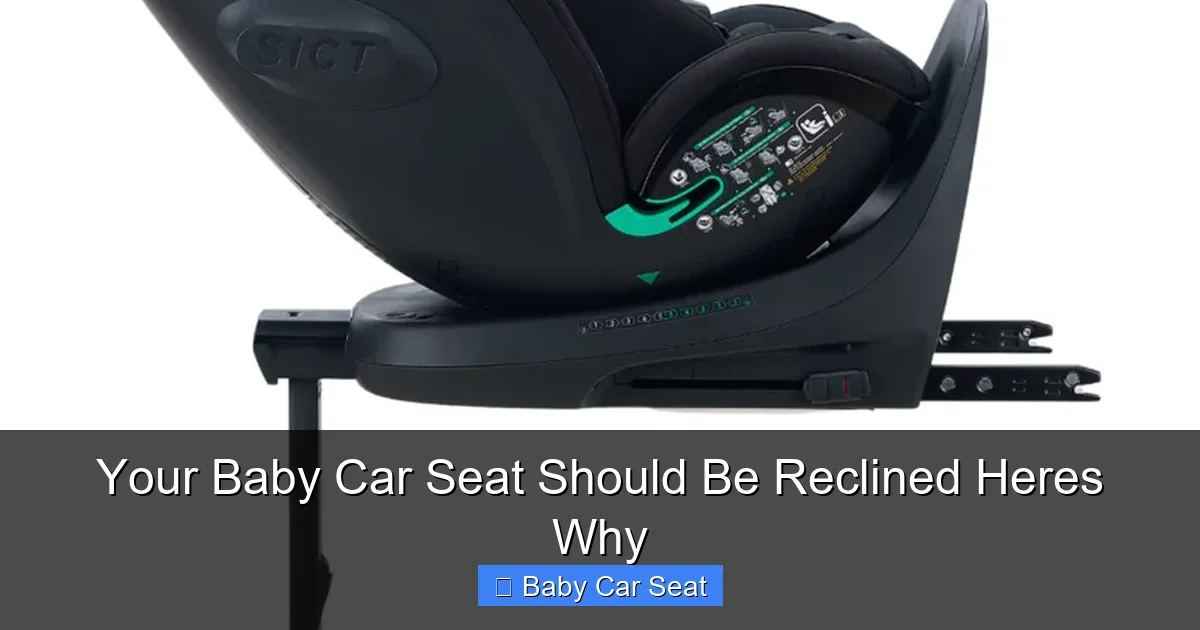
Visual guide about Your Baby Car Seat Should Be Reclined Heres Why
Image source: koopers.co
Now, imagine their car seat is too upright. In this position, their heavy head can chin-to-chest. This can kink that tiny airway shut. They might not be able to breathe well. This is a silent risk called positional asphyxiation.
The right recline angle cradles them. It supports their head and neck. It keeps that vital airway open and clear.
In a crash, a correct recline also helps the seat perform its job. It allows the harness to hold your child in the protective shell properly. Getting the angle right is your first, best act of safety.
Understanding the Correct Recline Angle
You will often hear “30 to 45 degrees.” This is the general safe range for most baby car seats (rear-facing infant seats).
Visual guide about Your Baby Car Seat Should Be Reclined Heres Why
Image source: chiccousa.com
- For Newborns & Small Infants: You need the deeper recline, closer to 45 degrees. This provides the best airway protection.
- As Your Baby Grows: Once they have full head control (usually around 6 months or older), you can adjust the seat to a more upright position within the allowed range, often around 30-35 degrees. Always check your manual for the exact specifications for your model.
Important: Convertible seats used rear-facing for toddlers have a different, usually more upright, allowed angle. Your car seat manual is the final authority.
Step-by-Step Guide to Achieving the Perfect Recline
Step 1: Gather Your Tools and Information
Before you touch the seat, get these three things:

Visual guide about Your Baby Car Seat Should Be Reclined Heres Why
Image source: people.com
- Your Car Seat Manual: Find the section on recline/installation angle.
- Your Vehicle Owner’s Manual: Look for the section on car seat installation. Some car seats are not compatible with certain vehicle seat contours.
- Your Eyes and Hands: You’ll be doing a physical check.
Step 2: Locate the Recline Indicator on Your Car Seat
This is your best friend. Most modern infant seats have one of two types built into the seat shell or base:
- Level Line: A line that must be parallel to the ground.
- Bubble Indicator: A window with a bubble that must sit between two marked lines.
Find it. Know what “correct” looks like for your seat.
Step 3: Install the Seat Base or Seat
Follow your manual’s instructions to install the base (for a travel system) or the seat itself using the seat belt or LATCH system. Tighten it well. The seat should not move side-to-side or front-to-back at the belt path by more than one inch.
Step 4: Check and Adjust the Angle
This is the key step. Look at your recline indicator.
- If the bubble is centered or the line is level: Great! Move to step 5.
- If the angle is too upright (bubble too high, line sloping): You need to create more recline.
- If the angle is too reclined (bubble too low, line sloping the other way): You need to make the seat more upright.
Step 5: Use Approved Methods to Fine-Tune (If Needed)
If your angle isn’t right, don’t force it or use random objects. Use these approved methods:
- Adjust the Base: Many seats have a built-in adjustable foot or recline mechanism. Extend it to increase recline, retract it to make it more upright.
- Use a Pool Noodle or Rolled Towel: Only if your car seat manual allows it. Place a firm, non-compressible pool noodle (or a tightly rolled towel) under the front edge of the car seat base, in the vehicle seat crease. Re-tighten the installation. This lifts the front, creating more recline.
- Try a Different Vehicle Seat Location: Sometimes, the slope of your car’s back seat is the issue. Try installing in the center or opposite side seat.
Re-check the indicator after every adjustment.
Troubleshooting Common Recline Problems
Problem: Seat is Too Upright, Can’t Get the Bubble in Range
Solution: First, ensure you’re using the correct belt path. Double-check that the built-in recline foot (if you have one) is fully extended. If allowed, add one pool noodle. If still not enough, you may add a second only if the manual explicitly says you can. Never use more than two.
Problem: Seat is Too Reclined, Even with Adjustments
Solution: Retract any built-in recline foot. Ensure there is nothing (like seat protectors or loose mats) under the base causing it to tilt. Try installing in a different seating position in your car, as some are more level than others.
Problem: The Seat Rocks Side-to-Side After Installation
Solution: Rocking often happens when you’re focused only on the recline angle. Apply pressure to the seat base with your knee or hand and tighten the seat belt or LATCH strap again. You must get a firm, tight install at the correct angle.
Special Considerations and Final Safety Checks
Convertible Seats: These seats have different angle requirements for rear-facing (often with an adjustable recline foot or panel) and forward-facing modes. Always switch the recline setting when you switch modes.
The 1-Inch Rule: Once installed, grab the seat at the belt path (where the seat belt or LATCH strap goes through). Pull firmly. The seat should not move more than one inch side-to-side or front-to-back. This test is as important as the angle check.
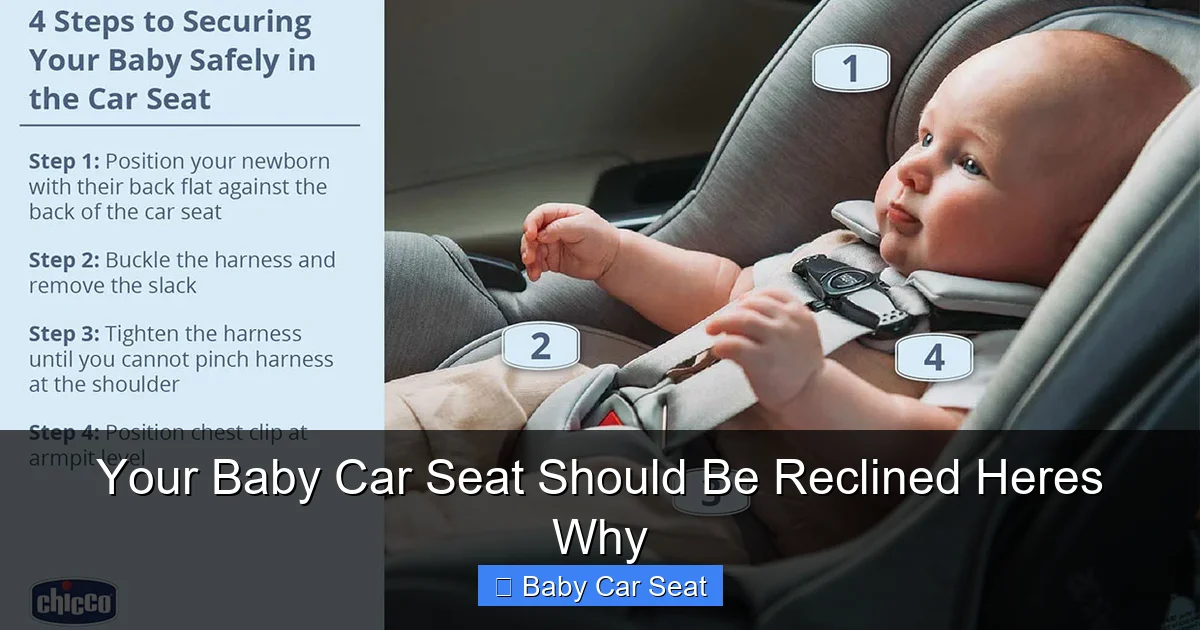
The Final Test: The “Fit” Test: Place your baby in the seat. Buckle the harness. The harness should be snug (you cannot pinch a horizontal fold in the strap at the shoulder). The chest clip should be at armpit level. Your baby’s back and bottom should be flat against the seat, with no slouching.
Conclusion: Safety is in the Details
Taking the time to ensure your baby car seat is correctly reclined is one of the most important safety steps you can take. It protects your child’s airway and ensures the seat can do its job in a crash. Remember your three guides: the car seat manual, the vehicle manual, and the built-in angle indicator. Don’t guess. If you are ever unsure, seek help from a Certified Child Passenger Safety Technician (CPST). You can find a free car seat check event near you through resources like the NHTSA website. Drive safely, and know you’ve given your little one the safest ride possible.
🎥 Related Video: Convertible vs. Rotating Car Seat – What’s BEST FOR YOU?!
📺 Babylist
We’re discussing the pros and cons of two car seat models today – the convertible and the rotating – to see which is BEST FOR …
