
Are disposable diapers toxic? Many parents worry about chemicals, fragrances, and gels touching their baby’s skin all day. This guide explains what’s really in disposable diapers, what science says about safety, and how to spot potential irritants. You’ll learn how to read diaper labels, choose safer brands, reduce risks, and decide what works best for your baby and your lifestyle.
Key Takeaways
- Point 1: Most disposable diapers are not considered highly toxic, but they can contain chemicals that may irritate sensitive skin.
- Point 2: Common diaper materials include plastics, super-absorbent gels, adhesives, dyes, and sometimes fragrances and lotions.
- Point 3: The biggest risks are usually skin irritation, diaper rash, or allergies, not serious poisoning in normal use.
- Point 4: Parents can reduce risks by choosing fragrance-free, dye-free, and chlorine-free disposable diapers when possible.
- Point 5: Reading labels, checking certifications, and testing new diapers slowly can help you find what works for your baby.
- Point 6: Cloth diapers and hybrid systems are alternatives if you want to avoid many disposable diaper ingredients.
- Point 7: The safest diaper is the one that keeps your baby dry, comfortable, and rash-free, while fitting your family’s budget and routine.
Introduction: Are disposable diapers toxic or just misunderstood?
New parents often ask the same question: are disposable diapers toxic? Your baby wears a diaper almost 24/7 in the first years of life. So it is normal to worry about what is touching their skin.
Online, you may see scary claims about chemicals, gels, and plastics. At the same time, doctors and big brands say disposable diapers are safe. It can feel confusing and overwhelming.
This guide will help you cut through the noise. We will look at what is inside disposable diapers, what science actually says, and how you can reduce risks. You will learn how to:
- Understand what disposable diapers are made of
- Spot possible irritants and allergens
- Choose safer disposable diapers for your baby
- Use diapers in a way that protects your baby’s skin
- Decide between disposable and cloth options
By the end, you will have a clear, practical answer to the question, are disposable diapers toxic, and you will know exactly what steps to take next.
Step 1: Understand what’s inside a disposable diaper
To answer “are disposable diapers toxic,” you first need to know what they are made of. Disposable diapers look simple, but they have several layers and materials.
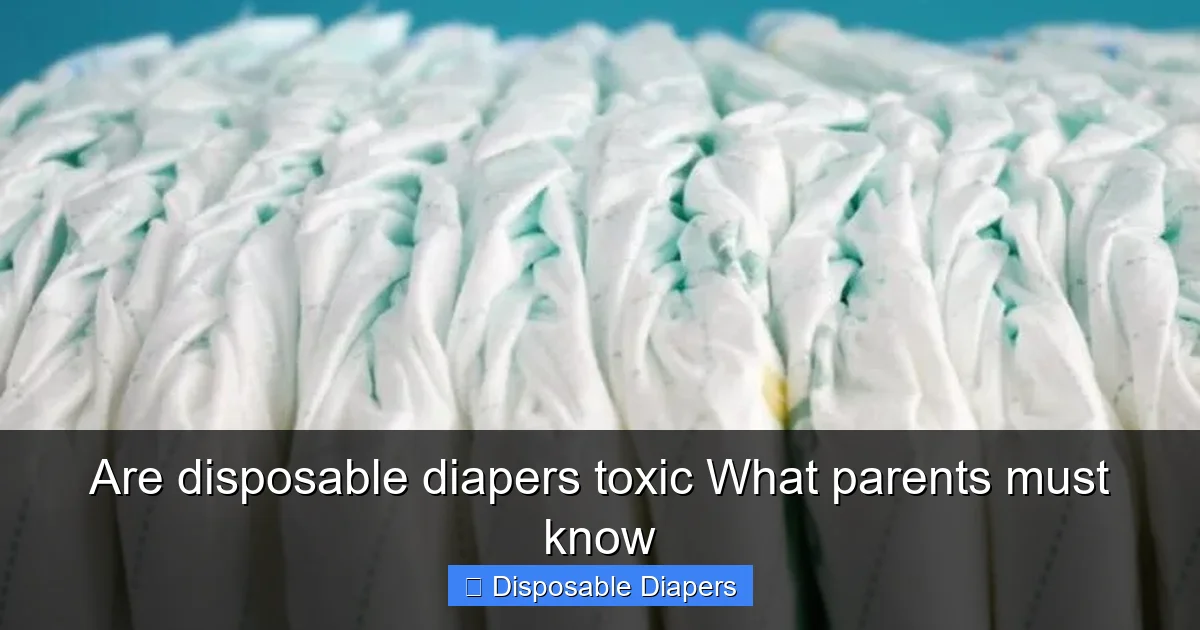
Visual guide about Are disposable diapers toxic What parents must know
Image source: babybowtie.com
Outer layer: The waterproof shell
The outer layer is the part you see. It is usually made from plastic-based materials like polyethylene or polypropylene. This layer keeps leaks from soaking your baby’s clothes and bedding.
These plastics are widely used in food packaging and medical products. In normal use, they are not considered highly toxic. Still, some parents prefer diapers that use plant-based or partially bio-based plastics to reduce environmental impact.
Inner layer: The soft, skin-touching surface
The inner layer is the soft part that touches your baby’s skin. It is often made from polypropylene or a blend of synthetic fibers. Some brands mix in plant fibers like cotton or bamboo.
This layer is designed to pull moisture away from the skin. On its own, it is usually not considered very toxic. But if the diaper includes fragrances, lotions, or dyes, they are often added to this layer, and those can sometimes irritate the skin.
Absorbent core: The “gel” and fluff
The core is where the real diaper magic happens. It usually has two main parts:
- Fluff pulp: Often made from wood pulp. This helps spread out the liquid.
- Superabsorbent polymer (SAP): This is the gel-like material that can absorb many times its weight in liquid. The most common type is sodium polyacrylate.
People often worry that this gel is toxic. In normal, intact diapers, SAP is generally considered safe. It is used in many hygiene products, like pads and adult incontinence products. It can be irritating if the gel leaks out and sits on the skin, but this is rare in modern diapers.
Other components: Adhesives, elastics, dyes, and extras
Disposable diapers also include:
- Adhesives and glues to hold layers together
- Elastic in the waist and legs for a snug fit
- Dyes or inks for prints and size markers
- Fragrances or lotions in some brands for scent or “skin care” claims
These extra components are often where irritation or allergic reactions happen. When asking, “are disposable diapers toxic,” most concerns focus on these added chemicals, not the basic structure of the diaper.
Step 2: Learn which diaper chemicals raise concerns
The phrase are disposable diapers toxic often comes up because people hear about certain chemicals that may be present in some diapers. Not every diaper has all of these. Many brands now avoid or limit them. But it helps to know the names so you can read labels and brand information more confidently.
Visual guide about Are disposable diapers toxic What parents must know
Image source: i.pinimg.com
Fragrances and perfumes
Some disposable diapers contain added fragrances to mask odors. “Fragrance” is a vague word. It can include many different chemicals, and companies do not always list them individually.
Fragrances are a common cause of skin irritation and allergies. They are not usually severely toxic at diaper levels, but they can bother sensitive babies. If your baby has eczema, rashes, or very sensitive skin, fragrance-free diapers are often a better choice.
Dyes and inks
Colored designs and patterns on diapers may use dyes and inks. These are usually on the outer layer, which does not touch the skin. However, some size markers or wetness indicators are closer to the inside.
In most cases, these dyes are tested for safety. But some babies react to certain colorants. If you suspect a reaction, try a plain, dye-free diaper and see if the skin improves.
Lotions and “skin care” additives
Some diapers are lined with lotion, often containing ingredients like petrolatum or plant oils. The idea is to protect the skin. For some babies, this works well. For others, it can cause redness or allergies.
If you already use a diaper cream you trust, you may prefer diapers without built-in lotion so you have full control over what touches the skin.
Chlorine and dioxins from bleaching
In the past, some wood pulp used in diapers was bleached with elemental chlorine. This process could create tiny amounts of dioxins, which are chemicals linked to health concerns at high levels.
Most modern diapers are now elemental chlorine free (ECF) or totally chlorine free (TCF). This greatly reduces or removes dioxin formation. When you ask, “are disposable diapers toxic,” dioxins are often mentioned, but current levels in reputable brands are extremely low and are not considered a major risk by most experts.
Volatile organic compounds (VOCs) and other trace chemicals
Some studies have found small amounts of VOCs and other chemicals in certain diapers. These can come from adhesives, inks, or manufacturing processes.
The levels found are usually very low. Regulatory bodies in many countries require that baby products meet strict safety limits. Still, if you want to be cautious, you can choose brands that publicly test for and limit VOCs and other potential contaminants.
Step 3: Look at what science says about diaper safety
To really address “are disposable diapers toxic,” we need to look at research, not just fear or marketing claims.
Visual guide about Are disposable diapers toxic What parents must know
Image source: i.pinimg.com
Regulation and safety testing
In many regions, disposable diapers are treated as consumer products or hygiene products. They must meet safety standards set by health or consumer agencies. Big diaper brands also run their own testing for skin irritation and absorption.
These tests help ensure that, in normal use, disposable diapers are not highly toxic. That said, regulations can vary by country, and not all brands are equal. This is why choosing reputable brands or those with third-party certifications can give extra peace of mind.
What studies say about health risks
Most research on diapers focuses on skin health, not deep systemic toxicity. The main findings include:
- Disposable diapers can help reduce diaper rash by keeping skin drier compared to older cloth systems without modern covers.
- Some babies react to specific ingredients like fragrance, dyes, or lotions.
- Serious health problems from typical disposable diaper use are very rare.
There have been a few studies and reports raising questions about trace chemicals in some brands. These studies often call for better transparency and stricter standards, not for parents to panic. Overall, current evidence suggests that properly used disposable diapers are not highly toxic for most babies.
Understanding “toxic” in real-world use
The word “toxic” can sound dramatic. In science, toxicity depends on dose, exposure time, and how the body processes a substance. Almost anything can be harmful in a high enough dose, even water.
When you ask, “are disposable diapers toxic,” a better question might be: Do disposable diapers pose a meaningful health risk in normal use? For most families, the answer appears to be no, especially when you choose safer options and watch your baby’s skin closely.
Step 4: Spot signs your baby may be reacting to a diaper
Even if disposable diapers are not highly toxic in general, your baby is unique. Some babies react to ingredients that others tolerate well. Here is how to tell if a diaper might be a problem for your child.
Common skin signs to watch for
- Redness in the diaper area that does not improve after a change of brand or better hygiene
- Rash with small bumps or patches where the diaper touches
- Dry, flaky, or peeling skin under the diaper
- Swelling or hives around the waist or leg bands
These signs do not always mean the diaper is “toxic,” but they can show that your baby’s skin is irritated or allergic to something in that diaper.
When to suspect a specific ingredient
- If the rash started after switching to a scented diaper, suspect fragrance.
- If the rash is only where colorful prints touch the skin, suspect dyes or inks.
- If the rash looks greasy or bumpy after using a “lotion-lined” diaper, suspect the lotion ingredients.
If you see these patterns, it is wise to change to a simpler, more basic diaper and see if the skin improves.
When to call a doctor
Contact your pediatrician if:
- The rash is severe or painful
- There are blisters, open sores, or yellow crusts
- The rash does not improve after a few days of care and a diaper change
- Your baby has a fever or seems very unwell
Doctors see diaper rashes all the time. They can help you decide if the problem is the diaper, yeast, bacteria, or something else.
Step 5: How to choose safer disposable diapers
Now let’s turn the question “are disposable diapers toxic” into action. You can lower risk by choosing diapers with fewer irritants and more transparent ingredients.
Prioritize fragrance-free products
Fragrance is one of the easiest things to avoid. Look for diapers labeled:
- Fragrance-free or unscented
- No perfumes
Be careful with “scented” or “fresh smell” claims. These likely mean added fragrance. Removing fragrance alone can make a big difference for sensitive babies.
Look for chlorine-free or low-chlorine bleaching
To reduce concerns about dioxins, choose diapers labeled:
- TCF (Totally Chlorine Free)
- ECF (Elemental Chlorine Free)
- Chlorine-free pulp
These terms show that the manufacturer uses safer bleaching methods for the wood pulp in the absorbent core.
Choose diapers without lotions if your baby is sensitive
If your baby has eczema or frequent rashes, a plain diaper can be better. Look for labels like:
- No added lotions
- No added moisturizers
This lets you apply your own diaper cream or ointment with ingredients you know and trust.
Consider simpler designs and fewer dyes
Bright characters and colorful prints are cute, but they are not necessary. For extra caution, you can choose:
- Plain white or minimal-print diapers
- Dye-free or print-free options
This reduces one more potential source of irritation.
Check for third-party certifications
Some diapers carry certifications that can help answer “are disposable diapers toxic” more clearly. These may include:
- Labels that limit certain chemicals and allergens
- Eco-labels that restrict chlorine, fragrances, and some VOCs
- Dermatologically tested claims, ideally with details
Certifications are not perfect, but they show that the brand has met extra standards beyond the legal minimum.
Balance safety with fit, performance, and budget
A “safer” diaper still needs to work well. Poorly fitting diapers can cause leaks, more moisture on the skin, and more rashes. When choosing, consider:
- How well the diaper absorbs and locks in moisture
- Whether it fits snugly without digging into the skin
- Cost per diaper and your monthly budget
The best answer to “are disposable diapers toxic” for your family will be a diaper that is gentle on skin, free from the worst irritants, and realistic for your daily life.
Step 6: Use disposable diapers in the safest way
How you use a diaper matters almost as much as which diaper you choose. Even a very gentle diaper can cause problems if it is left on too long.
Change diapers often
Wet or soiled diapers left on the skin can cause irritation and rash. Aim to:
- Change every 2–3 hours during the day
- Change as soon as possible after a bowel movement
- Use more frequent changes if your baby already has a rash
Dry, clean skin is less likely to react, no matter which brand you use.
Clean gently at every change
At each diaper change:
- Use mild, fragrance-free wipes or plain water with soft cloths
- Wipe front to back to avoid spreading germs
- Pat the skin dry instead of rubbing
Gentle cleaning helps protect the skin barrier, which is your baby’s natural defense against irritation.
Let the skin breathe
Whenever you can, give your baby some “diaper-free” time. Lay them on a towel or waterproof mat and let the skin air out.
Even 10–15 minutes a day can help reduce redness and moisture buildup. Air is free and non-toxic, and it works well.
Use barrier creams when needed
If your baby is prone to rash, a barrier cream can help. Look for:
- Zinc oxide-based creams
- Fragrance-free formulas
- Products recommended by your pediatrician
Apply a thin layer to clean, dry skin before putting on a fresh diaper. This creates a shield between the skin and moisture.
Watch for changes when you switch brands
Every time you change diaper brands, pay attention for a few days. Check for:
- New redness or rash
- Changes in your baby’s comfort or sleep
- Any unusual odor or reaction
If you see problems, go back to the old brand or try another gentle option. This simple habit helps you answer, for your own child, “are disposable diapers toxic or irritating to my baby?”
Step 7: Consider cloth diapers and hybrid options
If you are still uneasy and keep wondering, “are disposable diapers toxic,” you might want to explore alternatives. Cloth diapers and hybrids can reduce exposure to some disposable diaper ingredients.
Cloth diapers: Pros and cons
Pros:
- Fewer synthetic chemicals directly on the skin, depending on fabric and detergent
- Reusable, so less waste in landfills
- Can be cost-effective over time, especially for multiple children
Cons:
- More laundry and time required
- Need for proper washing to avoid buildup and odors
- Upfront cost for a full set
Cloth diapers can be very gentle, but they still require care. Detergents, fabric softeners, and diaper creams can also cause irritation if not chosen carefully.
Hybrid systems
Hybrid diapers use a reusable outer cover with a disposable or washable insert. They can offer:
- Less plastic overall than full disposable diapers
- More flexibility when traveling or at daycare
- Options for “eco” disposable inserts with fewer additives
Hybrids can be a middle ground if you want to reduce exposure and waste without going fully cloth.
Choosing what works for your family
There is no single right answer. For some families, a low-chemical disposable diaper is the best fit. For others, cloth or hybrids feel safer and more aligned with their values.
The real goal is not perfection. It is to make informed choices. Ask yourself:
- What can I realistically manage day to day?
- What does my baby’s skin respond best to?
- What balance of cost, convenience, and safety feels right to me?
Your answers will guide you better than any marketing claim or online debate about “are disposable diapers toxic.”
Troubleshooting common diaper concerns
Even with careful choices, issues can still pop up. Here is how to handle some of the most common problems.
Problem: Persistent diaper rash
Possible causes:
- Infrequent changes
- Reaction to wipes, creams, or diapers
- Yeast infection or bacterial infection
What to try:
- Switch to fragrance-free, lotion-free diapers
- Use water and soft cloths instead of wipes for a few days
- Apply a barrier cream at every change
- Give extra diaper-free time
- See a doctor if it does not improve in 3–5 days
Problem: Red marks from elastic or waistband
Possible causes:
- Diaper too tight or wrong size
- Sensitivity to elastic materials
What to try:
- Go up one diaper size
- Try a different brand with softer or wider elastic
- Check that clothes are not pressing the diaper too tightly
Problem: Strong chemical or perfume smell
Possible causes:
- Added fragrances
- Packaging odors from storage
What to try:
- Switch to fragrance-free diapers
- Store diapers in a cool, dry place, out of strong odors
- If the smell is very strong or strange, contact the manufacturer
Conclusion: So, are disposable diapers toxic?
After looking at materials, chemicals, and research, where do we land on the question, are disposable diapers toxic?
For most babies and most reputable brands, disposable diapers are not considered highly toxic in normal use. They are carefully designed, tested, and regulated. The biggest issues tend to be skin irritation, allergies, and diaper rash, not serious poisoning.
However, some disposable diapers do contain ingredients that can bother sensitive babies. Fragrances, dyes, lotions, and certain processing chemicals can all play a role. This is why it is wise to choose simpler, fragrance-free, and chlorine-free options when you can.
The safest choice is the one that keeps your baby dry, comfortable, and rash-free, while fitting your budget and lifestyle. Use the steps in this guide to:
- Understand what is in disposable diapers
- Recognize potential irritants
- Choose safer brands and designs
- Use diapers in a skin-friendly way
- Consider cloth or hybrids if they appeal to you
With this knowledge, you do not have to be scared by every headline about “are disposable diapers toxic.” Instead, you can make calm, informed decisions that support your baby’s health and your own peace of mind.
🎥 Related Video: There Is Some Toxic 💩 In Diapers! 😳 #diapers #parentingtips
📺 Non-Toxic Dad
Your baby’s diapers are full of , and not the kind your kiddo makes! Yep, I’m canceling most disposable diapers for the safety of …
