
This step by step guide explains how disposable diapers are made in modern factories, from raw materials to the finished, packed product. You will learn about each layer of the diaper, how machines assemble them at high speed, and what quality checks keep them safe and absorbent. By the end, you will understand the full journey of a disposable diaper and the key steps brands use to ensure comfort, performance, and hygiene.
How Disposable Diapers Are Made Step by Step Guide
Key Takeaways
- Point 1: Disposable diapers are made from several layers, each with a clear job: softness, absorption, leak protection, and fit.
- Point 2: The core of how disposable diapers are made is the absorbent pad, which combines fluff pulp and super absorbent polymer (SAP).
- Point 3: High-speed machines form, cut, glue, and assemble diapers in seconds, then fold and pack them for shipment.
- Point 4: Quality control checks weight, absorption, fit, and safety to ensure every disposable diaper meets strict standards.
- Point 5: Printing, shaping, and elastic application make diapers not only functional but also comfortable and appealing.
- Point 6: Environmental and safety rules guide how disposable diapers are made, including dust control and waste reduction.
- Point 7: Understanding how disposable diapers are made helps parents choose better products and appreciate the technology inside each diaper.
Introduction: What You Will Learn
If you have ever changed a baby, you have used a disposable diaper. It looks simple. But inside, it is a small piece of smart engineering. In this guide, we will explain how disposable diapers are made, step by step, in clear and simple language.
You will see what each layer does, how the materials come together, and how factories turn rolls of paper, plastic, and powders into soft, absorbent diapers. We will walk through each stage of how disposable diapers are made, from raw materials to final packing. You will also learn about quality checks, safety rules, and common problems that manufacturers must solve.
By the end, you will understand the full story of how disposable diapers are made and what makes a good diaper work so well.
Step 1: Understanding the Main Parts of a Disposable Diaper
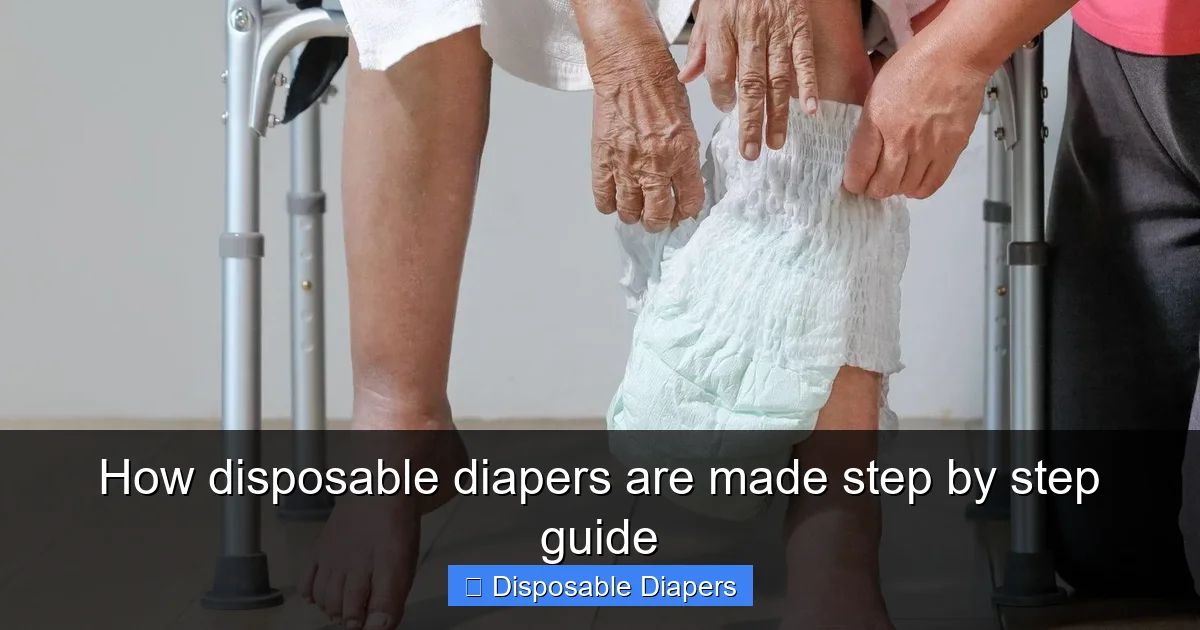
Before we look at how disposable diapers are made, it helps to know the main parts. Each part has a job. Together, they keep your baby dry and comfortable.
Visual guide about How disposable diapers are made step by step guide
Image source: guideforhealthytips.net
1.1 The Top Sheet (Inner Layer)
The top sheet is the soft layer that touches the baby’s skin. It is usually made from a nonwoven fabric. This fabric is often made from polypropylene fibers. It feels like cloth but is actually a type of plastic.
Its job is to let liquid pass through quickly while staying as dry as possible on the surface. When we look at how disposable diapers are made, the top sheet is one of the first layers added on the production line.
1.2 The Absorbent Core
The absorbent core is the heart of the diaper. This is where the real magic happens. It is usually made from:
- Fluff pulp: A soft, fibrous material made from wood pulp. It looks like cotton.
- Super Absorbent Polymer (SAP): Tiny granules that can absorb many times their weight in liquid and turn it into a gel.
How disposable diapers are made focuses a lot on this core, because it controls how much liquid the diaper can hold and how dry it keeps the baby.
1.3 The Back Sheet (Outer Layer)
The back sheet is the outer layer that faces the baby’s clothes. It is usually made from a thin, breathable plastic film, often polyethylene. This film stops liquid from leaking out.
Some brands use a back sheet that looks and feels like cloth. It may be a film laminated with a soft nonwoven fabric. When we talk about how disposable diapers are made, the back sheet is the base on which most other layers are built.
1.4 Leg Cuffs and Elastic
Leg cuffs are the raised barriers around the leg openings. They help stop leaks. Elastic threads or bands are added around the legs and waist. They help the diaper fit snugly and move with the baby.
These elastic parts are very important in how disposable diapers are made, because they affect comfort and leak protection.
1.5 Fastening System and Wetness Indicator
Most diapers use:
- Hook-and-loop tabs (like Velcro): Refastenable, soft, and easy to adjust.
- Adhesive tapes: Stick-on tabs used in some lower-cost diapers.
- Wetness indicator: A printed line that changes color when wet.
These small parts are added near the end of the process when we look at how disposable diapers are made on a full production line.
Step 2: Sourcing and Preparing Raw Materials
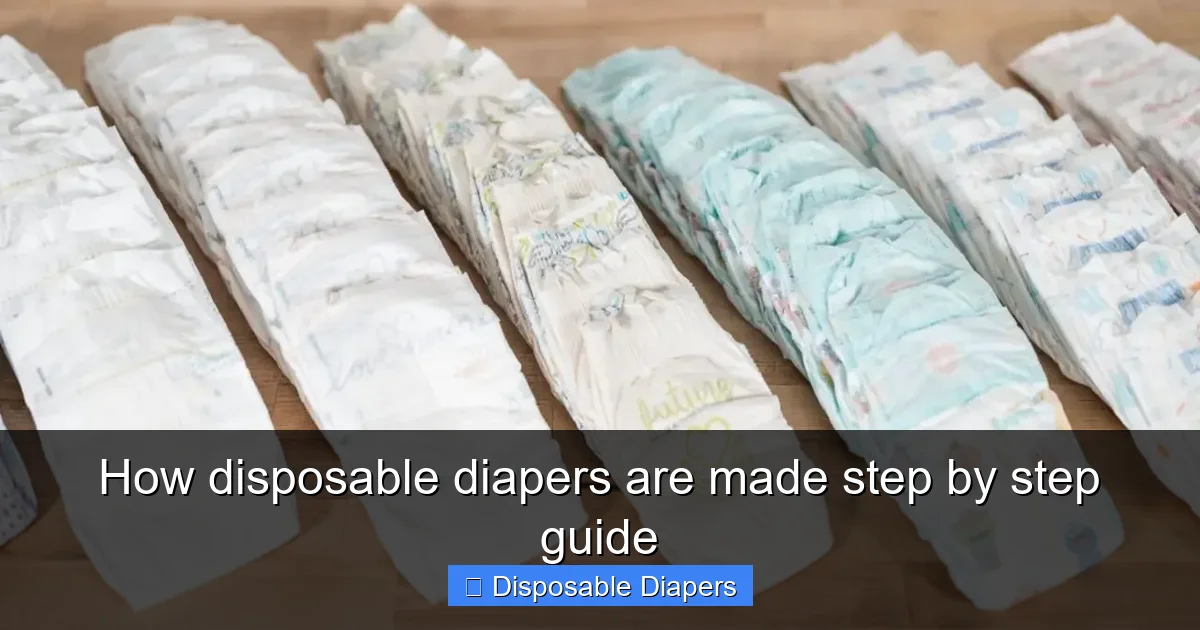
Now that you know the parts, the next step in how disposable diapers are made is sourcing the raw materials. Manufacturers buy huge rolls and bales of materials from suppliers.
Visual guide about How disposable diapers are made step by step guide
Image source: flavorfulexplorer.com
2.1 Fluff Pulp Preparation
Fluff pulp arrives in big, compressed rolls or sheets. It is made from treated wood pulp. In the factory, the pulp goes into a defibration machine. This machine breaks the pulp into loose, fluffy fibers.
This fluff is key to how disposable diapers are made, because it gives shape and structure to the absorbent core and helps spread liquid.
2.2 Super Absorbent Polymer (SAP)
SAP comes in bags or bulk containers as small white granules. It is stored in silos or hoppers. From there, it is fed into the production line through controlled dosing systems.
The exact mix of SAP and fluff is a big part of how disposable diapers are made, because it controls absorbency and cost.
2.3 Nonwoven Fabrics and Films
The top sheet, leg cuffs, and some parts of the back sheet are nonwoven fabrics. They come in large rolls, sometimes thousands of meters long. Plastic films for the back sheet and for some inner layers also arrive in rolls.
These rolls are mounted on unwinders that feed the material into the diaper machine. In how disposable diapers are made, keeping these rolls running smoothly at high speed is critical.
2.4 Elastics, Glue, and Other Components
Factories also stock:
- Elastic threads or bands for legs and waist
- Hot-melt adhesives (glues) in solid blocks or pellets
- Hook-and-loop tapes or adhesive tapes
- Inks for printing designs and wetness indicators
All of these are part of how disposable diapers are made, even though they are used in small amounts compared to pulp and SAP.
Step 3: Making the Absorbent Core
Now we reach the main technical part of how disposable diapers are made: forming the absorbent core. This step happens on a large, fast machine.
Visual guide about How disposable diapers are made step by step guide
Image source: clickamericana.com
3.1 Fluffing and Air-Laying the Pulp
First, the pulp goes into a hammer mill or defibrator. This machine shreds the pulp into soft, loose fibers. A stream of air carries the fibers forward.
The fibers drop onto a moving belt or drum with a vacuum underneath. The vacuum pulls the fibers down evenly. This process is called air-laying. It creates a soft, flat mat of fluff pulp.
3.2 Adding SAP to the Core
As the fluff fibers fall, SAP granules are added. This is done through precise dosing units. The goal is to mix the SAP evenly through the core or place it in zones where it is needed most (for example, in the center).
The ratio of fluff to SAP is a key part of how disposable diapers are made. More SAP means more absorbency, but also higher cost. Less fluff can make the core thinner and more flexible.
3.3 Shaping and Stabilizing the Core
The mixed mat of fluff and SAP passes under shaping rollers or through cutting stations. The mat is cut into the shape of the diaper core, often narrower in the middle and wider at the ends.
To keep the core from falling apart, some manufacturers:
- Use a tissue wrap around the core
- Use a light spray of glue to hold fibers together
- Compress the core slightly with rollers
This formed core then moves forward on the line. At this point in how disposable diapers are made, you can already see the main absorbent pad.
Step 4: Building the Diaper Sandwich (Layer by Layer)
Once the core is ready, the next stage in how disposable diapers are made is to build the full “sandwich” of layers: back sheet, core, and top sheet.
4.1 Laying Down the Back Sheet
The back sheet film unwinds from a large roll and runs along the length of the machine. It acts like a moving base. The absorbent cores are placed at regular intervals on this film.
Sometimes, a breathable film and a soft nonwoven layer are laminated together to make a cloth-like back sheet. This lamination can happen in a separate process or directly on the diaper line.
4.2 Positioning the Absorbent Core
The machine places each cut core on the back sheet at a fixed spacing. Sensors and guides keep the cores aligned, so every diaper has the core in the right place.
In how disposable diapers are made, this alignment is crucial. If the core is off-center, the diaper may leak or fit poorly.
4.3 Adding the Top Sheet
Next, the top sheet unwinds and is laid over the cores. Now you have a three-layer sandwich:
- Back sheet (bottom)
- Absorbent core (middle)
- Top sheet (top)
Hot-melt glue is applied in thin lines or spray patterns to bond the top sheet to the back sheet around the core. This seals the core inside and stops it from shifting.
At this stage in how disposable diapers are made, the product still looks like a long strip with repeated diaper shapes along it.
Step 5: Adding Elastic, Leg Cuffs, and Barriers
To prevent leaks and improve fit, elastic and leg cuffs are added next. This is a key step in how disposable diapers are made.
5.1 Applying Leg Elastics
Elastic threads or bands are stretched and glued along the sides of the diaper, near where the leg openings will be. The machine holds the elastic under tension while glue is applied.
When the elastic relaxes, it gathers the fabric, creating a snug fit around the legs. The pattern and number of elastic threads affect comfort and leak protection.
5.2 Forming Standing Leg Cuffs
Many diapers have raised side barriers called leg cuffs or leak guards. These are usually made from extra strips of nonwoven fabric along each side of the core.
Elastic may also be added to the cuffs. They are glued in a way that allows them to stand up when the diaper is worn. This design is an important detail in how disposable diapers are made to handle bigger messes.
5.3 Adding Waist Elastics
Some brands also add elastic at the back waist and sometimes at the front. This can be done with elastic threads, bands, or special stretch films.
These waist elastics help the diaper stay in place. They are bonded to the back sheet and covered by the top sheet or another soft layer so they do not touch the skin directly.
Step 6: Adding Fastening Systems and Extra Features
Now the diaper needs a way to close and adjust. This step in how disposable diapers are made adds the fastening system and other extras.
6.1 Attaching Hook-and-Loop or Tape Tabs
On each side of the back of the diaper, a machine attaches fastening tabs. These tabs can be:
- Hook-and-loop: Soft hooks that stick to a landing zone on the front of the diaper.
- Adhesive tape: Sticky tabs that attach to the plastic or a special tape panel.
The tabs are cut from a roll and glued or ultrasonically bonded to the diaper. Their exact position and angle are important, so sensors control their placement.
6.2 Creating the Landing Zone
For hook-and-loop systems, the front of the diaper has a “landing zone” made from loop material or a special nonwoven panel. This zone is added as a strip across the front.
In how disposable diapers are made, this landing zone must be wide enough to allow for adjustment as the baby moves and grows.
6.3 Printing Designs and Wetness Indicators
Many brands print cute designs, logos, or size markers on the back sheet. This printing can happen before the film is fed into the diaper line or on the line itself.
A wetness indicator is usually a printed stripe that changes color when wet. It is printed with special ink that reacts to moisture. Parents can then see if the diaper needs changing without opening it.
Step 7: Cutting, Shaping, and Folding the Diaper
Up to now, the product is still a long web with repeated diaper sections. The next part of how disposable diapers are made is cutting and shaping each piece.
7.1 Cutting Leg Openings and Diaper Shape
Rotary cutting tools or die cutters trim the sides of the diaper to create the hourglass shape. They also cut out the curved leg openings.
The scrap material from these cuts is collected and often recycled back into other products or used as industrial waste material. Good waste control is part of modern how disposable diapers are made processes.
7.2 Separating Individual Diapers
The long strip is then cut crosswise between each diaper. Now you have individual diapers moving along the conveyor, usually at very high speed.
Some lines can produce hundreds or even more than a thousand diapers per minute. This speed is a key reason why how disposable diapers are made today is so efficient.
7.3 Folding and Stacking
Each diaper is folded, usually in thirds or in half, so it fits neatly into the package. Mechanical arms or folding plates do this very quickly.
The folded diapers are then counted and stacked into groups, such as 20, 40, or more, depending on the pack size. These stacks move toward the packaging machines.
Step 8: Packaging and Final Handling
The last stage in how disposable diapers are made is packing them for sale and shipment.
8.1 Primary Packaging
Stacks of folded diapers are pushed into plastic bags or film sleeves. The bag is then sealed, often with heat sealing. The package is printed or labeled with:
- Brand name and logo
- Size and weight range
- Number of diapers
- Product features and instructions
This packaging keeps the diapers clean and dry until they reach the customer.
8.2 Secondary Packaging and Palletizing
Individual packs are then grouped into larger cartons or wrapped bundles for shipping. These boxes are stacked on pallets.
Pallets are wrapped in stretch film to keep everything stable in transport. Barcodes and batch codes help track where and when each batch was made. This traceability is an important part of how disposable diapers are made in a controlled, safe way.
Step 9: Quality Control in Diaper Manufacturing
Throughout the whole process of how disposable diapers are made, quality control is essential. Even small mistakes can lead to leaks, skin irritation, or safety risks.
9.1 In-Line Machine Checks
Sensors and cameras check:
- Position of cores, tabs, and elastics
- Presence of all layers
- Length and width of each diaper
- Print registration and color
If the machine detects a problem, it can reject faulty diapers and alert the operator.
9.2 Laboratory and Manual Tests
Samples are taken from each batch and tested in a lab or quality room. Common tests include:
- Absorption capacity (how much liquid it can hold)
- Rewet (how dry it feels after absorbing liquid)
- Fit and stretch tests
- Skin contact tests and pH checks
These tests make sure that how disposable diapers are made leads to safe, comfortable products for babies.
9.3 Safety and Hygiene Controls
Factories follow strict hygiene rules. Workers may wear hair nets, gloves, and special clothing. Air filters and dust control systems reduce airborne fibers and SAP dust.
Good hygiene and clean materials are part of responsible how disposable diapers are made processes, especially for products that touch sensitive baby skin.
Step 10: Environmental and Safety Considerations
Modern brands pay more attention to the environment and safety when they plan how disposable diapers are made.
10.1 Managing Waste and Recycling
Production creates trim waste from cutting and some off-spec diapers. Many factories:
- Recycle plastic films and nonwoven scraps where possible
- Reuse some materials in non-baby products
- Optimize cutting patterns to reduce waste
This helps reduce the environmental impact of how disposable diapers are made.
10.2 Safer Materials and Certifications
Some brands use:
- Chlorine-free pulp
- Fragrance-free and lotion-free designs
- Dermatologically tested materials
They may follow standards like ISO, or seek eco-labels and safety certifications. These choices influence how disposable diapers are made and marketed.
10.3 Energy and Emissions
Factories also work to improve energy use. They may:
- Use more efficient motors and machines
- Recover heat from processes
- Use better dust and air filters
All of this is part of a more responsible approach to how disposable diapers are made in large volumes.
Troubleshooting Common Manufacturing Issues
Even with advanced machines, problems can occur in how disposable diapers are made. Here are some typical issues and how manufacturers fix them.
11.1 Leaks and Poor Absorption
If diapers leak, it may be due to:
- Wrong fluff-to-SAP ratio
- Bad core placement
- Weak leg elastics or cuffs
Manufacturers adjust the SAP dosing, improve core shaping, or change the elastic pattern to solve these issues.
11.2 Skin Irritation Complaints
If parents report rashes, factories review:
- Dyes and inks used
- Lotions or fragrances added
- Cleanliness of materials and storage
They may change suppliers, remove certain additives, or tighten hygiene controls. This is a sensitive part of how disposable diapers are made and improved over time.
11.3 Weak Tabs or Tearing
If tabs tear or do not stick well, the cause may be:
- Wrong glue type or temperature
- Poor bonding between tab and back sheet
- Low-quality fastening material
Adjusting glue settings, choosing stronger materials, or improving bonding methods can fix these problems.
Conclusion: The Hidden Complexity Inside Every Diaper
Now you know how disposable diapers are made from start to finish. What looks like a simple product is actually a carefully engineered system of layers, glues, fibers, and elastic parts. Each step, from pulp fluffing to final packing, is designed to keep babies dry, comfortable, and safe.
Understanding how disposable diapers are made helps you see why some diapers perform better than others and why quality control matters so much. Next time you open a pack, you will know the long journey each diaper has taken—from raw materials, through high-speed machines, to your changing table.
🎥 Related Video: Step by Step Instructions to Make A Diaper Cake
📺 WatchMojo.com
How To Make A Diaper Cake Subscribe http://goo.gl/Q2kKrD Make a three-tier cake for your next baby shower using diapers, …
