
Disposable diapers can take hundreds of years to decompose, creating long‑lasting waste and pollution. This guide explains how long diapers decompose, what happens to them in landfills, and why they are such a big environmental concern. You’ll also learn practical, simple steps to reduce diaper waste, choose better products, and lessen your baby’s footprint without sacrificing convenience.
Key Takeaways
- Point 1: Disposable diapers can take around 300–500 years to decompose in landfills, meaning every diaper ever used is likely still around.
- Point 2: Most diapers decompose extremely slowly because they are made from plastics, super-absorbent gels, and treated wood pulp.
- Point 3: Diapers impact our environment by filling landfills, releasing greenhouse gases, and potentially leaching chemicals into soil and water.
- Point 4: How long diapers decompose depends on oxygen, moisture, temperature, and whether the diaper is in a landfill, compost system, or open environment.
- Point 5: Parents can reduce diaper waste by using fewer diapers, trying cloth or hybrid systems, and choosing eco-certified disposable brands.
- Point 6: Proper disposal, such as flushing solid waste and avoiding burning, helps lower health risks and environmental harm.
- Point 7: Small daily choices, multiplied by millions of families, can significantly reduce the long-term impact of diaper waste on our planet.
Introduction: Why Diaper Decomposition Matters
If you have a baby in diapers, you probably throw away several diapers every single day. It feels normal. It feels small. But when you multiply that by months, years, and millions of families, the amount of diaper waste becomes huge. That is why it is important to understand how long diapers decompose and how they impact our environment.
In this guide, you will learn how long diapers decompose, what they are made of, and what really happens to them in landfills. You will see why diapers are such a big part of household trash and how they affect soil, air, and water. Most importantly, you will get clear, simple steps you can take to reduce diaper waste without making your life harder.
We will keep the language simple and the tips practical. By the end, you will know exactly how long diapers decompose, why it matters, and what you can do about it today.
Step 1: Understand What Disposable Diapers Are Made Of
To understand how long diapers decompose, you first need to know what is inside them. A disposable diaper may look soft and harmless, but it is actually a complex mix of materials. Some break down slowly. Some barely break down at all.
Visual guide about How long diapers decompose and impact our environment
Image source: thumbs.dreamstime.com
Core materials in a typical disposable diaper
- Plastic backsheet: The outer layer is usually made from polyethylene or polypropylene. These are types of plastic. They are strong, waterproof, and very slow to break down.
- Absorbent core: This layer holds pee and moisture. It usually includes wood pulp (cellulose) and a super-absorbent polymer, often called SAP. SAP is a type of plastic gel that can hold many times its weight in liquid.
- Top sheet (inner layer): This is the soft part that touches your baby’s skin. It is often made from polypropylene or a similar plastic-based fiber.
- Elastic and fasteners: The stretchy leg cuffs and waist, plus the tabs, are made from elastic materials and more plastics.
- Dyes, lotions, and fragrances: Some diapers include inks for prints, lotions, or scents. These add chemicals that can also affect how long diapers decompose.
What this means for decomposition
Because so many parts of a diaper are plastic-based, they do not rot the way food or paper does. Plastics break down very slowly. They can turn into smaller and smaller pieces, called microplastics, but they do not fully return to nature in a short time. This is a big reason why diapers decompose so slowly and why they stay in landfills for centuries.
The wood pulp part can decompose faster, but it is trapped inside plastic layers. In a landfill with little air and light, even this natural material breaks down very slowly. When you ask how long diapers decompose, the honest answer is that most of the diaper will outlive you, your child, and even your great-grandchildren.
Step 2: Learn How Long Diapers Decompose in Different Conditions
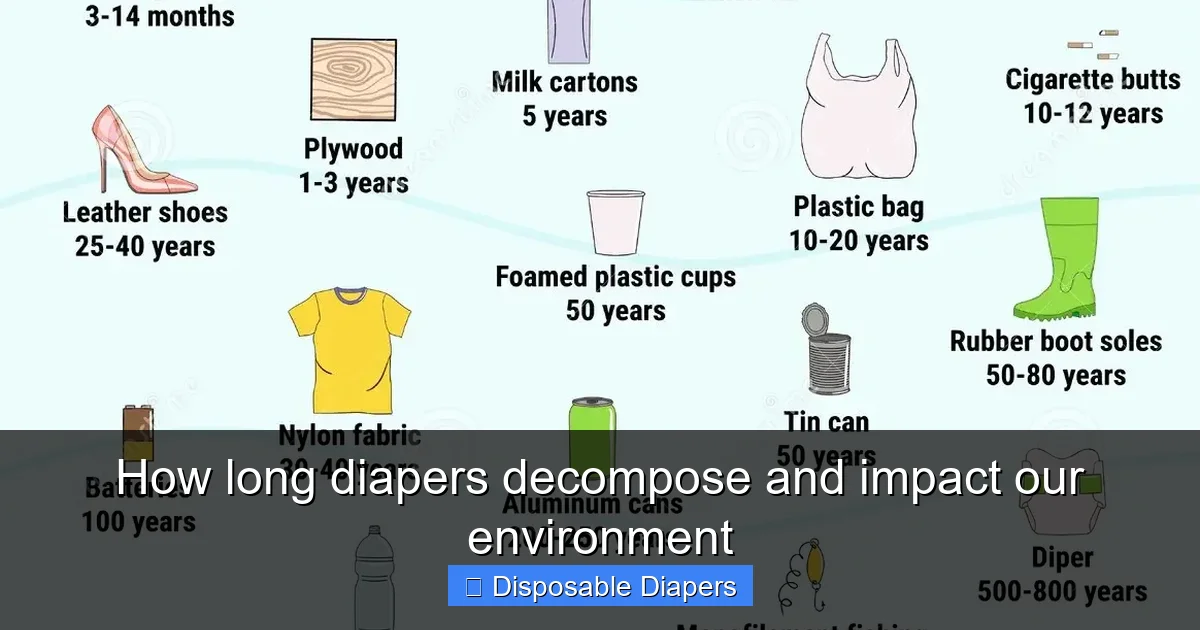
You will often hear that diapers take about 500 years to decompose. This number is an estimate, because modern disposable diapers have only been around since the mid-1900s. No one has watched a single diaper decompose for 500 years. Still, scientists can study the materials and conditions to make a good guess about how long diapers decompose.
Visual guide about How long diapers decompose and impact our environment
Image source: thumbs.dreamstime.com
In a typical landfill
Most disposable diapers end up in landfills. Landfills are designed to keep trash in one place and limit contact with the outside environment. They are lined and covered to reduce leaks and smells. This also means there is very little oxygen and sunlight inside.
- Estimated time: Around 300–500 years for a disposable diaper to decompose in a landfill.
- Reason: Low oxygen, low light, and layers of trash slow down all natural decay.
- Result: Diapers sit there almost unchanged for decades, then slowly break into smaller plastic pieces over centuries.
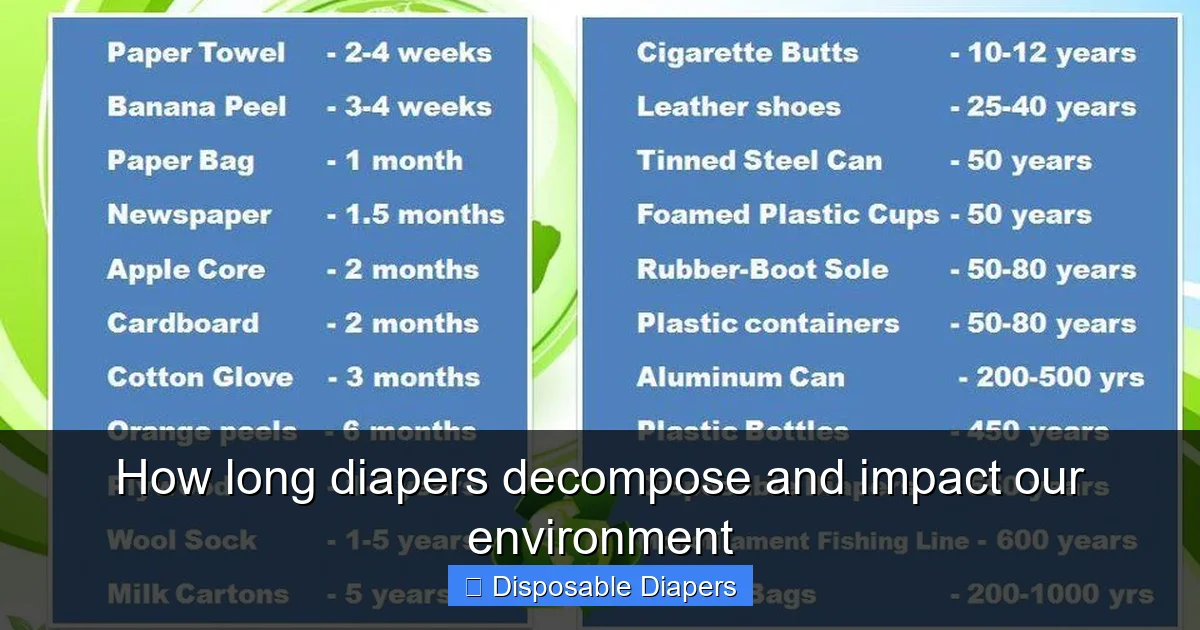
In some cases, diapers may stay almost intact for a very long time. Archaeologists have found old newspapers in landfills that are still readable after many years. If paper can last that long, imagine how long diapers decompose when they are made mostly of plastic.
In an open environment (litter or illegal dumps)
Sometimes diapers are dumped in open fields, rivers, or on roadsides. This is common where waste collection is poor. In these places, diapers decompose under different conditions.
- Sunlight and heat: UV rays can help break down plastic into smaller pieces faster than in landfills.
- Rain and water: Water can carry away chemicals and microplastics into soil and streams.
- Animals: Dogs, rats, and other animals may tear open diapers, spreading waste.
Even with sun and weather, how long diapers decompose is still counted in many decades or centuries. They may look like they are “gone” after some years, but in reality, they have just broken into tiny plastic fragments that stay in the environment.
In industrial composting (for special compostable diapers)
Some brands now sell “compostable” or “biodegradable” diapers. These are not the same as regular diapers. They are designed to break down faster, but usually only in special high-heat composting systems.
- Estimated time: Some certified compostable diapers can break down in 3–6 months in industrial composting facilities.
- Conditions: Very high temperatures, controlled moisture, and active turning of the compost.
- Limit: Most cities do not accept diapers in regular green bins. Home compost piles usually do not get hot enough. Human waste in compost also raises health concerns.
So when you look at how long diapers decompose, you must check what kind of diaper you have and where it goes. Regular disposable diapers will not decompose quickly, even if the package uses words like “eco” or “natural.”
Step 3: See How Diapers Impact Our Environment
Understanding how long diapers decompose is just one part of the story. The other part is how they affect the environment while they sit in landfills, dumps, or nature. Disposable diapers have a footprint from the moment they are made until long after they are thrown away.
Visual guide about How long diapers decompose and impact our environment
Image source: i.pinimg.com
Landfill space and growing waste
Diapers are bulky. A single baby can use 2,000–3,000 diapers in the first year alone. Over the full diapering period, that number can reach 4,000–6,000 diapers. All of those diapers go somewhere.
- In many countries, diapers make up an estimated 2–4% of household waste by weight, and even more by volume.
- Because diapers decompose so slowly, they pile up and stay in landfills for hundreds of years.
- As cities grow, finding new landfill space becomes harder, more expensive, and more damaging to local ecosystems.
Greenhouse gas emissions
When organic parts of diapers, like wood pulp and human waste, decompose without oxygen in landfills, they can produce methane. Methane is a powerful greenhouse gas. It traps much more heat than carbon dioxide over short periods.
Even if plastics do not rot quickly, the small amount of organic matter inside diapers can still release gases. Landfills often try to capture methane, but not all of it is collected. So the way diapers decompose contributes to climate change, even if the process is slow.
Chemical and microplastic pollution
Diapers contain plastics, inks, adhesives, and sometimes lotions or fragrances. Over time, as diapers decompose, these materials can leach into surrounding soil and water. This is especially a problem in poorly managed dumps or when diapers are burned in open fires.
- Microplastics: As plastics break into tiny pieces, they can enter rivers, lakes, and oceans. Fish and other animals may eat them.
- Chemicals: Some diaper components can release chemicals that may affect wildlife and, in some cases, human health.
- Pathogens: Human waste in diapers can carry bacteria and viruses. If diapers are left in open areas, they can pose health risks.
When you think about how long diapers decompose, remember that the problem is not just time. It is also what they release slowly over that long time frame.
Production footprint
The environmental impact of diapers starts even before they reach your home. Making diapers uses:
- Wood pulp, which can come from forests.
- Oil and gas, which are turned into plastics and SAP.
- Large amounts of water and energy in factories.
If diapers decompose only after hundreds of years, it means all of that resource use leads to a product that is used for just a few hours, then stored in a landfill for centuries. This is why many experts call disposable diapers a “linear” product: take resources, make, use once, then throw away for a very long time.
Step 4: Compare Disposable, Cloth, and Eco Diapers
To make better choices, it helps to compare how long diapers decompose across different types: standard disposable diapers, cloth diapers, and so-called eco or biodegradable diapers.
Standard disposable diapers
- Decomposition time: Around 300–500 years in landfills.
- Pros: Very convenient, widely available, easy to use.
- Cons: High landfill impact, slow to decompose, made mostly from plastics.
Cloth diapers
- Decomposition time: Cloth diapers can last for years and be reused many times. When finally discarded, cotton or bamboo fabrics can decompose in months to a few years under the right conditions, while any synthetic parts (like snaps or elastic) last longer.
- Pros: Reusable, can be used for multiple children, less solid waste in landfills.
- Cons: Require water, energy, and time for washing. Impact depends on how they are laundered.
Cloth diapers do not solve all environmental issues, but they change the problem. Instead of asking how long diapers decompose, you focus on how often they can be reused and how to wash them efficiently.
Eco, biodegradable, or compostable disposable diapers
Many brands now market “eco” diapers. The terms can be confusing, so it is important to read carefully.
- Biodegradable components: Some diapers use plant-based plastics or more wood pulp. Parts of these diapers may decompose faster than standard ones.
- Certified compostable: A few products are certified to break down in industrial compost facilities. They are not meant for home composting.
- Reality check: If these diapers still go to a regular landfill, how long diapers decompose may not be much shorter than with standard diapers because of the low-oxygen conditions.
Eco diapers can be a better choice when they reduce fossil-based plastics or use responsible forestry. But they are not magic. The key is where they end up and how they are processed.
Step 5: Take Practical Steps to Reduce Diaper Waste
You cannot change how long diapers decompose in a landfill once they are there. But you can reduce how many diapers you send to the landfill and choose options that are less harmful. Here are practical, realistic steps you can start today.
Tip 1: Use fewer diapers per day
This does not mean leaving your baby in a dirty diaper. It means being smart about changes.
- Change right after big messes, but avoid “just in case” changes when the diaper is still dry.
- Use diaper-free time at home on washable mats or towels to give skin a break and reduce diaper use.
- Choose the right size and fit so leaks are less likely, and you do not need extra changes.
Even one less diaper per day adds up. Over two years, that could mean hundreds of diapers that never reach a landfill.
Tip 2: Try a hybrid system (mix disposable and cloth)
You do not have to go “all or nothing” with cloth diapers. A hybrid system can cut your waste without overwhelming you.
- Use cloth at home during the day, when washing is easier.
- Use disposables at night or when traveling for convenience.
- Start with a small set of cloth diapers and see what works for your family.
This approach reduces the total number of disposable diapers you buy and throw away, without forcing a full lifestyle change.
Tip 3: Choose better disposable diapers
If you rely on disposables, you can still make lower-impact choices.
- Look for diapers with FSC-certified wood pulp (from responsibly managed forests).
- Prefer brands that clearly list materials and avoid unnecessary lotions and fragrances.
- Seek out diapers that reduce fossil-based plastics or use some plant-based materials.
- Check for third-party eco-labels rather than vague “green” claims.
These steps do not change how long diapers decompose dramatically, but they can reduce the overall footprint of each diaper and the chemicals that enter the environment.
Tip 4: Use diaper services or community support
In some areas, diaper services wash cloth diapers for you. In others, community groups share advice and secondhand supplies.
- Search for local cloth diaper services that deliver clean diapers and pick up dirty ones.
- Join parenting groups online to learn from others who have reduced diaper waste.
- Buy or sell gently used cloth diapers to save money and resources.
Sharing knowledge and resources can make it much easier to change habits and reduce the number of diapers that need to decompose in landfills.
Tip 5: Plan potty training thoughtfully
Potty training is a big step in cutting diaper use. While every child is different, some simple habits can help.
- Introduce the potty early in a relaxed way, so it feels normal, not scary.
- Watch for signs of readiness, like staying dry for longer or showing interest in the bathroom.
- Use training pants or cloth trainers to reduce full diaper use during the transition.
The earlier your child is ready to leave diapers behind (without pressure or stress), the sooner you stop adding to the pile of diapers that need centuries to decompose.
Step 6: Dispose of Diapers More Safely
Even if you cannot control how long diapers decompose, you can control how you throw them away. Proper disposal lowers health risks and reduces some environmental harm.
Always put solid waste in the toilet when possible
Most diaper packages quietly mention this, but many parents never notice. Human waste is meant to go into the sewer or septic system, not the landfill.
- When your baby has a solid bowel movement, shake or scrape it into the toilet.
- Use a disposable liner or a small spatula kept just for this job if that makes it easier.
- Then wrap and throw away the diaper itself.
This step does not change how long diapers decompose, but it reduces pathogens in landfills and lowers the risk of disease spread in open dumps.
Do not burn diapers in open fires
In some places, families burn trash to reduce volume. Burning diapers is very risky.
- Burning plastics can release toxic fumes and dioxins, which are harmful when inhaled.
- Ash from burned diapers can still contain chemicals and microplastics.
- Open burning adds to air pollution and health problems.
If you must burn some trash, keep diapers out of the fire. It is safer for your family and your community.
Use sealed bins and bags
Smell is often the main concern with diaper disposal, but sealed bins also help with hygiene.
- Use a bin with a tight lid to keep pests away.
- If possible, use biodegradable bag liners, but remember they still sit in landfills for a long time.
- Empty the bin regularly to avoid leaks and odors.
While this does not shorten how long diapers decompose, it makes the storage and transport phase safer and cleaner.
Troubleshooting: Common Concerns and How to Handle Them
“I feel guilty about diapers but can’t manage cloth.”
Many parents feel this way. Life with a baby is busy and stressful. If cloth diapers feel impossible right now, focus on small wins:
- Cut one diaper per day through smarter changes or diaper-free time.
- Choose a brand with clearer environmental standards.
- Plan to revisit cloth or hybrids later, or for a second child, when life feels calmer.
Any reduction helps. You do not have to be perfect to make a difference.
“Eco diapers cost more. Are they worth it?”
Eco diapers often cost more per piece. In return, they may use better-sourced pulp, fewer harsh chemicals, or some plant-based plastics. They may not change how long diapers decompose in a landfill by much, but they can lower the production footprint and chemical load.
If your budget is tight, you might get more impact by using a few cloth diapers each day than by switching fully to premium eco disposables. The best choice is the one you can sustain over time.
“My area has no special recycling or composting for diapers.”
Most places do not yet have diaper composting or recycling systems. In that case, regular trash is the only legal option. You can still:
- Flush solid waste into the toilet.
- Reduce total diaper use with hybrid systems.
- Support local or national policies that invest in better waste systems.
Change is slow, but it often starts with awareness. Understanding how long diapers decompose is one step toward pushing for better solutions.
Conclusion: Small Choices, Long-Term Impact
Disposable diapers are a modern convenience that most families rely on. Yet every diaper you throw away is likely to sit in a landfill for hundreds of years. How long diapers decompose is not just a number. It is a reminder that short-term use can have very long-term effects on our environment.
You do not have to give up all convenience to make a difference. By understanding what diapers are made of, how they decompose, and how they impact landfills, air, and water, you can make more informed choices. You can use fewer diapers, try hybrids, choose better products, and dispose of them more safely.
One family’s actions may seem small. But when millions of families take small steps, they reduce the number of diapers that need to decompose for centuries. That is how real change begins: with clear information, simple choices, and steady, practical action.
🎥 Related Video: disposable diaper 500 years to decompose
📺 Lighthouse Kids Company – Cloth Diapers
One of the biggest myths in the diapering industry is not what you’d think. The biggest myth is that disposable diapers will …
