
Are baby car seat bases universal? This guide answers that question and shows you how to check fit, install a base, and stay safe. Follow clear steps and tips to find the right base for your car and your child.
Key Takeaways
- Point 1: Baby car seat bases are not universally compatible; many are brand- and model-specific.
- Point 2: Always check your car manual and the car seat manual to confirm fit and install options.
- Point 3: Some seats use ISOFIX/LATCH which increase compatibility, but differences still exist.
- Point 4: Adapters can help with fit but may affect safety and void warranties if not approved.
- Point 5: Test the fit in your vehicle in person whenever possible before you buy.
- Point 6: Regular checks, correct installation, and manufacturer guidance are critical for safety.
Introduction: What you’ll learn
If you are shopping for car seats, you might ask, are baby car seat bases universal? Many parents want a base that fits every car. This guide answers that question clearly. You will learn how compatibility works. You will learn how to check your car and the base. You will learn to install and troubleshoot. By the end, you will know how to pick a safe base for your baby.
Step 1: Understand what a car seat base does
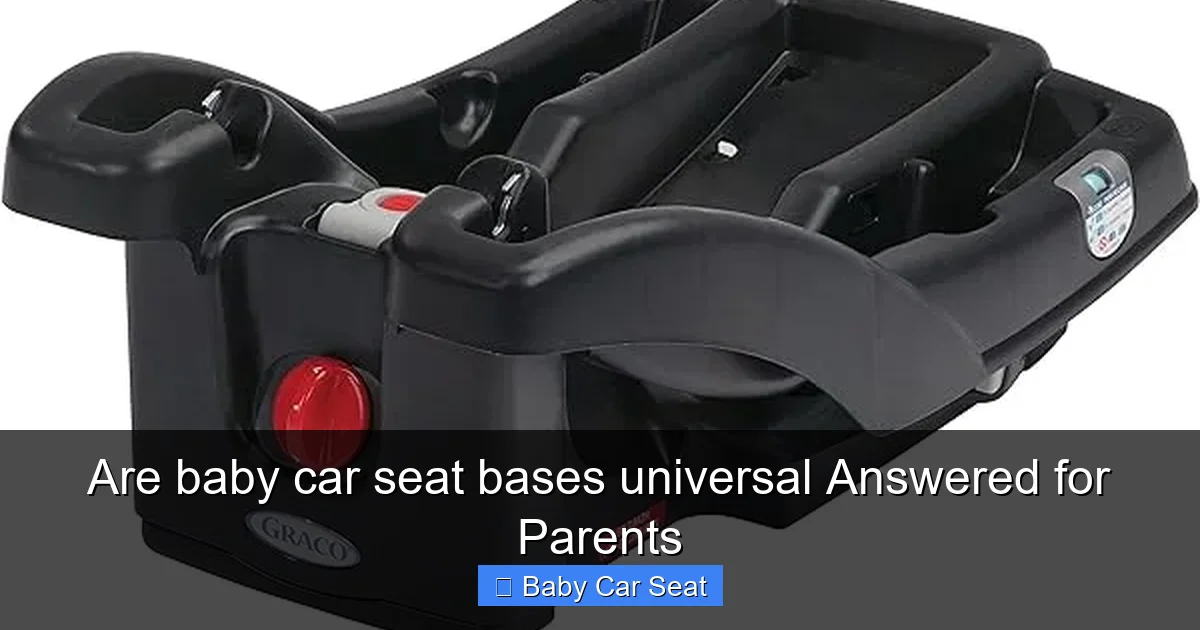
A car seat base holds the infant carrier in place. The base stays in the car. The carrier clicks in and out. A base makes travel easy. It protects the seat and keeps installation consistent. But not every base fits every car. Ask yourself: are baby car seat bases universal?
Visual guide about Are baby car seat bases universal Answered for Parents
Image source: psychoautos.com
Why bases vary
Bases vary by brand, model, and year. They have different anchors, shapes, belt paths, and recline angles. Some use ISOFIX or LATCH. Others rely on the vehicle seat belt. That means fit changes from car to car. So the short answer is: no, they are not always universal.
Step 2: Learn the main types of base attachment
Knowing attachment types helps answer are baby car seat bases universal. There are three common methods.

Visual guide about Are baby car seat bases universal Answered for Parents
Image source: psychoautos.com
1. LATCH / Lower Anchors and Tethers
LATCH is common in newer cars. It uses built-in anchors. Many bases have LATCH connectors. LATCH often makes installation easier. But anchor spacing and strengths differ by car and base. That affects fit.
2. ISOFIX (International standard)
ISOFIX is a global standard similar to LATCH. It increases compatibility between brands and vehicles. Many European and international seats use ISOFIX. It helps but does not guarantee universal fit.
3. Seat belt installation
Some bases attach with the car’s seat belt. This method works nearly anywhere. But belt paths and seat shapes vary. You must check the base and car manual. Seat belt method increases compatibility but still is not a universal fix.
Step 3: Check manufacturer compatibility
To answer are baby car seat bases universal, always check the manufacturer. Read the car seat manual. Look for a compatibility list. Many makers list approved vehicles. They may also list cars that do not work well.
Visual guide about Are baby car seat bases universal Answered for Parents
Image source: psychoautos.com
How to find compatibility info
- Read the car seat manual supplied with the base.
- Visit the manufacturer website and search for vehicle fit guides.
- Call customer support with your car make, model, and year.
- Look for online forums and verified fit lists.
Step 4: Test the base in your car before buying
One of the best answers to are baby car seat bases universal is: try before you buy. In-store testing or demo seats at baby stores helps. Check how the base sits on your car seat. See if LATCH hooks reach anchors. Try both LATCH and belt routes if possible.
What to look for when testing
- Does the base sit flat and stable?
- Is the recline level within the allowed range?
- Do the LATCH connectors reach without stretching?
- Can the base be tightened to remove slack?
- Does the carrier click securely into the base?
Step 5: Use approved adapters carefully
Sometimes you see adapters advertised to connect bases across brands. But adapters change how forces transfer in a crash. If you wonder are baby car seat bases universal because you plan to use an adapter, be careful. Only use adapters that the car seat maker approves.
When adapters help
Adapters can help when you want to use a stroller brand with a different infant carrier. Some makers design adapters for this. If the original manufacturer approves the adapter, it is generally safe to use.
When adapters hurt
Third-party adapters can void warranties. They may not meet crash standards. They can create unstable connections. This makes them risky. Avoid adapters that are not explicitly approved.
Step 6: Understand the role of base geometry and car seat shape
Even with LATCH and ISOFIX, base shape matters. Cars have different seat contours. Headrests, seat seams, and armrests change how a base sits. The same base can fit well in one car and not in another. So ask are baby car seat bases universal? The answer remains: no, due to base geometry and car seat shape.
Examples
- A narrow base might work in compact cars but not on wider seats.
- A base with a deep foot can hit the back of the car seat in some SUVs.
- High bolsters on car seats can prevent a base from reaching anchors.
Step 7: Check recline and angle indicators
Recline and angle are safety elements. Bases often have built-in indicators. These show whether the carrier is at the correct angle for a newborn. When you test a base, check the indicator. If the indicator cannot be set correctly in your car, the base is not a good fit.
Why angle matters
Newborns need a semi-reclined position. Too upright can block the airway. Too flat reduces the neck support. A poor angle increases injury risk. So even if a base fits, it must produce the right angle.
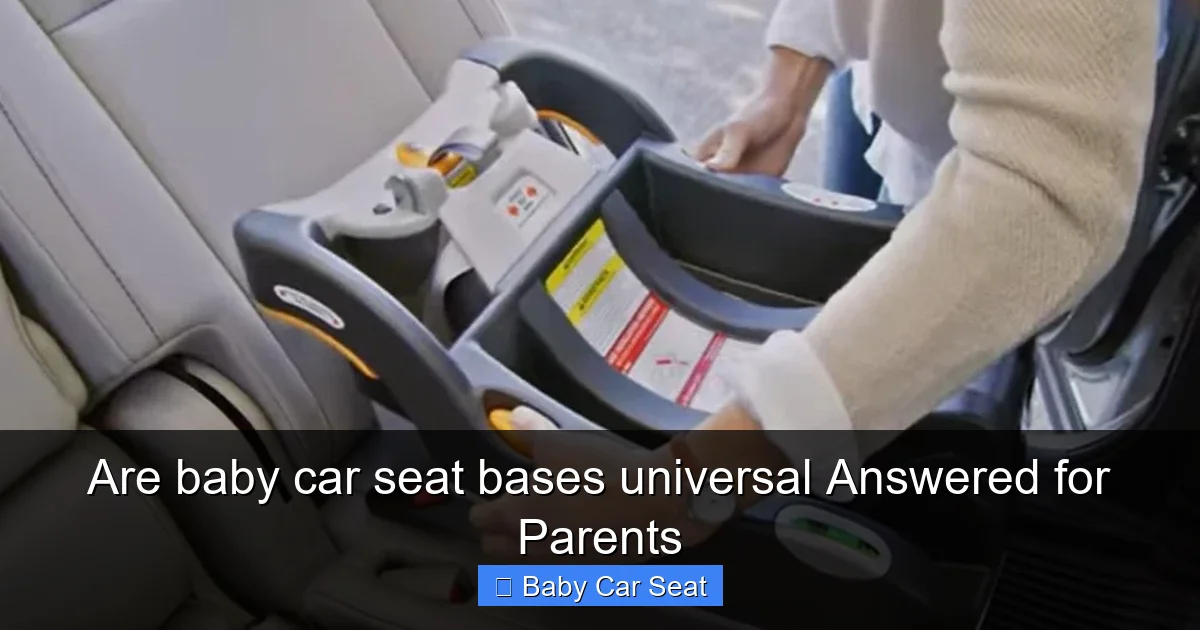
Step 8: Installation steps for a base
Here is a straightforward install routine. It helps answer practical questions about are baby car seat bases universal by showing common steps.
Step 8.1: Read both manuals
Always read the car manual and the base manual. Find the anchor locations and belt paths. Manuals often have pictures. They tell you what works for your car model.
Step 8.2: Choose the seating position
Most parents use the back seat center. But anchors may be easier on outboard seats. Check your car manual for allowed positions. A correct position is safer.
Step 8.3: Connect LATCH or thread the seat belt
Attach the base to LATCH anchors or thread the seat belt through the base. Tighten until the base moves less than one inch at the belt path. Many bases have a lock-off or built-in retractor. Use it for a tight fit.
Step 8.4: Check the level indicator
Adjust the base’s recline. Use the built-in indicator to get the right angle. For newborns, check the carrier’s label for the recommended angle.
Step 8.5: Click the carrier in and test release
Click the carrier into the base. Pull up gently to confirm a secure lock. Practice releasing and removing the carrier so you are comfortable.
Step 9: Common compatibility scenarios and solutions
Here are practical situations parents face when asking are baby car seat bases universal. Use these to guide choices.
Scenario A: Your car is older
Older cars may lack LATCH. Use the seat belt route. A belt-installable base is a better choice. Test the belt path for a tight install.
Scenario B: You drive multiple cars
If you need one base to move between cars, choose a model known for multi-car fit. Keep the manual in the glove box. Alternatively, buy two bases—one for each car. It is often safer and more convenient.
Scenario C: You have a compact car
In compact cars, space is tight. Choose a narrow base or a seat that is compact-friendly. Try it in the car before buying whenever possible.
Scenario D: You use rideshares or taxis
Rideshares rarely provide bases. Carry a lightweight, belt-install infant carrier that installs without a base. This gives more flexibility than relying on bases.
Step 10: Safety checks and maintenance
After you install the base, do routine checks. Even the best base can loosen. These checks help ensure ongoing safety and address fit concerns when parents ask are baby car seat bases universal.
Daily checks
- Ensure the base is tight with less than one inch of movement.
- Confirm the angle indicator is in the correct range.
- Check that the carrier clicks in fully.
Monthly checks
- Inspect for cracks or loose parts.
- Look for worn straps or frayed fabric.
- Verify that LATCH connectors latch securely.
Troubleshooting: What to do when things don’t fit
If you wonder are baby car seat bases universal because your base won’t fit, try these fixes.
Problem: Base won’t sit flat
Solution: Try a different seat position. Move the front seat. Remove seat covers or cushions. If it still won’t sit flat, the base may not be compatible.
Problem: LATCH strap won’t tighten
Solution: Check for twists. Feed the strap back through the clip. Use a helper to press the base down while tightening. If it still slips, use the seat belt method if allowed.
Problem: Indicator shows wrong angle
Solution: Adjust the foot or recline setting. Add a rolled towel under the base only if the manual permits. Never alter the base by adding non-approved materials unless the maker allows it.
Problem: Adapter needed
Solution: Only use manufacturer-approved adapters. Contact customer service. Do not use homemade or third-party adapters that are not certified.
How regulators and crash tests affect universality
Regulators set standards for safety. They don’t make every base universal. Tests ensure that bases meet crash standards for approved installations. But two bases can pass tests and still not fit the same car. Thus asking are baby car seat bases universal should lead you to check fit, not just standards.
Buying tips: How to choose the right base
Follow these practical tips when shopping.
- Buy the base from the same brand as the carrier when possible.
- Bring your car information to the store: make, model, year.
- Ask stores for in-car demos or a trial period.
- Keep the manuals and receipts in case of returns.
- Consider buying a second base if you use two cars frequently.
Real parent examples
Parents often ask, are baby car seat bases universal? Here are quick stories.
Example 1
A mom bought a popular base online. It fit her SUV perfectly. But in her husband’s compact car, the base hit the front seat and would not latch. They bought a second base for the other car.
Example 2
A dad chose a seat with ISOFIX. It fit their European car and their new sedan too. He still checked recline indicators each time he moved the base between vehicles.
Legal and warranty considerations
Some manufacturers require that the base be used only with specified carriers. Using a non-approved base or an unapproved adapter can void a warranty. Always check the warranty and registration. When in doubt, contact the manufacturer. This helps answer questions like are baby car seat bases universal from a legal angle.
Final checklist before you go home with a base
- Read both manuals and take photos of your installed base.
- Confirm the indicator shows correct recline for newborns.
- Check that the carrier clicks and releases smoothly.
- Ensure no part of the base is blocked by seat seams or accessories.
- Practice removing and reattaching the carrier until you are confident.
Conclusion
Are baby car seat bases universal? No. Bases are rarely fully universal. Some standards like ISOFIX and LATCH increase compatibility. But brand designs, car seat shapes, and vehicle seats make a perfect one-size-fits-all base unlikely. The best approach is to check manuals, test the base in your car, and follow manufacturer guidance.
Take time to try the base in your vehicle. Use approved adapters only. Keep the manuals handy and perform regular safety checks. Do these things and you will choose a base that fits well and keeps your child safe.
🎥 Related Video: Do you have the Egg2 Pushchair!? Commonly asked question answered here 🥚 #egg2 #eggstroller #baby
📺 Newbie and Me Baby Store
