
Do baby car seats need a base depends on the seat type and your needs. This guide explains when a base helps, how to install one, and how to use a seat without a base safely. Simple steps, tips, and troubleshooting make travel and daily rides easier for parents and caregivers.
Key Takeaways
- Point 1: Many infant car seats use a base for quick installs and a stable fit, but convertible and toddler seats often do not need a separate base.
- Point 2: A base can make transfers in and out of a car faster and more consistent, reducing installation errors.
- Point 3: You can safely use some baby seats without a base if you follow the manufacturer’s belt path and installation rules.
- Point 4: Proper installation checks—tightness, angle, and harness fit—are key whether you use a base or not.
- Point 5: For travel and multiple caregivers, a base often saves time and lowers risk of misuse.
- Point 6: If you are unsure, get a car seat check from a certified technician to confirm a safe install.
Introduction
This guide will answer a common question: do baby car seats need a base? You will learn when a base helps. You will learn how to install both base and no-base setups. You will learn tips, checks, and fixes for common problems. This guide uses simple language and step-by-step advice. Read on to feel confident and safe on the road.
Do baby car seats need a base: The basics
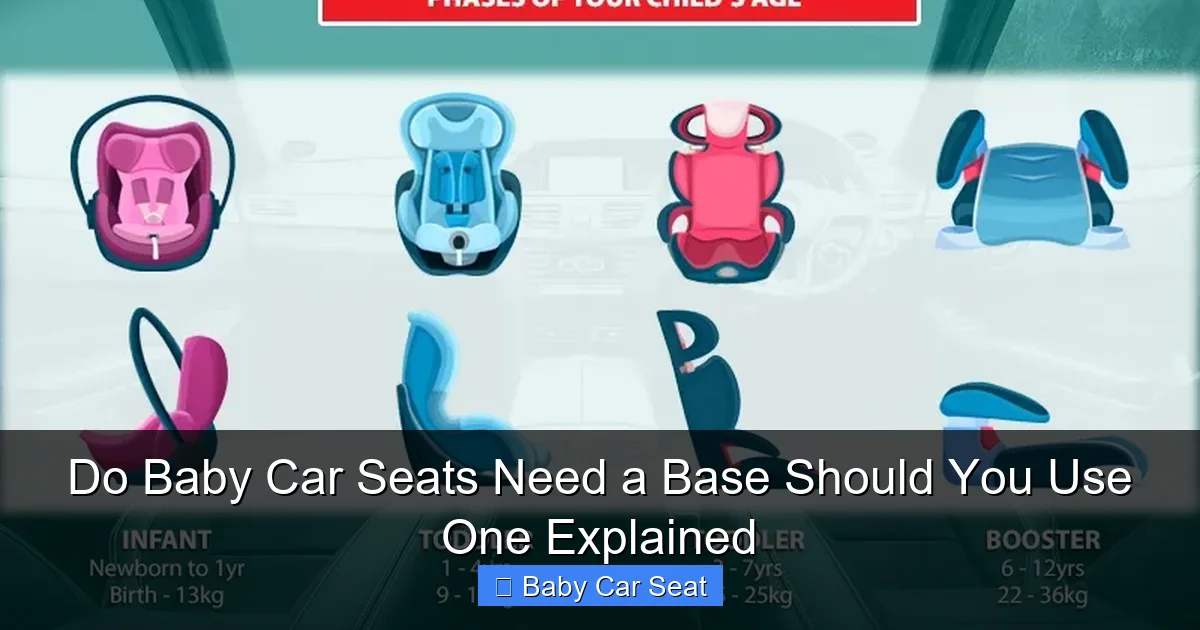
do baby car seats need a base depends on the model. Many infant carrier seats come with a base. The base stays in the car. The carrier clicks into it. Convertible car seats and toddler seats usually do not have a separate base. They install directly with the vehicle seat belt or LATCH. Some brands sell extra bases for travel and for multiple cars.
Visual guide about Do Baby Car Seats Need a Base Should You Use One Explained
Image source: i0.wp.com
Why manufacturers include a base
Manufacturers add a base for three reasons. One: speed. A base lets you click the baby seat in and out quickly. Two: consistency. The base stays installed and keeps the angle and position steady. Three: safety. A well-installed base reduces user error during each trip. Still, not every family needs a base.

Visual guide about Do Baby Car Seats Need a Base Should You Use One Explained
Image source: bygonely.com
Step 1: Decide if you need a base
Start by answering simple questions. The answers will help you decide if a base is right for you.
Visual guide about Do Baby Car Seats Need a Base Should You Use One Explained
Image source: csftl.org
Do you plan to move the seat often?
If you drive a lot between homes or use rideshares, a base saves time. It also reduces installation mistakes each time.
Will the seat be used in multiple cars?
Buying an extra base for each car is an option. That avoids moving the base each day. Many parents buy two bases to make life easier.
Is the seat an infant carrier or a convertible seat?
Infant carriers often come with a base. Convertible seats usually do not. Check your model’s manual to see if it requires a base.
Do you plan to travel by plane or taxi?
For air travel, you can bring an infant seat without its base. Airlines accept the carrier itself. A base is not usable on a plane. For taxis or rideshares, the base can be heavy and awkward. You may prefer to use the seat without the base when needed.
Step 2: If you choose a base — installing it
If you answer that a base is helpful, follow these steps to install it correctly. A proper install reduces crash risk. Take your time. Read your car manual and the car seat manual too.
Find the right spot
Place the base in the back seat. The center seat is often safest. But not all cars have LATCH there. Choose a spot with a good seat belt path and a firm vehicle seat.
Read both manuals
Open the car manual and the seat manual. Find the LATCH weight limits. Note the correct recline angle. Locate the belt path shown in diagrams.
Using LATCH to attach the base
Hook the lower anchors to the base. Pull the strap tight. Push down on the base while tightening. The base should not move more than one inch side-to-side or front-to-back at the belt path.
Using the seat belt to attach the base
Route the vehicle belt through the base belt path. Buckle the belt. Lock the belt if your car has a locking feature. Press down and tighten. Again, check for less than one inch of movement.
Adjust the recline
Set the base angle per the manual. Many bases have an indicator or a level. If your newborn is under a certain weight, use a more reclined position. For older infants, a more upright angle is fine.
Secure the carrier to the base
Place the carrier on the base. Listen for an audible click. Tug the carrier to ensure it is locked. Check the carrier’s harness and fit when the baby is in the seat.
Step 3: If you choose not to use a base — installing the carrier directly
You can often install the carrier without a base. Follow the carrier manual. Use the vehicle seat belt or LATCH anchors directly. This method works well for travel and taxis.
Using the seat belt
Route the lap and shoulder belt through the carrier’s belt path. Buckle the belt. Lock the belt as directed by the vehicle manual. Pull the belt tight until the carrier moves less than one inch at the belt path.
Using LATCH without a base
Some infant carriers have lower anchor points on the carrier. Attach the LATCH connectors directly to the vehicle anchors. Tighten for less than one inch of movement.
Position and angle
Set the carrier at the correct angle. Many carriers have built-in recline indicators. Make sure the baby’s airway stays open. A good rule: the baby’s head should not flop forward.
Step 4: Harnessing and securing your baby
Whether you use a base or not, harness fit matters. Always follow the car seat manual for harness height and tightness.
Harness height
For rear-facing infants the harness straps should be at or just below the shoulders. Adjust as your baby grows.
Harness snugness
Use the pinch test. You should not be able to pinch any harness webbing at the shoulder. The chest clip should be at armpit level.
Step 5: Practical tips and scenarios
Here are real-life tips to make the choice easier and safer.
If you share care with grandparents
Consider an extra base for the grandparent’s car. It speeds transfers and keeps installs correct.
For rideshare and taxis
Bring the carrier without the base when possible. The carrier installs with the vehicle seat belt. It is lighter and easier to carry.
Traveling by air
Do not bring the base on the plane. Airlines accept the carrier itself. Use the carrier on the airplane seat if allowed.
Using multiple bases
Buying a second base for a second car is common. It is also cheaper than moving a base often. Confirm compatibility with your carrier model.
Troubleshooting common problems
If something feels wrong, stop and check these common issues. Many problems have quick fixes.
The base rocks or moves too much
Check the tightness. Reinstall with the seat belt or switch to LATCH. Use a rolled towel or pool noodle under the base only if the manual allows it. Do not block airbags or create new hazards.
The carrier won’t click into the base
Inspect the base latch and carrier connectors. Clear any debris. Verify you have the correct base for your carrier model. Sometimes a small plastic tab prevents latching if not aligned.
The seat belt won’t lock
Some belts lock by pulling all the slack and slowly letting the retractor take it. Others require you to use the locking clip or switch to a locking mode. Read the vehicle manual for the belt type.
The infant’s head flops forward
Check the recline angle. Add a rolled receiving blanket only if the manual allows. If the problem persists, consider a newborn insert or a different seat that supports the head better.
The harness is loose
Re-thread the harness if needed. Pull the adjuster strap firmly. Check that the chest clip is at armpit level and the harness is flat and untwisted.
Seats older than six years or recalled
Check the expiration date on the seat. Search for recalls on the manufacturer’s website. Do not use damaged or expired seats. Replace when needed.
Safety checks every ride
Do these quick checks each time you use the seat. They take less than a minute and cut risks.
- Check the tightness at the belt path. Less than one inch of movement is safe.
- Check the recline angle for newborns. Use the built-in indicator.
- Check harness snugness with the pinch test.
- Check the chest clip at armpit level.
- Check that the carrier clicks into the base if you use one.
- Confirm the seat is not expired and has no visible cracks or damage.
Pros and cons: base vs no base
Weigh the pros and cons to match your lifestyle.
Pros of using a base
- Quick in-and-out for the carrier.
- Consistent angle and installation.
- Lower odds of user error on each ride.
Cons of using a base
- Extra weight and bulk to move between cars.
- May cost more if you want bases in multiple cars.
- Not usable on airplanes.
Pros of not using a base
- Less weight to carry for travel and taxis.
- Often cheaper if you don’t buy extra bases.
- Works on planes and in cars without space for a base.
Cons of not using a base
- More chance of installation error each time you install.
- May take longer to secure the seat in the car.
Real example: a week of rides
Here is a short example to show how choices matter.
Monday: You drive one child to day care. The base is in your car. You click the carrier in. The trip is quick.
Tuesday: Your partner uses the same car. No problem. The base stays put. They click the carrier in and go.
Wednesday: You travel on a plane. You carry the carrier only. The base would not fit. You install the carrier with the airline’s rules.
Thursday: You call a rideshare. You bring the carrier but not the base. You secure it with the vehicle belt. The ride is safe.
Friday: Grandparents pick up the baby. You bought a second base for their car. Transfers are fast and safe.
When to skip the base entirely
Skip the base if you travel often. Skip the base if you need to move the seat by hand a lot. Skip the base if your car doesn’t fit the base well. Also skip it if the seat model is designed only for direct installation without a base.
When a base is strongly recommended
Use a base if you want fast transfers. Use a base if you want a consistent install every time. Use a base if you often switch between drivers in the same car. Also use a base if the manual says it is required for the carrier.
Checklist before every ride
Use this short checklist every time:
- Is the seat or base installed tightly? Less than one inch of movement.
- Is the recline angle correct for the baby’s age and weight?
- Is the harness at or below the shoulders for rear-facing?
- Is the harness snug using the pinch test?
- Is the chest clip at armpit level?
- Is the carrier clicked into the correct base (if using one)?
Getting help
If you still ask yourself do baby car seats need a base, ask an expert. Many fire stations and hospitals host car seat check events. Certified Child Passenger Safety Technicians can inspect your install. Bring your car manual and the seat manual. A single check can save lives.
Conclusion
So, do baby car seats need a base? The short answer: not always. Many infant carriers work with or without a base. A base makes life easier and can lower installation errors. But for travel, taxis, and planes, the seat alone works fine when installed correctly. Choose the option that fits your life. Follow the manuals. Do the safety checks. And if in doubt, get a certified check. That way every ride is safer and less stressful for you and your child.
🎥 Related Video: Infant Car Seats vs. Convertible Car Seats – Babylist
📺 Babylist
Confused about the difference between an infant and convertible car seat? Babylist Scout Laura breaks it down to help you …
