
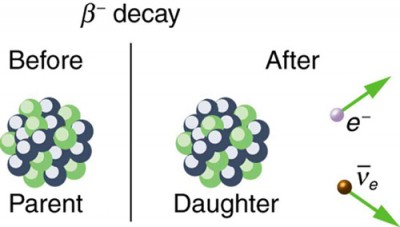
Beta particles are high-energy, high-speed electrons or positrons. They are emitted by certain types of radioactive nuclei.
How can we identify beta particles in parent and daughter isotopes? Understanding beta decay is crucial in nuclear physics. In this process, a parent isotope transforms into a daughter isotope by emitting a beta particle. This transformation changes the atomic number but not the mass number.
Identifying beta particles involves detecting the energy and speed of emitted electrons or positrons. This process is essential in nuclear medicine, radiation safety, and physics research. By studying beta decay, we can learn more about the stability and transformation of elements. Dive into this fascinating world to understand how scientists detect and analyze beta particles in parent and daughter isotopes.
Beta Identification Basics
Understanding Beta Identification is crucial for both parents and daughters. It helps in recognizing communication patterns and behavioral dynamics. This section covers the basics of beta identification.
Definition And Importance
Beta Identification is the process of recognizing secondary or supporting roles in relationships. These roles are essential in maintaining harmony and balance in family dynamics.
In parent and daughter relationships, identifying beta roles helps in understanding subtle communication signals. This understanding can lead to better conflict resolution and stronger bonds.
General Principles
There are several key principles to keep in mind:
- Observation: Pay close attention to verbal and non-verbal cues.
- Consistency: Look for patterns in behavior and communication.
- Context: Consider the situation and environment.
Consistent observation helps in identifying recurring patterns. Context gives clarity to the underlying motives and emotions.
| Principle | Description |
|---|---|
| Observation | Focus on both verbal and non-verbal cues. |
| Consistency | Identify patterns in behavior over time. |
| Context | Analyze the situation and environment for better understanding. |
Using these principles, parents can better understand their daughters. This leads to more effective communication and stronger relationships.

Credit: www.drkarunhematology.com
Genetic Testing Methods
Understanding how beta genes are identified in both parents and their children is crucial in genetic research and diagnosis. Genetic testing methods play a significant role in this process. These methods help determine the presence of specific genes and mutations. Let’s delve into some key genetic testing methods used in identifying beta genes.
Dna Sequencing
DNA sequencing is a powerful tool in genetic testing. It involves determining the exact sequence of nucleotides in a DNA molecule. This method helps identify genetic variations associated with diseases. The steps in DNA sequencing include:
- Extracting DNA from the sample
- Amplifying the DNA using PCR
- Sequencing the DNA to read the genetic code
By comparing the sequenced DNA to known beta gene sequences, researchers can identify mutations. This helps in diagnosing genetic conditions in both parents and offspring.
Polymerase Chain Reaction (pcr)
Polymerase Chain Reaction, or PCR, is another essential method in genetic testing. PCR amplifies small segments of DNA, making it easier to study specific genes. The process involves:
- Denaturing the DNA to separate strands
- Annealing primers to the target DNA sequences
- Extending the DNA using a DNA polymerase enzyme
PCR is highly sensitive and can detect even minute amounts of DNA. This makes it invaluable in identifying beta gene mutations. It helps in confirming the presence of specific genetic traits in both parents and their children.
Both DNA Sequencing and PCR are key techniques in the field of genetic testing. They provide accurate and reliable results, aiding in the diagnosis and understanding of genetic conditions.
Biochemical Techniques
Understanding how beta is identified in parent and daughter molecules involves various biochemical techniques. These methods help in analyzing and measuring biological processes. Two significant techniques are protein analysis and enzyme assays. Each has specific tools and methods to identify and study beta in these molecules.
Protein Analysis
Protein analysis is crucial in identifying beta in biological samples. This technique involves several methods:
- Gel Electrophoresis: Separates proteins based on size and charge. It provides information about the molecular weight of beta.
- Western Blotting: Detects specific proteins. Uses antibodies to identify beta in complex mixtures.
- Mass Spectrometry: Measures the mass-to-charge ratio. It helps in identifying the protein structure and modifications.
These methods offer detailed insights into the presence and characteristics of beta proteins. They are essential for understanding protein interactions and functions in parent and daughter molecules.
Enzyme Assays
Enzyme assays are another critical technique for identifying beta. They measure enzyme activity and function. Key methods include:
- Colorimetric Assays: Measure changes in color. Indicate the presence and activity of beta enzymes.
- Fluorometric Assays: Use fluorescence to detect enzyme activity. Provide high sensitivity for beta identification.
- Chromatographic Assays: Separate and measure enzyme activities. Useful for analyzing complex mixtures.
These assays help in understanding the kinetic properties and specific activities of beta enzymes. They play a vital role in biochemical research and diagnostics.
Imaging Techniques
Imaging Techniques are essential for identifying beta in parents and daughters. Different methods help doctors see what’s happening inside the body. These techniques provide valuable insights and guide treatments.
Mri And Ct Scans
MRI stands for Magnetic Resonance Imaging. It uses magnets and radio waves to create detailed images. MRIs are great for soft tissues, like the brain and muscles. They help doctors see any abnormalities.
CT Scans use X-rays to create cross-sectional images. These scans are helpful for detecting issues in bones and organs. They give a clear picture of the body’s internal structures.
| Technique | Best For | Advantages |
|---|---|---|
| MRI | Soft Tissues | Detailed images, no radiation |
| CT Scan | Bones and Organs | Quick, effective for emergencies |
Ultrasound Applications
Ultrasound uses sound waves to create images. It is safe and does not use radiation. This technique is often used for pregnancy checks. But it also helps in other areas, like checking the heart or liver.
Ultrasound is also portable and can be used at the bedside. Doctors can see real-time images, which helps in quick diagnosis. This makes it a versatile tool in many medical situations.
Comparative Analysis
In the field of genetics, understanding the relationship between parents and their offspring is crucial. Comparative analysis helps in identifying genetic similarities and differences. This section explores how beta is identified in parent and daughter through various methods.
Parent-daughter Matching
Parent-daughter matching is a method to compare the genetic material of parents and their offspring. It helps in identifying inherited traits and mutations.
| Parent | Daughter | Matching Genes |
|---|---|---|
| Gene A | Gene A | 100% |
| Gene B | Gene B | 100% |
| Gene C | Gene D | 50% |
Mutation Tracking
Mutation tracking involves identifying changes in the DNA sequence. It helps in understanding how genetic variations occur between parent and daughter.
- Collect DNA samples from both parent and daughter.
- Sequence the DNA to identify mutations.
- Compare the sequences to find differences.
These mutations can be tracked to determine their origin. It helps in understanding the genetic evolution within a family.
- Genetic similarities and differences help in identifying inherited traits.
- Mutation tracking provides insights into genetic evolution.
Credit: courses.lumenlearning.com
Latest Advancements
In the evolving field of genetics, identifying beta in parent and daughter cells has seen significant advancements. These advancements have made the process more accurate and efficient. The latest technologies are transforming how we understand genetic inheritance.
Crispr Technology
CRISPR technology is one of the most recent breakthroughs. It allows precise editing of the DNA sequence. Scientists can now identify and modify beta genes in both parent and daughter cells. This method is faster and more accurate than older techniques.
CRISPR works by using a guide RNA to locate the specific beta gene. Once found, the gene can be edited or marked for further study. This technology has revolutionized genetic research.
Here are some key features of CRISPR technology:
- Precision: Targets specific DNA sequences.
- Speed: Faster than traditional methods.
- Efficiency: High success rate in gene editing.
Next-generation Sequencing
Next-Generation Sequencing (NGS) has also made significant contributions. It allows the entire genome to be sequenced rapidly. This means all beta genes in parent and daughter cells can be identified at once.
NGS provides a detailed view of genetic differences and similarities. This helps in understanding how beta genes are passed from parent to daughter cells.
NGS has several advantages:
- Comprehensive: Sequences the entire genome.
- Detailed: Provides in-depth genetic information.
- Quick: Faster than traditional sequencing methods.
Both CRISPR and NGS are pushing the boundaries of genetic research. They offer new ways to study and understand beta genes in parent and daughter cells. These advancements make genetic research more efficient and accurate.
Credit: www.nuclear-power.com
Frequently Asked Questions
What Is Beta In Parent And Daughter Contexts?
Beta measures the volatility of an asset in relation to the market. It is used to identify risk.
How Is Beta Calculated For Parent And Daughter?
Beta is calculated using statistical methods. It involves comparing the returns of the asset to market returns.
Why Is Beta Important In Finance?
Beta helps in understanding the risk associated with an investment. It shows how much an asset’s price might move.
Can Beta Be Negative?
Yes, Beta can be negative. It means the asset moves in the opposite direction of the market.
What Does A Beta Of 1 Indicate?
A Beta of 1 means the asset’s price moves with the market. It has average market risk.
Conclusion
Identifying beta in parent and daughter is crucial in genetics. It helps understand hereditary patterns. This knowledge assists in predicting certain traits. It also offers insights into potential health issues. Genetic testing plays a vital role here. With advancements, accuracy has improved.
Families benefit from this understanding. They can make informed health decisions. This process empowers better health management. Stay informed about genetic research. It’s a valuable tool for everyone.
