
Learn safe limits for infant sleep in car seats. This guide explains how long can baby sleep in car seat, why limits matter, and clear steps to protect your child on drives. Simple tips and trouble‑shooting help you act fast and confidently.
Key Takeaways
- Short naps only: Limit sleep in a car seat to brief periods, ideally under 30 minutes for newborns and infants.
- Watch positioning: A slumped head or chin-to-chest is unsafe; check the harness and head support often.
- Move baby if needed: Transfer to a flat, firm sleep surface when you reach your destination.
- Use while traveling: Car seats are fine for travel, but not for routine sleep outside the car.
- Know warning signs: Look for breathing changes, color changes, or poor responsiveness and act immediately.
- Follow guidelines: Combine manufacturer rules, AAP advice, and pediatric guidance for safest practice.
Introduction
This guide teaches parents and caregivers what to do about how long can baby sleep in car seat. You will learn safe time limits. You will learn signs to watch. You will learn step‑by‑step moves to keep baby safe. The language is simple. The steps are clear. Read on for easy, practical help.
Why this matters
Car seats save lives in crashes. But they are not designed for long sleep outside a car. Babies have soft, flexible airways. When a baby slumps, the chin may fall toward the chest. That can narrow the airway. The risk is greatest for newborns and preemies. That is why we ask: how long can baby sleep in car seat safely? Knowing the answer helps prevent danger.

Visual guide about How Long Can Baby Sleep in Car Seat Safely Explained
Image source: thumbs.dreamstime.com
Quick rule of thumb
Keep it short. For most newborns and infants, try to limit sleep in a car seat to no more than 30 minutes at a time. For older infants with strong head control, short naps up to 60 minutes may be okay. These are general limits. Always watch your baby. If you have a high‑risk infant, talk to your pediatrician.

Visual guide about How Long Can Baby Sleep in Car Seat Safely Explained
Image source: img.freepik.com
Step-by-step: How to handle car seat sleep safely
Use these steps when asking how long can baby sleep in car seat on your trips.
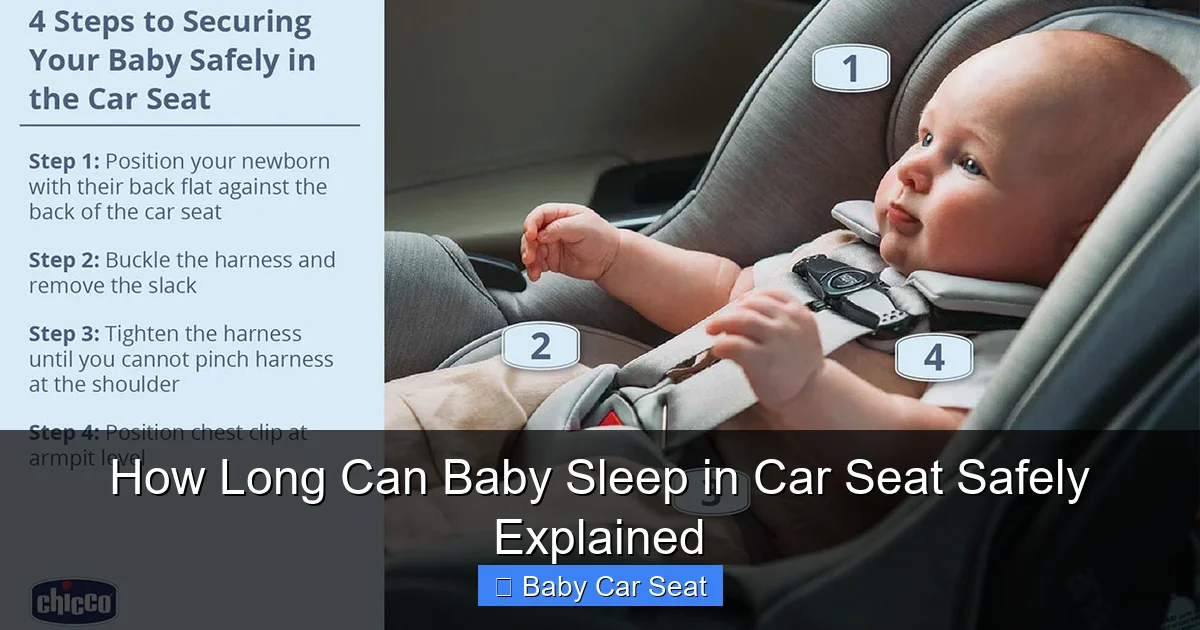
Visual guide about How Long Can Baby Sleep in Car Seat Safely Explained
Image source: chiccousa.com
Step 1: Prepare before the trip
Check the car seat manual. Install the seat correctly. Make sure the harness fits snugly. Keep the chest clip at armpit level. Use a rear‑facing seat for infants. A secure fit reduces slumping. A tight harness helps keep the head aligned.
Step 2: Plan for short sleep windows
Set expectations. Plan breaks every 20 to 30 minutes for newborns. For babies older than 6 months, plan a stop at about 45 to 60 minutes. This answers the common question: how long can baby sleep in car seat during a drive? Short stops let you check baby’s position and breathing.
Step 3: Check position every stop
Stop safely. Open the car door. Look at the baby’s face and chest. Make sure the chin is not pressed to the chest. Ensure the nose and mouth are clear. If the head is forward, fix it or move the baby to a flat surface.
Step 4: Move baby if needed
If the baby is very sleepy or slept longer than planned, transfer to a safe sleep spot right away. Always move a sleeping infant from the car seat to a firm, flat crib or bassinet when you arrive. This is part of the answer to how long can baby sleep in car seat once you are off the road.
Step 5: Keep baby monitored while driving
Use a rearview mirror or a baby car mirror to watch the face. Have a travel partner check on the baby. Never rely on a camera alone. If you notice unusual breathing or color, stop and check immediately.
Step 6: Avoid aftermarket accessories that change position
Do not add products that change how the seat supports the baby. Pillows, wedges, or inserts not made by the seat maker can change crash performance and increase slumping. Follow the manufacturer’s guidance on approved supports. This is often asked in the context of how long can baby sleep in car seat safely.
H3 Sub-steps: How to transfer baby safely
Step A: Stop the car in a safe place
Turn off the engine. Put the car in park. Engage the parking brake. Open the door. Remove the baby carefully.
Step B: Undo the harness correctly
Loosen and unbuckle. Slide the straps off one shoulder at a time. Keep one hand under the baby’s back for support. Do not twist or jerk the baby out quickly.
Step C: Place baby on a flat surface
Place the baby on a firm, flat sleep surface. Use a crib, bassinet, or a portable flat baby bed. Make sure the sleep area is clear of blankets and soft items.
Practical tips and examples
Here are everyday tips you can use now when thinking about how long can baby sleep in car seat.
- Example 1 — Short errand: If you’re running a 10‑minute errand, it is fine if baby snoozes in the seat. Check on return.
- Example 2 — Long drive: For a 2‑hour trip with a newborn, stop every 20–30 minutes. Remove baby, check breathing and position, then resume.
- Example 3 — Airport travel: During flights, car seats are allowed in airplanes. But aim to move baby to a flat sleep surface at your destination.
- Rule for preemies: Preterm infants have higher risk. Ask the pediatrician before long car seat sleep. They may advise limits or additional monitoring.
How the car seat affects breathing
The seat cradles the baby. That is good in a crash. But the angle can bend the airway. A chin‑to‑chest position narrows the upper airway. Babies cannot lift their heads well. This is why you must know how long can baby sleep in car seat before risk grows.
Troubleshooting: What to do if you see trouble
If you worry about how long can baby sleep in car seat and something seems off, follow these steps.
Symptom: Baby breathing fast or slow
Stop and remove baby. Check responsiveness. If baby is very sleepy but wakes to touch, move to a flat surface. If breathing is very fast, very slow, or irregular, call emergency services right away.
Symptom: Baby looks blue or pale
This is an emergency. Remove baby and begin emergency care. Call emergency services. If you are trained, start infant CPR if needed.
Symptom: Baby can’t be woken
This is an emergency. Remove from seat, place on flat surface, and call for help. Do not assume the baby is just in a deep sleep.
Symptom: Head slumped forward
Stop and fix the position. Tighten the harness. Add only approved padding. If you can’t fix it, remove baby and let them rest flat.
Special situations
Not all situations are the same. Adjust your plan for these cases.
Newborns (0–2 months)
Newborns have weak necks and small airways. Limit car seat sleep to short stints. Many experts say try not to exceed 20–30 minutes. Always check often.
Preterm or medically fragile infants
They may need extra monitoring. Talk to the pediatrician before long car seat use. Some babies need a medical exam or special devices.
Older infants (6–12 months)
They have better head control. You may allow longer naps in the seat. Still, avoid making it a regular sleep place. Move them to a flat surface when you can.
Car seat on stroller frames
The risk is similar. The seat angle may change. Always watch for slumping. Use a stroller that keeps the seat upright and check the baby often.
What the experts say
The American Academy of Pediatrics (AAP) advises that car seats are for travel. They are not a safe substitute for a place to sleep at home. Pediatricians recommend moving infants to a flat, firm sleep surface as soon as possible. This advice helps answer the question: how long can baby sleep in car seat? Use it as a guide.
Car seat choice and setup
Choose a seat that fits your child. A rear‑facing seat is best for young infants. Read the manual. Follow weight and height limits. A well‑installed seat reduces movement that can cause slumping and breathing problems. Proper installation is part of safe answers to how long can baby sleep in car seat.
Using car seat accessories safely
Only use accessories approved by the seat maker. Do not add aftermarket products that tilt the baby or add padding not tested with the seat. These can change crash performance and breathing position. If you need more head support, look for products labeled as compatible by the manufacturer.
Night driving and long trips
On long trips, stop regularly. Plan overnight stops in a hotel with a crib or a safe bassinet. Use the car seat only while the car is moving. When you take long drives, have a travel partner who can watch the baby and swap driving duties.
Signs it’s time to get baby out
- Chin touches chest or head slumps.
- Breathing looks labored or unusual.
- Skin turns pale, blue, or gray.
- Baby is very limp or hard to wake.
- Baby slept longer than your planned limit.
How to build habits that keep baby safe
Make a plan before trips. Set timers for regular checks. Teach caregivers your rules. Keep a clear, calm process for stopping and checking. These habits answer the constant question: how long can baby sleep in car seat safely?
Conclusion
Car seats protect babies in cars. But they are not made for long sleep outside the car. Keep sleep in a car seat short. For newborns, aim for under 30 minutes. For older infants, keep naps brief and check often. Move baby to a flat, firm sleep surface at your destination. Watch for slumping and breathing changes. When in doubt, stop and check. Following these steps helps you balance travel needs with safety and gives a clear answer to how long can baby sleep in car seat in most situations.
🎥 Related Video: Can my baby sleep in a car seat, bouncy seat, or swing?
📺 Premier Health
Sheree Young, RN, CPLC explains safe sleep for babies in car seats, bouncy seats and swings. Find more answers to frequently …
