
How often to sterilize baby bottles depends on your baby’s age, health, and feeding method. This guide gives clear schedules, step-by-step sterilizing methods, and practical tips to keep bottles safe and clean.
Key Takeaways
- Point 1: Newborns need the most care; sterilize daily for the first few months.
- Point 2: For older babies, sterilize less often if you clean bottles well after each use.
- Point 3: Use a method you trust: boiling, steam, microwave, chemical, or UV all work when used correctly.
- Point 4: Sterilize after illness and when water quality is poor.
- Point 5: Check for wear and replace bottles and nipples on a schedule.
- Point 6: Follow simple drying and storage rules to keep bottles sterile longer.
Introduction
This guide explains how often to sterilize baby bottles. You will learn when to sterilize, which methods work, and how to do each method step by step. You will also get tips, examples, and troubleshooting help. The goal is simple. Keep bottles safe for your baby.
Why the question “how often to sterilize baby bottles” matters
Babies have weak immune systems. Germs on bottles can cause tummy bugs. Knowing how often to sterilize baby bottles helps prevent illness. It also cuts stress for parents. You will learn clear rules and flexible options.
Visual guide about How Often to Sterilize Baby Bottles Expert Guide Now
Image source: cdn.shopify.com
Basic rules: When to sterilize
Start with a few simple rules. Use them to set your routine for how often to sterilize baby bottles.

Visual guide about How Often to Sterilize Baby Bottles Expert Guide Now
Image source: cdn2.momjunction.com
- Sterilize daily for newborns and preemies.
- Sterilize after any sickness.
- Sterilize when tap water is unsafe.
- For older babies, clean well and sterilize less often.
Step 1: Decide your schedule
Choosing a schedule is the first step in deciding how often to sterilize baby bottles. Use your baby’s age and health to guide you.
Visual guide about How Often to Sterilize Baby Bottles Expert Guide Now
Image source: cdn.shortpixel.ai
Newborns and preemies (0–3 months)
Sterilize all bottles and nipples every day. Do this until the baby reaches 3 months or the doctor says otherwise. This is the safest plan for very young babies.
3–6 months
You can start to reduce how often you sterilize. Clean bottles after each use. Sterilize daily or every few days if your home and water are clean.
6+ months
When babies start solids, their immune systems are stronger. You can sterilize less often. Daily cleaning and weekly sterilizing often works. Still sterilize after illness.
Special cases
If your baby was born early, has a weak immune system, or has had infections, sterilize more often. Ask your pediatrician if you are not sure.
Step 2: Clean before you sterilize
Cleaning comes before sterilizing. Sterilizing dirty bottles is not enough. Good cleaning reduces germs and helps sterilize work well.
Rinse right away
Rinse bottles and nipples right after feeding. Use warm water to remove milk residue. This stops buildup and bad smell.
Use a brush
Use a bottle brush for the inside. Use a nipple brush for the teat. Clean all parts. Pay attention to seams and valves.
Use soap and warm water
Wash with mild dish soap and warm water. Rinse well. No soap left behind. This step helps when you determine how often to sterilize baby bottles.
Step 3: Choose a sterilizing method
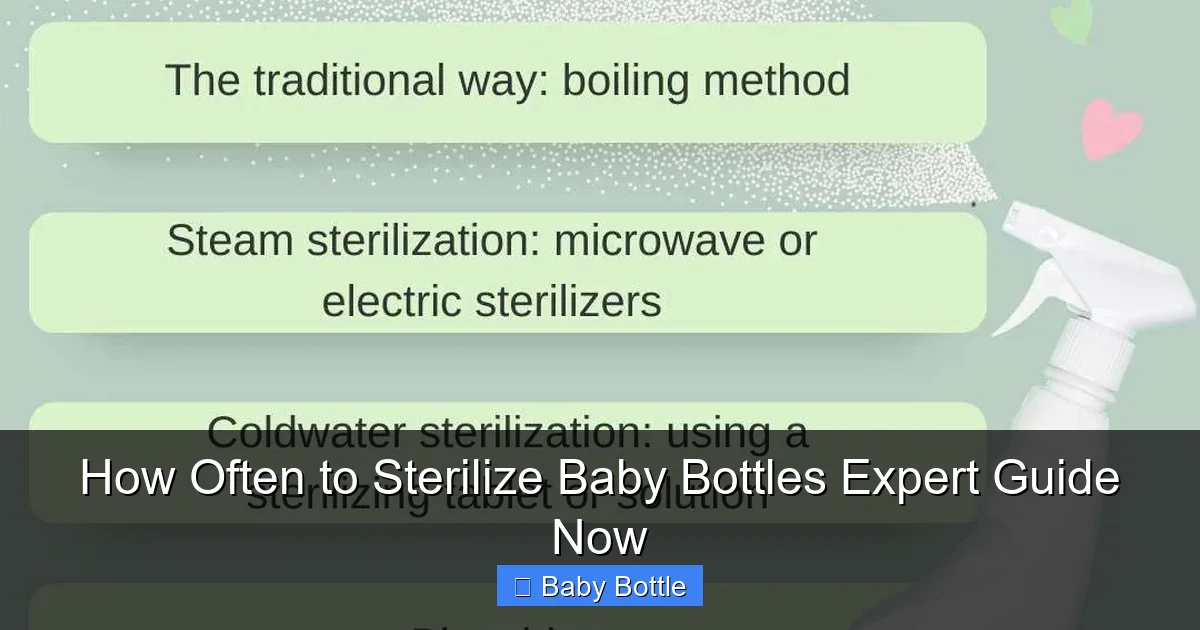
There are five main methods. Each is safe if used right. Pick the one that fits your life. All answer the question of how often to sterilize baby bottles.
Boiling
Boiling is simple and cheap. It uses no special gear.
- Fill a large pot with water.
- Submerge bottles, nipples, and parts.
- Bring to a rolling boil for 5 minutes.
- Turn off heat and remove with clean tongs.
Boiling works well at home and when traveling.
Electric steam sterilizers
These units are fast. They use steam to kill germs.
- Place cleaned parts in the sterilizer.
- Add water as the machine says.
- Run the cycle (usually 5–15 minutes).
- Leave parts in the closed unit until needed.
Steam sterilizers are easy for daily use. They help parents stick to a schedule for how often to sterilize baby bottles.
Microwave steam sterilizers
Fit for small kitchens. Quick and cheap.
- Place parts in the microwave sterilizer box or bag.
- Add water and microwave per instructions.
- Carefully remove hot items afterwards.
Microwave sterilizers are handy, especially for day trips or short notice.
Cold water sterilizing solutions
Use for travel or where power is limited. These are chemical solutions or tablets that kill germs in cold water.
- Mix solution in a clean container.
- Soak parts for the recommended time (often 30 minutes).
- Rinse only if the product says to.
These are safe when used exactly as directed.
UV sterilizers
Modern and fast. Use ultraviolet light to kill germs. These units are more expensive.
- Place clean parts in the UV unit.
- Run the cycle as instructed (usually 5–10 minutes).
UV sterilizers are useful for busy parents who want fast results.
Step 4: Dry and store properly
Drying and storage keep bottles safe after sterilizing. Even sterilized bottles can get contaminated if stored poorly.
Air dry on a clean rack
Use a clean drying rack. Let air dry completely. Do not use a towel. Towels can carry germs and lint.
Store in a covered container
Keep dry bottles in a closed container or the sterilizer if it stays closed. This keeps dust and bugs away.
Use clean hands and tongs
When handling sterilized parts, use clean hands or tongs. Touching the inside of a bottle can reintroduce germs.
Step 5: Set a realistic routine
Now decide your routine for how often to sterilize baby bottles. Match it to your life. Here are sample routines you can copy.
Sample routine A — Newborn
- Clean after every feed.
- Sterilize daily (boil or steam).
- Air dry and store covered.
Sample routine B — 3–6 months
- Clean after every feed.
- Sterilize every 2–3 days or weekly if bottles are used only at home.
- Sterilize after any illness.
Sample routine C — 6+ months
- Clean after every feed.
- Sterilize weekly or as needed.
- Sanitize if baby has infections or cuts in the mouth.
Practical tips and examples
Here are tips parents use every day. They help you follow your plan for how often to sterilize baby bottles.
- Label sterilized bottles with the date if you store more than one day.
- Use a small electric sterilizer on the counter to save time.
- Keep a travel set of bottles and a cold-water sanitizer for outings.
- Replace nipples every 2–3 months or sooner if cracked.
- Inspect bottles for scratches. Scratches can hide bacteria. Replace if scratched.
- If you pump breast milk, sterilize pump parts that touch milk often.
Troubleshooting
Sometimes things don’t go to plan. Here are common problems and fixes when thinking about how often to sterilize baby bottles.
Problem: Bottles smell after sterilizing
Cause: Mineral buildup or leftover milk. Fix: Clean again with vinegar or baking soda, then boil for 5 minutes. Rinse well.
Problem: White residue or spots
Cause: Hard water minerals. Fix: Use distilled water for final rinse or use vinegar to remove buildup. Or use a steam sterilizer that uses distilled water.
Problem: Sterilizer not heating correctly
Cause: Low water or power issue. Fix: Check the water level and power. Clean the unit per instructions. Replace if broken.
Problem: Baby still sick after sterilizing
Cause: Illness may come from other sources. Fix: Sterilize more often. Clean hands and surfaces. Talk to your pediatrician.
Problem: Bottles get cloudy or scratched
Cause: Dishwasher damage or rough cleaning. Fix: Hand wash gently. Replace cloudy or scratched bottles.
Safety notes and common myths
There are myths about how often to sterilize baby bottles. Here are clear facts.
- Myth: Sterilizing every feed is always required. Fact: Not always. Newborns need more care. Older babies can do with less if bottles are cleaned well.
- Myth: Soap and hot water is enough for newborns. Fact: For newborns and preemies, sterilizing adds protection.
- Myth: You must rinse after chemical sterilizing. Fact: Follow product directions. Some say no rinse, some say rinse.
When to replace bottles and nipples
Replacement matters. Even clean bottles can fail if damaged. Replace parts on a schedule.
- Replace nipples every 2–3 months or when worn.
- Replace plastic bottles if scratched, clouded, or warped.
- Replace silicone nipples if they change shape or feel sticky.
- Check manufacturer guidance for each product.
What pediatricians say
Most pediatricians suggest sterilizing daily for the first few months. After that, clean well and sterilize less often. Always sterilize after illness. If unsure, call your baby’s doctor. Their advice will match your baby’s needs.
Cost and time tips
Sterilizing does not have to be costly. Boiling is free. Steam sterilizers save time. Microwaves are quick. Cold water solutions help on the go. Pick the method that fits your budget and schedule. That makes you more likely to follow your plan for how often to sterilize baby bottles.
Checklist: Daily and weekly tasks
Use this simple checklist to stay on track.
- Daily: Wash bottles after each use. Air dry on clean rack.
- Daily (newborn): Sterilize all feeding parts.
- Weekly (older baby): Sterilize all bottles and nipples.
- After illness: Sterilize everything used for feeding.
- Monthly: Inspect and replace any worn parts.
Conclusion
Deciding how often to sterilize baby bottles is easy with rules and a routine. Newborns and preemies need daily sterilizing. Older babies need less, but still need good cleaning and occasional sterilizing. Use a method you trust. Dry and store properly. Replace parts when needed. If you are ever unsure, ask your pediatrician. A clear plan reduces stress and keeps your baby safe.
🎥 Related Video: Bottle feeding! Risks & solutions!! #mommy #breastfeeding #newmom #parenting #babyledweaning
📺 Bacchonkidoc Madhavi
