
Natural diaper alternatives can help you cut waste, save money, and protect your baby’s skin. This guide walks you through cloth diapers, biodegradable disposables, elimination communication, and hybrid systems, with simple steps to get started. Learn how to choose the best option for your lifestyle, avoid common mistakes, and transition away from conventional disposable diapers with confidence.
Key Takeaways
- Point 1: Natural diaper alternatives include cloth diapers, biodegradable disposables, and elimination communication, giving eco conscious parents flexible options.
- Point 2: Switching from conventional disposable diapers can cut landfill waste, reduce chemicals on your baby’s skin, and often lower long-term costs.
- Point 3: Cloth diapers are the most popular natural diaper alternative and come in modern, easy-to-use styles that work much like disposables.
- Point 4: Biodegradable and plant-based disposable diapers are a good bridge option for families not ready for full-time cloth.
- Point 5: Elimination communication can reduce diaper use dramatically, but it works best when started gradually and with low pressure.
- Point 6: A hybrid approach that mixes several natural diaper alternatives is often the most realistic and sustainable for busy parents.
- Point 7: Planning, the right supplies, and a simple routine are the keys to making natural diaper alternatives work day-to-day.
Introduction: Why Consider Natural Diaper Alternatives?
If you are reading this, you are probably an eco conscious parent who wants to cut waste and protect your baby’s skin. You may feel guilty about how many disposable diapers you throw away each week. Or maybe your baby has sensitive skin, rashes, or allergies. Natural diaper alternatives can help with all of this.
This guide will show you the best natural diaper alternatives for eco conscious parents. You will learn what each option is, how it works, and how to start. We will cover cloth diapers, biodegradable disposable diapers, elimination communication, and hybrid systems. You will also get step-by-step instructions, real-life tips, and simple troubleshooting help.
By the end, you will know how to choose the natural diaper alternatives that fit your lifestyle, your budget, and your baby’s needs. You do not have to be perfect or zero-waste. Small changes still make a big difference.
Step 1: Understand Your Natural Diaper Alternatives
Before you buy anything, it helps to know your options. Natural diaper alternatives sit on a spectrum. Some are very low waste. Some are very low effort. The best choice for you may be a mix of several methods.
Visual guide about Best natural diaper alternatives for eco conscious parents
Image source: marketresearchintellect.com
Cloth Diapers
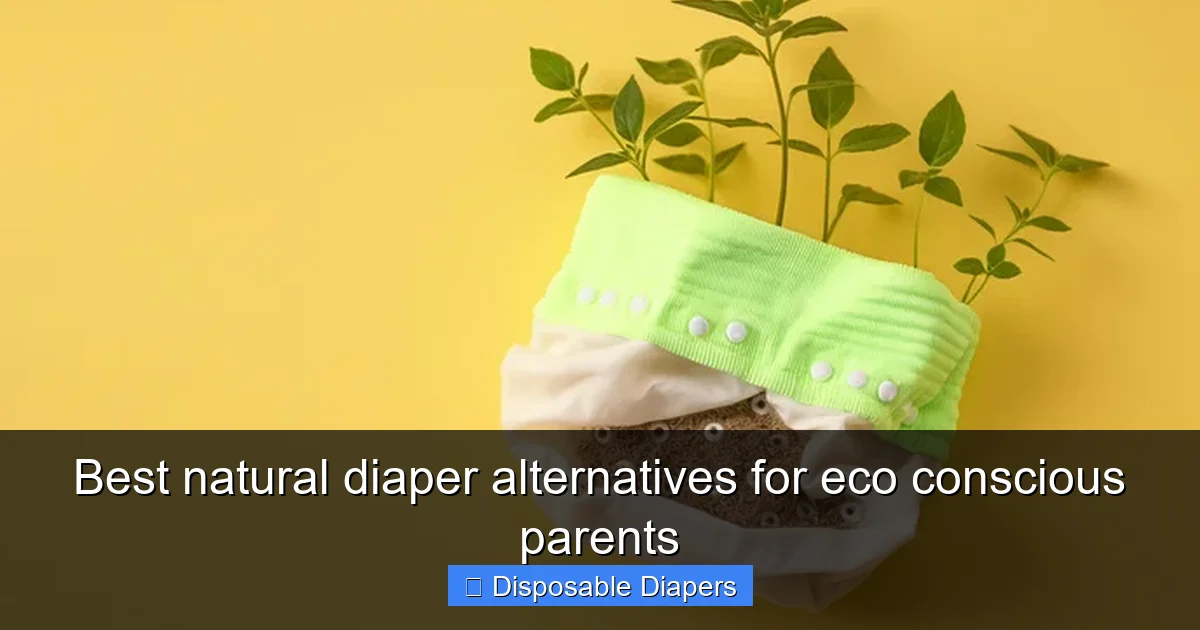
Cloth diapers are the most common natural diaper alternatives. These are reusable diapers you wash and use again. Modern cloth diapers are not like the old days of big safety pins and plastic pants. Today’s styles look and work much like disposable diapers, but they are made from fabric.
Common cloth diaper types include:
- Prefolds and flats: Rectangular pieces of cotton, bamboo, or hemp. You fold them and fasten them with a clip, then cover them with a waterproof cover.
- Pocket diapers: A waterproof outer shell with a pocket inside. You stuff absorbent inserts in the pocket. They fasten with snaps or hook-and-loop like disposables.
- All-in-one diapers (AIOs): The absorbent part and the waterproof shell are sewn together. You use them just like a disposable diaper, then wash.
- Fitted diapers: Shaped like a diaper but made of absorbent fabric. They need a separate waterproof cover.
Cloth diapers are strong natural diaper alternatives because they are reusable for years, and often for more than one child. They reduce waste and can save money over time.
Biodegradable and Plant-Based Disposable Diapers
If full-time cloth feels like too big a jump, biodegradable disposables are easier natural diaper alternatives. These diapers look and work like regular disposable diapers but use more natural materials. Many use plant-based fibers, fewer plastics, and fewer chemicals.
Key features include:
- Plant-based topsheets and cores (like bamboo or wood pulp).
- Fragrance-free and chlorine-free processing.
- Less petroleum-based plastic in the diaper.
Note that “biodegradable” does not always mean they will break down quickly in a landfill. Still, they are often gentler on baby skin and use more renewable materials. They are helpful natural diaper alternatives for parents who want less waste but still need convenience.
Hybrid Diapers
Hybrid diapers sit between cloth and disposable. They use a reusable outer cover with either washable inserts or disposable inserts. You can switch between the two as needed.
These natural diaper alternatives are good for parents who want flexibility. You can use washable inserts at home and compostable or plant-based inserts when out. This cuts waste but still keeps your routine simple.
Elimination Communication (EC)
Elimination communication is a very different kind of natural diaper alternative. Instead of relying on diapers all the time, you learn your baby’s cues and offer a potty or sink at certain times. You still use diapers as a backup, but usually fewer of them.
EC does not mean your baby is fully potty trained as a newborn. It is more like gentle toilet learning from birth. This method can work with cloth or biodegradable diapers as backup. Many eco conscious parents use elimination communication to reduce diaper use and help baby stay aware of their body.
Other Low-Waste Options
Some families use extra methods to support their natural diaper alternatives:
- Reusable cloth wipes: Washable wipes instead of disposable wipes.
- Diaper-free time: Letting baby play on a waterproof mat without a diaper for short periods.
- Training pants and underwear: For older babies and toddlers, to cut diaper use.
You do not have to use every option. Choose the natural diaper alternatives that feel realistic for your home and schedule.
Step 2: Choose the Right Option for Your Family
Now that you know the main natural diaper alternatives, you need to decide what fits your life. Ask yourself a few simple questions.
Visual guide about Best natural diaper alternatives for eco conscious parents
Image source: wellnessinspirationhub.com
Question 1: How Much Laundry Can You Handle?
Cloth diapers and reusable wipes mean more laundry. This does not have to be hard, but it is regular work. If you can wash every 2–3 days, cloth is a strong choice. If laundry is already stressful, you may prefer biodegradable disposables or a hybrid system.
Question 2: What Is Your Budget?
Cloth diapers cost more at the start, but less over time. Biodegradable disposables cost more per diaper than regular disposables. A hybrid system can balance costs. Think about what you can spend up front and month to month.
Question 3: What Is Your Childcare Situation?
Some daycare centers do not accept cloth diapers or certain natural diaper alternatives. Others are very open to them. Ask your caregiver what they allow. You might use cloth at home and plant-based disposable diapers at daycare. That is still a big win.
Question 4: How Important Is Convenience Right Now?
Be honest about your energy level. Newborn days can be intense. You can start with simple natural diaper alternatives, like plant-based disposable diapers and reusable wipes, and add cloth later. There is no one “right” way to be an eco conscious parent.
Sample Plans for Different Families
- Busy working parents: Biodegradable disposables for daycare and outings, cloth diapers at night and weekends.
- Stay-at-home parent with support: Mostly cloth diapers, some elimination communication, reusable wipes, and diaper-free time.
- Apartment living with limited laundry: Hybrid diapers with disposable inserts plus a small set of cloth for home.
Mix and match natural diaper alternatives until you find a system that feels smooth and sustainable.
Step 3: How to Get Started with Cloth Diapers
Cloth diapers are one of the most popular natural diaper alternatives. Here is how to start without feeling overwhelmed.
Visual guide about Best natural diaper alternatives for eco conscious parents
Image source: multimodalityiniran.com
Gather Your Supplies
For full-time cloth diapering one baby, you will usually need:
- 18–24 cloth diapers (or shells plus inserts).
- 24–36 cloth wipes (optional but helpful).
- 2 large waterproof diaper pail liners.
- 2–3 small wet bags for outings.
- Liner sheets (optional) to make poop cleanup easier.
- Cloth-safe diaper cream (zinc-free or labeled cloth-safe).
You can start with fewer diapers and build your stash as you go. Many eco conscious parents buy some diapers new and some second-hand.
Set Up Your Diaper Changing Station
Make it easy to use your natural diaper alternatives by setting up a simple station:
- Keep clean cloth diapers, wipes, and liners within reach.
- Place a diaper pail with a waterproof liner next to the changing area.
- Pre-moisten cloth wipes with water or keep a spray bottle nearby.
- Have a small basket for creams and spare covers.
When your station is ready, you are much more likely to stick with cloth as your main natural diaper alternative.
How to Put On a Cloth Diaper
Putting on cloth is almost like using a disposable:
- Lay baby on the clean diaper.
- Pull the front up between the legs.
- Fasten the snaps or hook-and-loop at the waist.
- Check the fit around the legs and back. It should be snug but not tight.
If you use prefolds or flats, you will fold them first, then fasten with a clip, then add a cover. It may take a few tries to find your favorite fold. Many parents like a simple pad fold (folded in thirds like a long rectangle).
Washing Cloth Diapers
Washing is the part that worries many new users of natural diaper alternatives. But the routine can be simple.
A basic wash routine looks like this:
- Step 1: Store dirty diapers dry. Shake solids into the toilet if your baby is on solids. Place diapers in a pail with a liner. No soaking needed.
- Step 2: Pre-rinse or short wash. Run a cold or warm cycle with no or little detergent to remove most urine and poop.
- Step 3: Main wash. Run a hot, long cycle with a full dose of detergent. Use a mainstream detergent without fabric softeners.
- Step 4: Dry. Line dry in the sun when you can, or tumble dry on low to medium. Avoid high heat for covers and shells.
Once you set your wash routine, cloth diapers become one of the easiest natural diaper alternatives to maintain.
Cloth Diaper Tips
- Do not use fabric softener. It can coat the fibers and reduce absorbency.
- If diapers smell after washing, you may need more water, more detergent, or a longer wash.
- Use fleece or disposable liners if you need easier cleanup or if you use diaper cream.
- Adjust the rise snaps on one-size diapers as your baby grows.
Step 4: Using Biodegradable and Plant-Based Disposables
Biodegradable disposables are simpler natural diaper alternatives if you want convenience with less impact and fewer chemicals.
Choosing a Brand
When shopping, look for:
- Clear labeling about materials (bamboo, plant-based, FSC-certified pulp).
- No added fragrance, lotions, or dyes if your baby has sensitive skin.
- Chlorine-free processing (often labeled TCF or ECF).
- Honest claims about biodegradability and compostability.
Remember that even the best natural diaper alternatives in disposable form still create some waste. But they often use more renewable materials and can be gentler on your baby.
How to Use Them Effectively
Use them just like regular disposable diapers. To reduce impact even more, you can:
- Use them mainly for nights, travel, or daycare, and cloth at home.
- Change as soon as they are wet to protect your baby’s skin.
- Pair them with reusable wipes to cut more waste.
Some cities allow industrial composting of certain brands. Check your local rules before putting any natural diaper alternatives in compost.
Step 5: Trying Elimination Communication (EC) Gently
Elimination communication is one of the most unique natural diaper alternatives. You do not have to be diaper-free all day. You can start small and use it to cut diaper use and raise body awareness.
Start with “Easy Catches”
Easy catches are times when your baby is most likely to pee or poop:
- Right after waking up.
- Right after feeding.
- During or just after diaper changes.
At these times, hold your baby over a potty, sink, or toilet. Support their back and thighs. Make a cue sound, like “psss.” If they go, great. If not, that is okay. Put the diaper back on.
Use Back-Up Diapers
Even with EC, most eco conscious parents still use diapers. Cloth diapers or plant-based disposables work well as backup. You can line them with a soft cloth or training pants for older babies.
Keep It Stress-Free
- Do not pressure your baby or yourself.
- Think of EC as communication, not strict training.
- Celebrate small wins. Even one “catch” a day reduces diaper use.
Used this way, elimination communication becomes one of the most flexible natural diaper alternatives. It works alongside any diaper system you choose.
Step 6: Build a Hybrid Natural Diaper System
Most eco conscious parents do not use just one method. They use a mix of natural diaper alternatives that change over time.
Example Hybrid Routines
- Hybrid Routine A: Cloth diapers at home, biodegradable disposables for nights and outings, cloth wipes everywhere.
- Hybrid Routine B: Hybrid covers with disposable inserts for daycare, cloth inserts at home, a bit of EC after naps.
- Hybrid Routine C: Mostly plant-based disposable diapers but reusable wipes, diaper-free playtime, and early potty introduction at 12–18 months.
Your routine can shift as your baby grows, your budget changes, or your schedule gets busier or calmer. The key is to keep using natural diaper alternatives in a way that feels sustainable, not stressful.
How to Transition Gradually
If you are coming from full-time conventional disposables, try this step-by-step path:
- Week 1–2: Switch to plant-based disposable diapers and add reusable wipes.
- Week 3–4: Add cloth diapers for a few hours each day at home.
- Week 5–6: Use cloth during the day, plant-based disposables at night or for outings.
- After 6 weeks: Adjust your mix based on what feels easiest.
Small, steady changes help you stick with natural diaper alternatives long term.
Troubleshooting Common Problems with Natural Diaper Alternatives
Even the best system has bumps. Here is how to handle common issues with natural diaper alternatives.
Problem: Leaks
Possible causes: Poor fit, not enough absorbency, or waiting too long between changes.
Solutions:
- Check that the diaper is snug at the legs and waist. No gaps.
- For cloth, add an extra insert for naps or nights.
- Change more often, especially for newborns and heavy wetters.
- Try a different brand or style if leaks are constant.
Problem: Diaper Rash
Possible causes: Moisture against the skin, detergent buildup, sensitivity to materials.
Solutions:
- Change more often and allow diaper-free time.
- Use a simple, fragrance-free cream that is safe for cloth if you use it.
- For cloth, check your wash routine. You may need more rinsing or a different detergent.
- Try a different fabric (like bamboo or cotton) or a different brand of biodegradable diaper.
Problem: Strong Smells
Possible causes: Not enough detergent, not enough water, or waiting too long between washes.
Solutions:
- Wash cloth diapers every 2–3 days.
- Increase the amount of detergent slightly.
- Add an extra rinse at the end of the wash cycle.
- Air out the diaper pail and wash the liner often.
Problem: Overwhelm
Possible causes: Trying to change everything at once, lack of support, unrealistic expectations.
Solutions:
- Scale back. Use natural diaper alternatives part-time until it feels easy.
- Ask your partner, family, or friends to help with laundry or changes.
- Join online groups of eco conscious parents who use natural diaper alternatives for tips and reassurance.
- Remember that every diaper you do not throw away is a win.
Extra Tips for Eco Conscious Parents
Once you have your basic system of natural diaper alternatives, you can fine-tune your routine even more.
Use Energy Wisely
- Wash full loads of diapers to save water and energy.
- Line dry when weather allows. Sunlight also helps remove stains.
- Use cold water for the pre-rinse and hot only for the main wash if needed.
Think Long-Term
- Buy neutral colors and prints so you can reuse diapers for future children.
- Resell or donate cloth diapers when you are done. This extends their life.
- Choose durable products that will not wear out quickly.
Care for Your Baby’s Skin Naturally
- Use simple, fragrance-free products on your baby’s skin.
- Let your baby have short periods without any diaper when safe.
- Watch for any reaction to new materials and adjust if needed.
Conclusion: Choose the Natural Diaper Alternatives That Work for You
Natural diaper alternatives give eco conscious parents real power. You can lower waste, save money over time, and protect your baby’s skin. You do not have to be perfect or all-or-nothing. You can use cloth diapers at home, biodegradable disposables at night, or try a little elimination communication when it feels right.
The best natural diaper alternatives for your family are the ones you can keep using without burning out. Start small, adjust as you go, and remember that every step away from conventional disposable diapers helps. With a bit of planning, a simple routine, and a flexible mindset, you can raise your baby in a way that is kinder to their body and to the planet.
🎥 Related Video: Why regular? Choose Mess-free ☁️UNO Diapers by SUperBottoms
📺 SuperBottoms
A mountain of disposable diapers OR just 16 UNO Cloth Diapers for 3 years — it’s your pick! Make the smart switch.
