
Newborn diaper care can feel overwhelming, but it does not have to be. This guide walks you through everything you need to know about disposable diapers for newborns, from choosing the right size to preventing rashes and leaks. With simple steps and practical tips, you will feel more confident and keep your baby clean, dry, and comfortable all day long.
Key Takeaways
- Point 1: Choose the right disposable diaper size and fit to prevent leaks and keep your newborn comfortable.
- Point 2: Change diapers often, clean gently, and always dry the skin well to reduce diaper rash.
- Point 3: Use soft wipes or cotton and water, and avoid harsh products on delicate newborn skin.
- Point 4: Learn the correct way to put on a disposable diaper to avoid blowouts and red marks.
- Point 5: Use barrier creams, give diaper-free time, and know when a rash needs a doctor’s visit.
- Point 6: Handle nighttime diaper care with the right absorbency and calm, low-light changes.
- Point 7: Dispose of diapers safely and plan ahead with a well-stocked diaper station at home and on the go.
Introduction: Why Newborn Diaper Care Matters
Bringing home a newborn is exciting, but diaper changes can feel like a big challenge. Newborns need many diaper changes every day, and their skin is very delicate. Good newborn diaper care helps prevent diaper rash, keeps your baby comfortable, and makes your daily routine much smoother.
This guide focuses on disposable diapers for newborns. You will learn how to choose the right diaper, how to change it step by step, and how to prevent leaks and skin irritation. These newborn diaper care tips for new parents are simple, clear, and easy to follow, even when you are tired and learning as you go.
By the end, you will know how to:
- Pick the best disposable diapers for your baby
- Set up a diaper changing area that works
- Change diapers safely and gently
- Prevent and treat diaper rash
- Handle nighttime and on-the-go diaper care
- Dispose of diapers in a clean and safe way
Let us walk through these essential newborn diaper care tips step by step, so you can feel more confident and your baby can stay dry and happy.
Step 1: Choosing the Right Disposable Diapers for Your Newborn
Good newborn diaper care starts with the right diaper. Not all disposable diapers are the same, and newborns have special needs. Their skin is thin, they pee often, and their poop is usually runny at first. The right diaper will help prevent leaks and irritation.
Visual guide about Essential newborn diaper care tips for new parents
Image source: i.pinimg.com
Understand Newborn Diaper Sizes
Most brands offer a newborn (NB) size and a size 1. Newborn sizes are usually for babies up to about 4–5 kg (around 8–10 lbs), but the weight range can vary by brand.
- Newborn size: Often has a cut-out or lower front for the umbilical cord stump.
- Size 1: Slightly bigger and may fit longer if your baby is larger at birth.
Check the weight range on the package, but also look at your baby’s shape. If the diaper leaves deep red marks or you see gaps at the legs or back, you may need a different size.
Look for Gentle, Newborn-Friendly Features
When you shop for disposable diapers, look for features that support good newborn diaper care:
- Soft materials: Choose diapers that feel very soft, not rough or stiff.
- Wetness indicator: A color-changing line that shows when the diaper is wet is very helpful for new parents.
- Umbilical cord-friendly design: Many newborn diapers have a lower front to avoid rubbing the cord stump.
- Good leg cuffs: Elastic around the legs helps prevent leaks and blowouts.
- Fragrance-free: For sensitive newborn skin, fragrance-free diapers are often a safer choice.
Signs You Need a Different Size or Brand
Even if the weight range seems right, you might need to switch size or brand. Watch for these signs:
- Frequent leaks or blowouts, especially up the back
- Red marks around legs or waist that do not fade quickly
- Skin irritation where the diaper touches
- Tabs that do not reach the center or overlap too much
Every baby is different. One of the best newborn diaper care tips for new parents is to try a small pack first. See how it fits and how your baby’s skin reacts before buying in bulk.
Step 2: Setting Up a Safe and Efficient Diaper Changing Area
A well-organized diaper changing area makes newborn diaper care much easier. You will change many diapers each day, so you want everything within reach and safe for your baby.
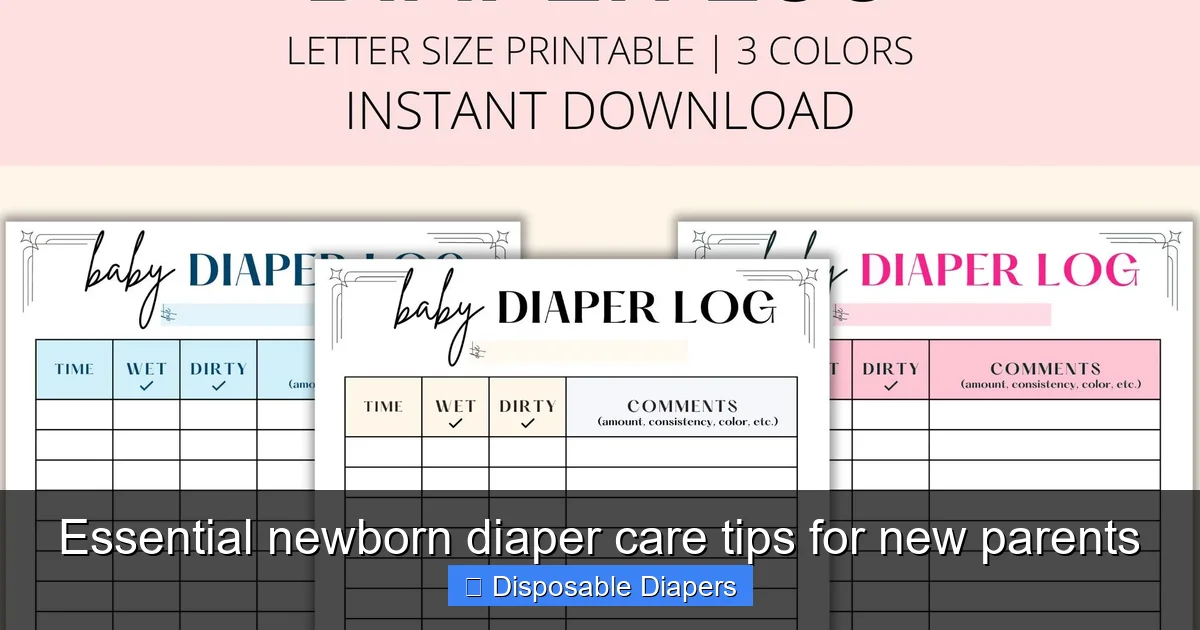
Visual guide about Essential newborn diaper care tips for new parents
Image source: i.pinimg.com
Choose a Safe Surface
You can use a changing table, a changing pad on a dresser, or even a pad on the floor. The key is safety.
- Stable and flat: The surface should not wobble or tilt.
- Guard rails: If you use a changing table, rails help prevent falls.
- Safety strap: Use it, but never rely on it alone. Always keep one hand on your baby.
- Floor option: If you are worried about falls, a changing pad on the floor is very safe.
Stock Your Diaper Changing Station
Good newborn diaper care means you never have to leave your baby alone to grab supplies. Keep these items within arm’s reach:
- Disposable diapers in the right size
- Baby wipes (fragrance-free and alcohol-free, if possible)
- Diaper cream or barrier ointment
- Disposable changing pad liners or washable covers
- Small washcloths or cotton pads
- Hand sanitizer (for you, if there is no sink nearby)
- A change of clothes for the baby
- Plastic bags or a diaper pail for disposal
Refill your station daily. This simple habit supports smooth newborn diaper care and saves time and stress.
Keep It Clean and Hygienic
Diaper changes can be messy, so focus on hygiene:
- Use a wipe or cloth to clean the changing pad after messy changes.
- Wash or replace pad covers often.
- Wash your hands or use hand sanitizer after each change.
- Empty the diaper pail regularly to avoid odor and germs.
Step 3: How to Change a Newborn’s Disposable Diaper (Step by Step)
Newborn diaper care gets easier with practice. Follow these simple steps each time you change a diaper.
Visual guide about Essential newborn diaper care tips for new parents
Image source: sayeehospitals.in
Step 3.1: Prepare Before You Start
Before you lay your baby down, gather everything you need:
- Clean disposable diaper
- Wipes or warm water and cotton pads
- Diaper cream, if needed
- Clean outfit, if you expect a big mess
Wash your hands. Place your baby on the changing surface and keep one hand on them at all times.
Step 3.2: Remove the Dirty Diaper
Open the diaper tabs, but do not pull the diaper away yet. Gently lift your baby’s legs by holding their ankles together and raising them slightly.
- Use the front of the dirty diaper to wipe away some of the poop if there is a lot.
- Fold the front of the diaper down under your baby’s bottom, clean side up, to act as a barrier while you wipe.
Slide the dirty diaper out once the area is mostly clean. Fold it closed by rolling it inward and securing it with the tabs.
Step 3.3: Gently Clean Your Baby’s Skin
This is a key part of newborn diaper care. Clean the diaper area gently but thoroughly.
- For girls: Always wipe from front to back to avoid spreading germs.
- For boys: Clean around the penis and scrotum, and gently between skin folds.
- For both: Do not forget the creases around the thighs and bottom.
Use soft, fragrance-free wipes, or cotton pads with warm water. If your baby’s skin is very sensitive, plain water is often best. Use a new wipe or pad each time you swipe to avoid spreading poop.
Step 3.4: Let the Skin Dry
One of the most important newborn diaper care tips for new parents is to let the skin dry before putting on a new diaper. Moisture trapped under a diaper can lead to diaper rash.
- Pat the area dry with a soft cloth, do not rub.
- Let the skin air-dry for a minute or two if your baby allows it.
Step 3.5: Apply Diaper Cream if Needed
Use a thin layer of barrier cream or ointment if your baby’s skin looks red or if they are prone to rash. You do not need a thick coat; a light layer is enough to protect the skin from moisture.
Look for creams with zinc oxide or petroleum jelly. Avoid products with strong fragrance on newborn skin.
Step 3.6: Put on the Clean Disposable Diaper
Slide a clean diaper under your baby’s bottom. The side with the tabs goes at the back. Pull the front of the diaper up between the legs and over the belly.
- Fasten the tabs snugly but not too tight. You should be able to slide two fingers between the diaper and your baby’s waist.
- Make sure the leg cuffs are pulled out, not tucked in. This helps prevent leaks.
- If your baby still has an umbilical cord stump, fold the front of the diaper down to keep it dry and exposed to air.
Step 3.7: Dress and Clean Up
Put your baby’s clothes back on. Then wash your hands again. Throw away the dirty diaper in a diaper pail or sealed trash bag.
Over time, this whole process will feel faster and more natural. With practice, newborn diaper care becomes just another part of your day.
Step 4: How Often to Change a Newborn’s Disposable Diaper
Newborns pee and poop a lot. Regular changes are a key part of good newborn diaper care. They keep your baby dry and help prevent rashes.
Typical Diaper Change Frequency
Most newborns need about 8 to 12 diaper changes per day. This can vary, but a good rule is:
- Change the diaper every 2 to 3 hours, or sooner if it is wet or dirty.
- Change the diaper after each poop, even if it was just changed.
Use the wetness indicator on disposable diapers if your brand has one. If not, gently press the front of the diaper to feel if it is heavy or squishy.
Nighttime Diaper Changes
At night, you may not need to change the diaper after every small pee if the diaper is very absorbent and your baby’s skin is healthy. But always change a poop diaper, day or night.
To keep nighttime calm:
- Use a more absorbent nighttime disposable diaper if needed.
- Change the diaper right before bedtime.
- Use dim light and speak softly during night changes.
Step 5: Preventing Diaper Rash with Smart Newborn Diaper Care
Diaper rash is very common, but there is a lot you can do to prevent it. These newborn diaper care tips focus on keeping the skin clean, dry, and protected.
Keep the Area Clean and Dry
Moisture and friction are the main causes of diaper rash. To reduce them:
- Change diapers often, before they get too full.
- Clean gently but thoroughly at every change.
- Let the area dry before putting on a new diaper.
Use Barrier Creams Wisely
A thin layer of barrier cream can protect the skin from pee and poop. This is especially helpful if your baby has loose stools, is teething, or is on antibiotics.
- Apply a light layer after each change if your baby is prone to rash.
- Do not scrub off every last bit at each change; gentle cleaning is enough.
Give Diaper-Free Time
Air is your friend. One of the most helpful newborn diaper care tips for new parents is to give your baby some diaper-free time each day.
- Lay your baby on a towel or waterproof pad.
- Let them go without a diaper for 10–15 minutes, a few times a day if possible.
This helps the skin dry out and heal if there is any irritation.
Choose Gentle Products
Newborn skin is sensitive. Avoid products that might irritate it:
- Use fragrance-free and alcohol-free wipes.
- Avoid talc-based baby powders.
- Be careful with scented soaps or lotions on the diaper area.
When to Call the Doctor About a Rash
Most mild diaper rashes get better in a few days with good newborn diaper care. But call your doctor if:
- The rash is very red, raw, or bleeding.
- You see blisters, open sores, or pus.
- The rash does not improve after 2–3 days of home care.
- Your baby has a fever or seems very upset.
Step 6: Special Newborn Diaper Care Situations
Some newborns have extra needs, such as an umbilical cord stump, circumcision, or very sensitive skin. Here is how to adjust your diaper care.
Caring for the Umbilical Cord Stump
Until the stump falls off, you want to keep it clean and dry.
- Fold the front of the diaper down so it does not rub the stump.
- Use newborn disposable diapers with a cord cut-out if possible.
- Do not cover the stump with the diaper or cream.
Call your doctor if the area looks very red, smells bad, or has yellow discharge.
Diaper Care After Circumcision
If your baby boy is circumcised, follow your doctor’s instructions.
- Use a soft disposable diaper that does not press too tightly.
- Apply petroleum jelly or ointment as directed to prevent the penis from sticking to the diaper.
- Change diapers often to keep the area clean and dry.
Very Sensitive or Allergy-Prone Skin
Some babies react to certain disposable diapers, wipes, or creams.
- Try a different brand of diaper, preferably fragrance-free and hypoallergenic.
- Use plain warm water and cotton pads instead of wipes for a while.
- Introduce new products one at a time so you can see what causes a reaction.
If you see hives, swelling, or a sudden rash, stop using the new product and call your doctor.
Step 7: Nighttime Newborn Diaper Care Tips
Nights with a newborn are already tiring. Smart newborn diaper care at night can help everyone sleep a little better.
Use the Right Diaper for Night
Some babies pee more at night. You may want to use a more absorbent disposable diaper for bedtime.
- Choose a diaper with strong leak guards and high absorbency.
- Make sure it fits well around the legs and waist.
- Consider going up one size at night if your baby’s weight is near the top of the range and you see leaks.
Keep Night Changes Calm and Quick
To help your baby go back to sleep:
- Use a small night light instead of bright overhead lights.
- Have everything ready before bedtime: diapers, wipes, cream, clothes.
- Change the diaper before the last feed or right after, depending on your routine.
- Speak softly and avoid too much stimulation.
When to Wake for a Diaper Change
If your baby is sleeping soundly and the diaper is only a little wet, you usually do not need to wake them. But always change a poop diaper, even at night, to protect the skin and avoid infection.
Step 8: On-the-Go Newborn Diaper Care
Leaving the house with a newborn can feel like a big task. With the right newborn diaper care tips, you can handle diaper changes anywhere.
Pack a Well-Stocked Diaper Bag
Always keep these items in your diaper bag:
- 6–8 disposable diapers (more for longer trips)
- Travel pack of wipes
- Portable changing pad
- Diaper cream
- Plastic bags for dirty diapers and clothes
- Extra outfit or two for the baby
- Small hand sanitizer for you
Find a Safe Place to Change
Many public places have changing tables in restrooms. If not, you can change your baby:
- On the back seat of your car, using a changing pad
- On a clean floor or bench with a pad underneath
Never leave your baby alone on a high surface, even for a second.
Dispose of Diapers Properly When Out
Roll up the dirty diaper and seal it in a plastic bag before putting it in a trash can. This helps control odor and keeps germs contained.
Troubleshooting Common Newborn Diaper Problems
Even with the best newborn diaper care, you may face some common issues. Here is how to handle them.
Leaks and Blowouts
If you are dealing with frequent leaks or blowouts:
- Check the size. You may need a bigger diaper.
- Make sure the leg cuffs are pulled out and not tucked in.
- Fasten the tabs evenly and snugly.
- Try a different brand with stronger leak guards.
Red Marks on Skin
Light marks that fade quickly can be normal. Deep red marks that last may mean the diaper is too tight.
- Loosen the tabs a bit.
- Consider going up a size.
- Try a softer disposable diaper brand.
Strong Odor
Some smell is normal, but strong odor can be reduced with good newborn diaper care habits.
- Change diapers more often.
- Empty the diaper pail daily or every other day.
- Use a pail with a lid or a sealing system.
Baby Cries During Diaper Changes
Some newborns dislike feeling cold or being handled. To help:
- Warm your hands before you start.
- Use warm water with cotton pads instead of cold wipes.
- Talk or sing softly to comfort your baby.
- Work calmly and quickly, but do not rush so much that you skip steps.
Safe Disposal and Hygiene with Disposable Diapers
Good newborn diaper care includes how you handle dirty diapers after the change.
How to Wrap and Throw Away Disposable Diapers
After each change:
- Roll the dirty diaper from front to back, tucking in the mess.
- Use the tabs to seal it into a tight bundle.
- Place it in a diaper pail or a sealed trash bag.
Managing Diaper Pails and Trash
To keep your home fresh and clean:
- Empty the diaper pail regularly.
- Clean the pail with soap and water or a mild disinfectant every week or so.
- Wash your hands after handling dirty diapers or the pail.
Conclusion: Building Confidence with Newborn Diaper Care
At first, diaper changes can feel messy and stressful. But with these newborn diaper care tips for new parents, you will quickly build skill and confidence. Choosing the right disposable diapers, changing them often, cleaning gently, and protecting your baby’s skin all work together to keep your little one comfortable.
Remember, there is no perfect way to do everything. You will find your own routine over time. As long as your baby is clean, dry, and content, you are doing a great job. Use these simple newborn diaper care tips as a guide, adjust them to your baby’s needs, and trust yourself as you learn and grow with your new baby.
🎥 Related Video: 7 Essential New Parent Hacks for Baby Bliss
📺 Emma Hubbard
Learning how to care for a newborn is a huge learning curve! But for many of the challenges you’ll face as a new parent there are …
