
Sensitive skin diaper tips for calm happy babies is your step-by-step guide to keeping delicate baby skin clean, dry, and rash-free. You will learn how to choose the right disposable diapers, build a gentle diaper routine, and spot early signs of irritation before they turn into big problems. Use these simple, proven tips to protect sensitive skin and keep your baby calm, comfortable, and happy all day.
Key Takeaways
- Point 1: Choosing the right disposable diaper for sensitive skin can greatly reduce redness, rashes, and discomfort.
- Point 2: A gentle, consistent diaper change routine is more important than fancy products for protecting sensitive skin.
- Point 3: Fragrance-free, alcohol-free wipes and cleansers are usually best for babies with sensitive skin.
- Point 4: Diaper-free time and breathable clothing give delicate skin a chance to heal and stay dry.
- Point 5: Barrier creams and ointments act like a shield between baby’s skin and moisture in the diaper.
- Point 6: Knowing the early signs of irritation helps you act fast and prevent painful diaper rash.
- Point 7: When in doubt, talk with your pediatrician or dermatologist, especially if rashes are frequent or severe.
Sensitive skin diaper tips for calm happy babies
If your baby has sensitive skin, diaper changes can feel stressful. You may worry about every new red spot or rash. The good news is that a calm, simple routine and the right disposable diapers can make a big difference. This guide will walk you through the best sensitive skin diaper tips so you can keep your baby comfortable and happy.
You will learn how to pick gentle disposable diapers, how often to change them, how to clean delicate skin, and how to prevent diaper rash. You will also see what to do when things go wrong, and when to call the doctor. Use these sensitive skin diaper tips as a step-by-step plan you can follow every day.
Understanding sensitive skin in the diaper area
What does “sensitive skin” really mean?
Sensitive skin is skin that gets irritated more easily than usual. It may turn red, dry, or bumpy after contact with urine, stool, wipes, soap, or even some disposable diapers. In the diaper area, skin stays warm and moist, which makes it even more likely to react. That is why sensitive skin diaper tips focus on keeping the area clean, dry, and protected.
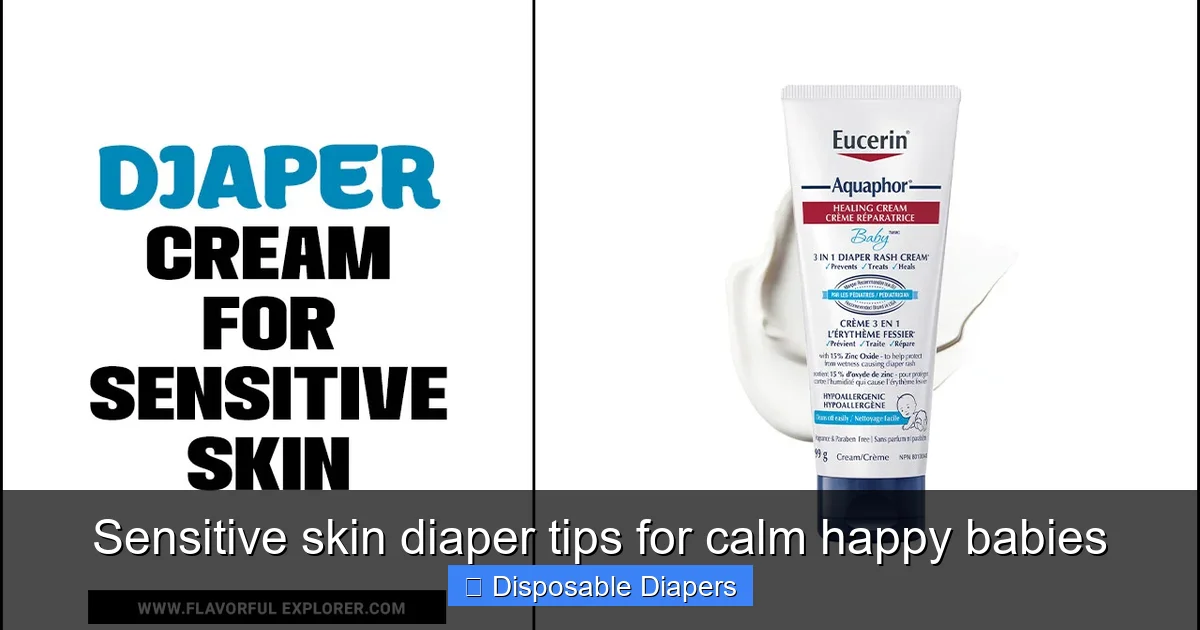
Visual guide about Sensitive skin diaper tips for calm happy babies
Image source: flavorfulexplorer.com
Common signs your baby has sensitive skin
- Redness that appears quickly after a wet or dirty diaper
- Dry, flaky patches that do not fully go away between changes
- Small red bumps, especially in skin folds
- Baby seems fussy, pulls at the diaper, or cries during diaper changes
- Rash that gets worse with some products, but better when you stop using them
If you notice these signs often, your baby may need extra gentle care and special sensitive skin diaper tips to stay comfortable.
Why the diaper area is extra delicate
Baby skin is thinner than adult skin. It loses moisture quickly and is easier to damage. In the diaper area, skin is in constant contact with urine, stool, and friction from the diaper. This can break down the skin barrier. Once the skin barrier is weak, irritants and germs can get in more easily and cause rashes. That is why the best sensitive skin diaper tips focus on protection and prevention.
Step 1: Choose the right disposable diaper for sensitive skin
The first and most important of all sensitive skin diaper tips is choosing the right diaper. Not all disposable diapers are the same. Some may feel soft, but still bother delicate skin. Others are made to be extra gentle and breathable.

Visual guide about Sensitive skin diaper tips for calm happy babies
Image source: 5.imimg.com
Look for key features on the label
- Fragrance-free: Added scents can irritate sensitive skin. Choose diapers labeled “fragrance-free” or “unscented.”
- Hypoallergenic: This means the diaper is made to reduce the risk of allergic reactions.
- Latex-free: Some babies react to latex, so a latex-free diaper is safer for sensitive skin.
- Soft, breathable materials: A soft inner lining and breathable outer layer help reduce friction and heat.
- High absorbency: The more urine the diaper can pull away from the skin, the less irritation you will see.
When shopping, take your time to read the packaging. These simple checks are some of the easiest sensitive skin diaper tips you can use right away.
Avoid common irritants
Some diapers use lotions, dyes, or strong adhesives that may bother delicate skin. Try to avoid:
- Strong perfumes or scented liners
- Bright colored prints on the inside of the diaper
- Lotions or “skin conditioners” added to the diaper lining
- Rough or stiff waistbands and leg cuffs
If you notice a rash that matches the shape of the diaper’s pattern or waistband, it may be a reaction to dyes or materials. One of the most useful sensitive skin diaper tips is to switch to a plainer, more natural-looking diaper and see if things improve.
Test new diapers slowly
When you try a new brand or style, do a simple test:
- Use the new diaper during the day only for the first 2–3 days.
- Check the skin at every change for new redness, bumps, or dry patches.
- If the skin stays calm, you can start using that diaper at night as well.
- If irritation appears, stop using that diaper and go back to the old one.
This slow testing method is one of the most practical sensitive skin diaper tips. It helps you avoid a full-blown rash from a diaper that does not suit your baby.
Step 2: Build a gentle diaper change routine
Even the best diaper will not help if it stays on too long. A gentle, regular routine is the heart of all sensitive skin diaper tips. The goal is simple: keep the diaper area as clean and dry as possible, without scrubbing or harsh products.
Visual guide about Sensitive skin diaper tips for calm happy babies
Image source: images.ctfassets.net
How often to change diapers
- Newborns: Every 2–3 hours during the day, and at least once at night if they wake to feed.
- Older babies: Every 3–4 hours during the day, or as soon as you notice it is wet or soiled.
- After every stool: Always change the diaper right away after a bowel movement, even if the diaper is not very full.
Frequent changes are one of the simplest sensitive skin diaper tips. Less time in a wet or dirty diaper means less irritation and fewer rashes.
Step-by-step gentle change
Use this step-by-step process to protect sensitive skin at every change.
Step 1: Prepare your supplies
- Clean disposable diaper
- Soft, fragrance-free wipes or cotton pads
- Bowl of warm water (if using cotton pads)
- Barrier cream or ointment if needed
- Soft towel or changing mat
Having everything ready lets you move quickly and calmly. This is one of the most helpful sensitive skin diaper tips, because a smooth change is less stressful for both you and your baby.
Step 2: Remove the dirty diaper gently
- Lay baby on their back on the changing surface.
- Open the diaper and use the front part to gently wipe away some of the mess.
- Fold the dirty diaper under your baby’s bottom while you clean, so the clean side is against the skin.
Avoid pulling or tugging at the diaper. Gentle handling is a key part of sensitive skin diaper tips, because friction can irritate delicate skin.
Step 3: Clean with care
You can use either fragrance-free wipes or cotton pads with warm water. For very sensitive skin, many parents find water and cotton to be the gentlest choice.
- Wipe from front to back, especially for baby girls, to avoid spreading germs.
- Use soft, light strokes. Do not scrub.
- Pay special attention to skin folds around the thighs and buttocks.
- If stool is stuck, let a damp cotton pad sit on the area for a few seconds to soften it, then wipe gently.
Gentle cleaning is one of the most important sensitive skin diaper tips. The goal is to remove urine and stool without damaging the skin barrier.
Step 4: Pat dry (do not rub)
Use a soft cloth or towel to pat the area dry. Rubbing can cause friction and make redness worse. Make sure all folds are dry. Moisture trapped in folds is a common cause of diaper rash.
If you have time, let the area air dry for a minute or two. This simple step is one of the easiest sensitive skin diaper tips to add to your routine.
Step 5: Apply a barrier cream if needed
Barrier creams or ointments create a thin shield between your baby’s skin and moisture in the diaper. They are very helpful if your baby has sensitive skin or is prone to rashes.
- Use a thin, even layer over any areas that tend to get red.
- Focus on the buttocks, around the anus, and where the diaper elastic touches the skin.
- You do not need a thick, heavy layer; a light coating is usually enough.
Regular use of barrier creams is one of the most effective sensitive skin diaper tips, especially during teething, illness, or diarrhea.
Step 6: Put on a fresh diaper
- Slide the clean diaper under your baby’s bottom.
- Make sure the back of the diaper comes up to the baby’s waist.
- Fasten the tabs snugly but not too tight. You should be able to slip two fingers inside the waistband.
- Check that leg cuffs are pulled out gently to prevent leaks and rubbing.
A good fit prevents chafing and leaks. Proper fit is one of the more overlooked sensitive skin diaper tips, but it can greatly reduce irritation marks around the legs and waist.
Step 3: Choose gentle wipes and cleansers
Wipes and cleansers touch your baby’s skin many times a day. For a baby with delicate skin, choosing the right ones is as important as picking the right disposable diaper. Many of the best sensitive skin diaper tips focus on what you use to clean, not just on the diaper itself.
What to look for in wipes
- Fragrance-free: Avoid any added scents, even if they smell “fresh” or “baby-like.”
- Alcohol-free: Alcohol can dry and sting sensitive skin.
- Minimal ingredients: The fewer ingredients, the lower the risk of irritation.
- Soft texture: Choose wipes that feel smooth, not rough or scratchy.
Some brands make wipes labeled for “sensitive skin” or “water-based.” These are often a good starting point for babies who need extra gentle care.
When to use water and cotton instead
For very sensitive or already irritated skin, one of the best sensitive skin diaper tips is to skip wipes altogether for a while. Instead:
- Use soft cotton pads or cloths.
- Wet them with warm (not hot) water.
- Clean gently and pat dry as usual.
This simple change can quickly calm a rash that is made worse by even the mildest wipes.
Be careful with soaps and cleansers
You do not need soap at every diaper change. In fact, using soap too often can dry and irritate sensitive skin. Follow these sensitive skin diaper tips for cleansers:
- Use a mild, fragrance-free baby cleanser only when the area is very soiled.
- Avoid bubble bath and harsh soaps on the diaper area.
- Rinse very well to remove all soap.
Most of the time, warm water alone is enough to clean the diaper area, especially if you change diapers often.
Step 4: Use barrier creams and ointments wisely
Barrier products are a key part of many sensitive skin diaper tips. They help protect delicate skin from urine, stool, and friction. But it is important to choose the right product and use it correctly.
Types of barrier products
- Zinc oxide creams: Thick, white creams that stay on the skin and block moisture. Good for moderate to severe redness.
- Petroleum jelly ointments: Clear ointments that seal in moisture and protect against friction. Good for daily prevention.
- Combination products: Some creams mix zinc oxide with other soothing ingredients like panthenol or aloe.
Many parents find that a thin layer of petroleum jelly at every change, plus a thicker zinc oxide cream during flare-ups, is one of the most reliable sensitive skin diaper tips.
How to apply without irritating skin
- Make sure the skin is clean and dry before you apply.
- Use clean hands or a small spatula to spread a thin, even layer.
- Do not rub hard; glide the cream gently over the skin.
- You do not need to remove every trace at each change. Gently wipe what comes off easily, then reapply a fresh layer.
Leaving a bit of cream on the skin between changes is fine. This is one of the simpler sensitive skin diaper tips that can save you time and reduce friction from over-wiping.
When to use barrier creams
- At every change, if your baby has very sensitive skin or frequent rashes.
- During teething, illness, or diarrhea, when rashes are more likely.
- At bedtime, when the diaper may stay on longer.
Regular, preventive use is more effective than waiting until the skin is already very red and sore.
Step 5: Give skin time to breathe
One of the most powerful sensitive skin diaper tips is also one of the simplest: diaper-free time. Letting your baby spend short periods without a diaper helps the skin dry out and heal.
How to do safe diaper-free time
- Place a waterproof mat or large towel on the floor or crib.
- Lay a soft blanket or cloth on top for comfort.
- Let your baby lie or play without a diaper for 10–20 minutes.
- Offer a toy or sing to keep them calm and happy.
You can do this once or twice a day, or more often if your baby has an active rash. Many parents find that adding diaper-free time is one of the most effective sensitive skin diaper tips for stubborn irritation.
Choose breathable clothing
Even when your baby is wearing a diaper, you can help the skin breathe by:
- Using loose, soft cotton clothing.
- Avoiding tight onesies or pants that press the diaper into the skin.
- Skipping plastic pants or extra covers over disposable diapers.
Less pressure and more airflow mean less heat and moisture, which is key for sensitive skin.
Step 6: Watch for early signs of irritation
Catching problems early is one of the smartest sensitive skin diaper tips. A small red patch is much easier to treat than a full rash with broken skin.
What to check at every diaper change
- Color: Is the skin slightly pink, bright red, or normal?
- Texture: Is it smooth, bumpy, or broken?
- Location: Is the redness where the diaper touches, or in skin folds, or both?
- Baby’s reaction: Do they flinch or cry when you touch or clean the area?
If you see early redness, add extra barrier cream, increase diaper-free time, and make sure you are changing often. These quick steps are some of the most useful sensitive skin diaper tips to stop a rash before it gets worse.
Common types of diaper rash
Not all rashes are the same. Knowing the difference helps you choose the right care.
- Irritant rash: Redness on the areas that touch the diaper, often from urine, stool, or friction. Usually improves with frequent changes and barrier cream.
- Yeast rash: Bright red rash with sharp edges and small red “satellite” spots. Often appears after antibiotics or a long-lasting rash. May need an antifungal cream from your doctor.
- Allergic rash: Redness or bumps where a product touches the skin, such as the waistband or where wipes are used. Often improves when you stop using the product.
If you are not sure what type of rash your baby has, ask your pediatrician. Getting the right diagnosis is one of the most important sensitive skin diaper tips, because different rashes need different treatments.
Troubleshooting common problems
Even when you follow all the best sensitive skin diaper tips, problems can still happen. Here is how to handle some of the most common issues.
Problem 1: Rash that will not go away
If a rash lasts more than a few days, or keeps coming back:
- Double-check that all products are fragrance-free and gentle.
- Increase diaper-free time each day.
- Use a thicker layer of barrier cream at every change.
- Consider switching diaper brands to see if the material is the problem.
If there is no improvement after 3–5 days of careful care, this is a sign to call your doctor.
Problem 2: Redness only where the diaper touches
This often points to contact irritation or allergy. Useful sensitive skin diaper tips here include:
- Switch to a different brand of disposable diaper, ideally one labeled hypoallergenic.
- Avoid diapers with prints or lotions inside.
- Use only water and cotton pads for a few days.
If the redness clears after you switch diapers, you have likely found the cause.
Problem 3: Rash with small red dots and shiny skin
This may be a yeast rash. In this case:
- Keep the area very dry with frequent changes and diaper-free time.
- Avoid using cornstarch, which can sometimes make yeast worse.
- Call your pediatrician. They may recommend an antifungal cream.
Getting medical advice quickly is one of the most important sensitive skin diaper tips when you suspect yeast.
Problem 4: Baby cries during diaper changes
If diaper changes seem painful:
- Use lukewarm water instead of wipes for a while.
- Pat, do not rub, when cleaning and drying.
- Apply a thick layer of barrier cream to protect raw areas.
- Talk softly and move slowly to keep your baby calm.
If pain is severe or the skin looks broken or oozing, contact your doctor the same day.
When to call the doctor
Most mild rashes will clear with home care and good sensitive skin diaper tips. But sometimes you need medical help. Call your pediatrician if:
- The rash does not improve after 3–5 days of careful care.
- You see open sores, blisters, or yellow crusts.
- The rash is very bright red, swollen, or warm to the touch.
- Your baby has a fever or seems very unwell.
- The rash spreads beyond the diaper area.
- You suspect a yeast infection or allergy.
Do not feel bad about asking for help. Part of using sensitive skin diaper tips wisely is knowing when expert care is needed.
Extra sensitive skin diaper tips for special situations
During teething
Many babies get more frequent diaper rashes during teething. Stools can be looser and more acidic. During this time:
- Change diapers more often than usual.
- Use barrier cream at every change.
- Increase diaper-free time if you can.
During illness or diarrhea
Diarrhea is very hard on sensitive skin. Helpful sensitive skin diaper tips in this case include:
- Rinse the area with warm water instead of wiping when possible.
- Gently pat dry and apply a thick barrier cream.
- Change diapers immediately after each loose stool.
- Call your doctor if diarrhea lasts more than a day or two, or if your baby seems dehydrated.
At night
Nighttime diapers stay on longer, which can bother sensitive skin. To help:
- Use a highly absorbent disposable diaper.
- Apply a generous layer of barrier cream before bed.
- If your baby wakes to feed, check the diaper and change if it is very wet or soiled.
These small changes can make a big difference in how the skin looks in the morning.
Conclusion: Calm, happy babies start with gentle care
Caring for a baby with delicate skin can feel overwhelming, but it does not have to be. With the right disposable diaper, a gentle cleaning routine, and simple habits like diaper-free time and barrier creams, you can greatly reduce irritation. These sensitive skin diaper tips are easy to follow and fit into your daily life.
Remember to watch for early signs of redness, avoid harsh products, and give the skin time to breathe. And if a rash will not go away, or your baby seems very uncomfortable, do not hesitate to call your doctor. With patience and consistent care, you can keep sensitive skin comfortable and enjoy more calm, happy moments with your baby.
🎥 Related Video: Don’t sleep on diaper rash cream #dermatologist @DrDrayzday
📺 Dr Dray
skincaretips #skincarehacks #skincareproducts #skinbarrier.
