
Parenting greatly influences a child’s development. The four main parenting styles are authoritative, authoritarian, permissive, and uninvolved.
Understanding these styles helps parents shape their child’s future. Each style has its unique approach to discipline, communication, and expectations. Knowing the differences can guide parents in making informed choices. Parenting styles affect children’s behavior, self-esteem, and academic success. By exploring each style, parents can learn effective techniques.
This knowledge supports a balanced, nurturing environment for their kids. Read on to discover the traits and impacts of each parenting style. This will help you recognize your own approach and make positive adjustments where necessary.
Credit: www.nbcsandiego.com
Authoritative Parenting
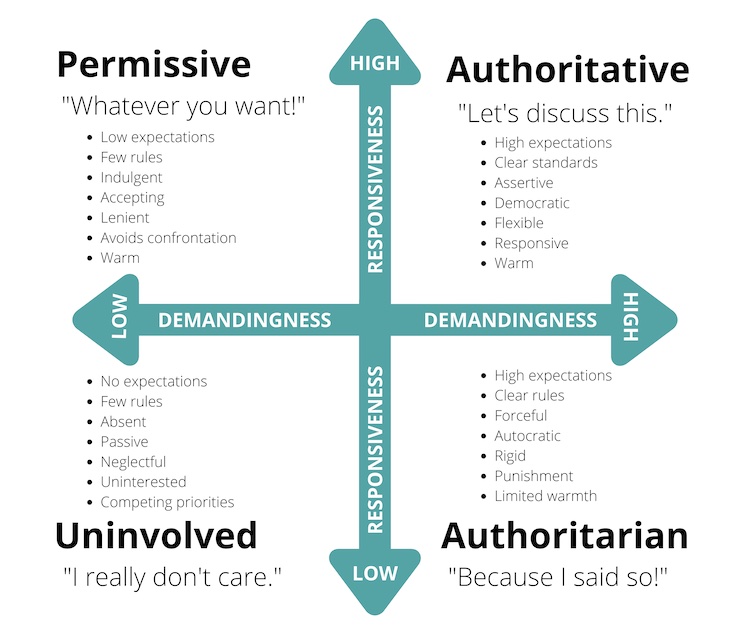
Authoritative parenting is one of the four main parenting styles. It is known for its balance between high demands and high responsiveness. This style encourages independence while maintaining limits and rules. Parents using this approach create a positive, nurturing environment.
Characteristics
Authoritative parents exhibit several key characteristics:
- High Expectations: These parents set clear standards and expectations for their children.
- Open Communication: They encourage open dialogue and listen to their children’s opinions.
- Warmth and Support: They show affection and provide emotional support consistently.
- Clear Boundaries: They set and enforce rules, but with flexibility and understanding.
- Encouragement of Independence: They promote self-reliance and independent decision-making in their children.
Effects On Children
Children raised by authoritative parents tend to experience positive outcomes. Here are some common effects:
- Higher Self-Esteem: These children often have better self-confidence and self-worth.
- Academic Success: They tend to perform well in school due to the supportive environment.
- Better Social Skills: They develop strong interpersonal skills and form healthy relationships.
- Resilience: They are more likely to handle stress and challenges effectively.
- Lower Risk of Behavioral Problems: They generally exhibit fewer behavioral issues and are more disciplined.
Authoritarian Parenting
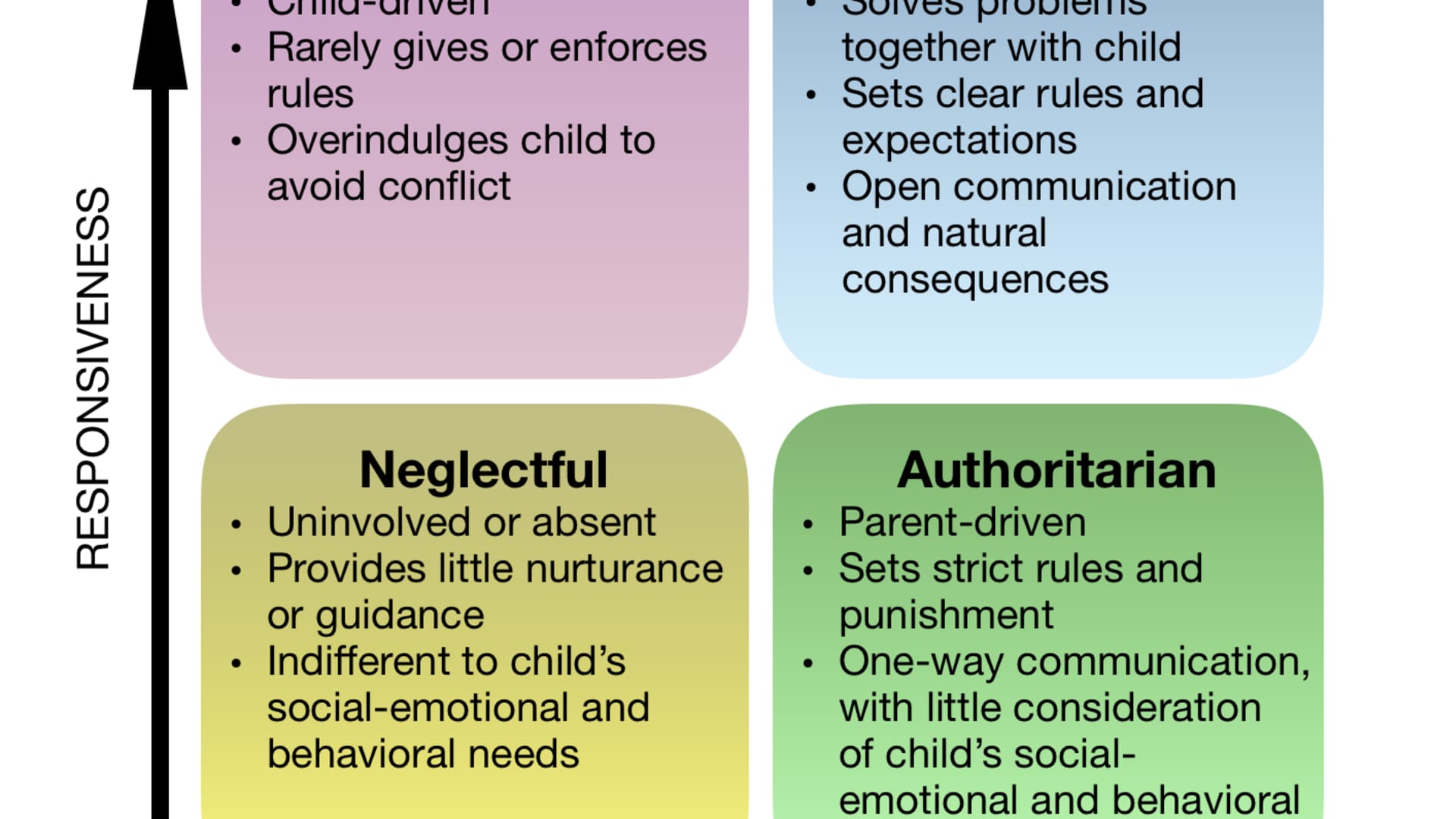
Authoritarian parenting, often referred to as strict parenting, is one of the four primary parenting styles. This style is characterized by high demands and low responsiveness. Parents who adopt this approach expect their rules to be followed without question and often use punishment to enforce obedience.
Characteristics
- High Expectations: Parents set high standards for their children.
- Strict Rules: There are many rules, and they must be followed without exception.
- Little Flexibility: Parents are not open to dialogue or negotiation.
- Control and Obedience: Parents prioritize obedience over nurturing.
- Harsh Punishments: Punishments are often severe to ensure compliance.
Effects On Children
Authoritarian parenting can have several impacts on children, both positive and negative.
- Low Self-Esteem: Children may feel inadequate due to constant criticism.
- Poor Social Skills: They may struggle with social interactions.
- High Anxiety Levels: The pressure to meet high expectations can cause anxiety.
- Rebellion: Some children may rebel against strict rules.
- Academic Success: On the positive side, children may excel academically due to high expectations.
Understanding the characteristics and effects of authoritarian parenting can help parents make informed decisions about their parenting style. It’s essential to balance discipline with empathy to foster healthy development in children.
Permissive Parenting
Permissive Parenting is one of the four main parenting styles. It is characterized by a lenient approach where parents are more responsive than demanding. These parents tend to be nurturing and communicative, often acting more like a friend than a traditional authority figure. While this style can foster a warm relationship, it may also lead to certain challenges.
Characteristics
- High responsiveness: Permissive parents are very attentive to their child’s needs.
- Low demands: They have few rules and expectations.
- Non-traditional roles: They often avoid setting boundaries.
- Overly lenient: They rarely discipline their children.
Effects On Children
Children raised with Permissive Parenting often face unique outcomes:
- Lack of self-discipline: They may struggle with self-control.
- Poor social skills: They might have difficulty respecting authority.
- Insecurity: They can feel uncertain without clear boundaries.
- Higher risk of behavioral issues: They may engage in risky behaviors.
Permissive Parenting creates a nurturing environment. Yet, it often results in children lacking discipline and social skills. Understanding these effects can help parents find a balance between love and rules.
:max_bytes(150000):strip_icc()/types-of-parenting-styles-1eb6933a3b39478fab919fbf8d549a74.png)
Credit: www.parents.com
Uninvolved Parenting
Uninvolved parenting is one of the four main parenting styles. This style is marked by a lack of responsiveness to a child’s needs. Parents who use this style are often emotionally distant from their children. They may provide basic needs but offer little guidance or support. This can lead to various effects on the child’s development.
Characteristics
Uninvolved parents show little interest in their child’s life. They do not set many rules or expectations. Here are some key characteristics:
- Minimal communication with the child
- Low levels of warmth and affection
- Few or no demands for behavior
- Inconsistent discipline
- Basic needs are met, but emotional needs are ignored
Effects On Children
Children raised by uninvolved parents often struggle with self-esteem. They may feel unimportant or neglected. The lack of guidance can lead to poor academic performance. Here are some common effects:
- Low self-worth and confidence
- Difficulty forming healthy relationships
- Increased risk of behavioral issues
- Poor academic achievement
- Higher likelihood of mental health problems
Children need support and guidance from their parents. The absence of these can hinder their emotional and social development. Recognizing these effects can help in understanding the importance of involved parenting.
Choosing Your Style
Parenting styles affect how children grow and develop. Each parent must find their unique approach. This section will help you choose a style that fits your family. Let’s explore the factors you should consider.
Factors To Consider
When choosing your parenting style, think about your child’s needs. Some children need more guidance while others are more independent. Consider your own personality and values. Do you prefer structure or flexibility?
Here are some key factors to consider:
- Child’s temperament: Understand your child’s natural behavior.
- Family dynamics: Evaluate how your family interacts.
- Cultural background: Culture influences parenting approaches.
- Personal beliefs: Reflect on your beliefs about discipline and support.
Combining Styles
Many parents combine different styles. This approach can be very effective. You can be strict in some areas and lenient in others. Balance is key.
Here are some ways to combine styles:
- Authoritative and Permissive: Set clear rules but allow freedom within those rules.
- Authoritarian and Uninvolved: Use strict rules but give space for independence.
- Permissive and Authoritative: Be nurturing but enforce important rules.
Combining styles allows you to adapt to different situations. It provides a flexible approach to parenting.
Impact On Child Development
Parenting styles play a crucial role in a child’s development. The way parents interact with their children significantly influences their emotional and social growth. Understanding the four parenting styles—authoritative, authoritarian, permissive, and uninvolved—can help parents make informed choices that benefit their children.
Emotional Development
Each parenting style affects a child’s emotional development differently. Authoritative parents provide a balance of warmth and discipline. This style fosters high self-esteem and emotional resilience. Children feel secure and valued.
In contrast, authoritarian parents are strict and less responsive. They enforce rules without discussion. This often leads to lower self-esteem. Children may feel anxious or fearful.
Permissive parents are indulgent and lenient. They avoid confrontation. Their children may struggle with self-control and authority. They might also have higher self-esteem but can be emotionally immature.
Uninvolved parents show little interest in their children’s lives. They provide minimal guidance. This often results in emotional detachment. Children may struggle with self-esteem and emotional regulation.
Social Skills
Social skills are crucial for a child’s success. Different parenting styles shape these skills in various ways. Authoritative parenting encourages social competence. Children learn to communicate effectively. They are also good at resolving conflicts.
Authoritarian parenting, on the other hand, can hinder social skills. Children may become shy or aggressive. They often struggle with peer relationships.
Permissive parenting can lead to poor social skills as well. Children may feel entitled. They often have difficulty following rules and respecting others.
Uninvolved parenting generally results in the poorest social outcomes. Children often feel neglected. They may struggle with forming healthy relationships.
| Parenting Style | Emotional Development | Social Skills |
|---|---|---|
| Authoritative | High self-esteem, emotional resilience | Effective communication, conflict resolution |
| Authoritarian | Low self-esteem, anxiety | Shyness, aggression |
| Permissive | High self-esteem, emotional immaturity | Entitlement, rule-breaking |
| Uninvolved | Emotional detachment, low self-esteem | Poor relationship skills |
Understanding these impacts can help parents choose the best approach. A balanced parenting style benefits a child’s emotional and social growth.
Credit: allstarsprevention.com
Frequently Asked Questions
What Are The 4 Main Parenting Styles?
The four main parenting styles are authoritative, authoritarian, permissive, and uninvolved. Each has unique characteristics.
How Does Authoritative Parenting Affect Children?
Authoritative parenting encourages independence and self-discipline. Children often become confident and socially responsible.
What Is Authoritarian Parenting Style?
Authoritarian parenting is strict and controlling. Parents set rigid rules and expect obedience without question.
What Are Characteristics Of Permissive Parents?
Permissive parents are lenient and indulgent. They allow children much freedom and rarely enforce rules.
How Does Uninvolved Parenting Impact Child Development?
Uninvolved parenting lacks responsiveness and involvement. Children may feel neglected and struggle with self-esteem.
Conclusion
Understanding the four parenting styles helps guide your approach with children. Each style impacts kids differently. Identify your style. Adjust as needed. Aim for a balanced approach. This promotes a positive environment. Remember, no one style fits all. Adapt to your child’s needs.
Focus on consistency and love. Your efforts shape their future. Parenting is a journey. Keep learning and evolving.
