
A parent company owns enough voting stock in another company to control its policies. It usually oversees operations of its subsidiaries.
A parent company holds a majority stake in another firm, known as a subsidiary. This allows the parent to control and manage the subsidiary’s business operations. Large corporations often use this structure to diversify their investments. It helps in spreading risks across various industries.
A parent company can guide its subsidiaries towards growth and stability. This relationship benefits both entities involved. The parent company reaps financial rewards while the subsidiary gains resources and support. Understanding this setup is important for grasping corporate structures. It helps in recognizing how businesses expand and operate efficiently.

Credit: www.indeed.com
Definition Of A Parent Company
A parent company holds a controlling interest in another company. This controlling interest allows the parent company to influence the subsidiary’s operations and decisions. Understanding the basic concept and key characteristics is essential to grasp the full scope of a parent company.
Basic Concept
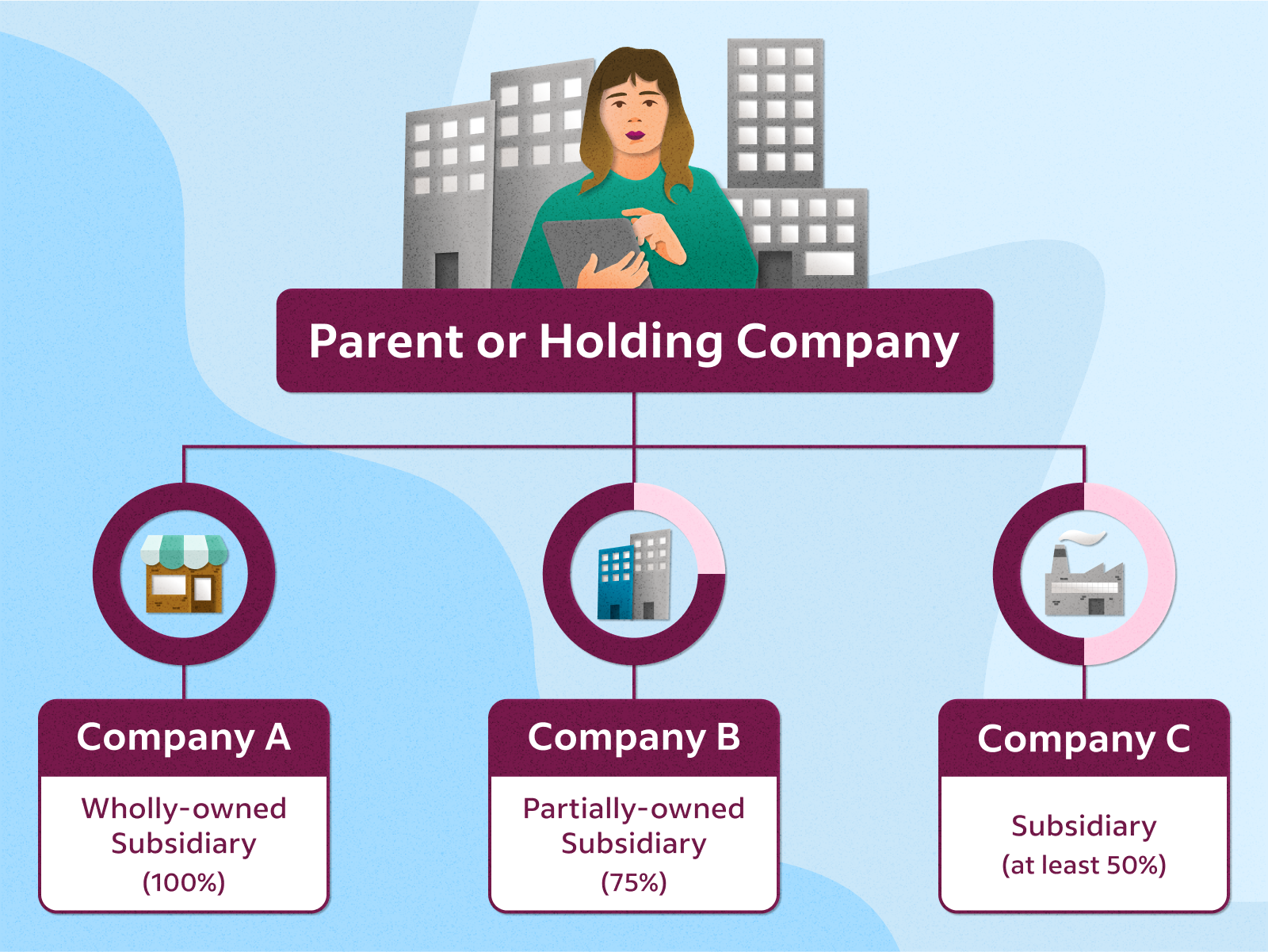
The basic concept of a parent company involves ownership and control. A parent company usually owns more than 50% of the subsidiary’s voting stock. This ownership gives the parent company control over the subsidiary’s management and policies.
Parent companies can be large corporations or small businesses. They often expand their influence by acquiring other companies. This structure allows the parent company to diversify its operations and spread risks.
Key Characteristics
Several key characteristics define a parent company:
- Ownership: Majority ownership of the subsidiary’s stock.
- Control: Ability to influence the subsidiary’s decisions and operations.
- Financial Reporting: Consolidated financial statements for the parent and subsidiary.
- Management: Oversight of the subsidiary’s management team.
- Risk Diversification: Spread of risks across multiple businesses.
These characteristics help parent companies maintain stability and growth. By understanding these elements, one can better comprehend how parent companies operate and influence their subsidiaries.
Credit: www.indeed.com
Types Of Parent Companies
Understanding the types of parent companies helps in grasping their structures and roles. There are primarily two types of parent companies: wholly-owned subsidiaries and holding companies. Each type serves a distinct purpose and offers unique benefits.
Wholly-owned Subsidiaries
A wholly-owned subsidiary is a company whose entire stock is owned by another company, known as the parent company. The parent company has total control over its subsidiary. This structure allows the parent company to manage operations and strategies directly.
Wholly-owned subsidiaries often benefit from the resources and expertise of their parent company. They maintain their own identity but align closely with the parent company’s goals. This alignment ensures consistency across the organization.
Holding Companies
A holding company owns enough voting stock in another company to control its policies and management decisions. Unlike operational companies, holding companies do not produce goods or services. They exist to own shares of other companies.
Holding companies provide a strategic advantage by reducing risks. They diversify their investment across various sectors. This structure allows the parent company to influence multiple businesses without direct involvement in day-to-day operations.
The table below summarizes the key differences between wholly-owned subsidiaries and holding companies:
| Type | Ownership | Control | Operations |
|---|---|---|---|
| Wholly-owned Subsidiary | 100% owned by parent company | Full control by parent company | Direct involvement in operations |
| Holding Company | Owns significant shares | Influences policies and management | No direct involvement in operations |
Role In Business Operations
A parent company plays a critical role in business operations. It oversees and manages its subsidiaries, ensuring they align with overall goals. This oversight helps in maintaining consistency and efficiency across the organization.
Strategic Direction
A parent company sets the strategic direction for its subsidiaries. It ensures they follow a unified vision and mission. This direction helps in achieving long-term objectives and growth. The parent company formulates strategies that guide the subsidiaries.
These strategies include:
- Market expansion
- Product development
- Competitive positioning
By setting a clear strategic direction, the parent company ensures all subsidiaries work towards common goals. This alignment boosts efficiency and productivity.
Resource Allocation
The parent company manages resource allocation across its subsidiaries. This involves distributing financial, human, and technological resources effectively. Proper resource allocation ensures each subsidiary has what it needs to succeed.
Key aspects of resource allocation include:
| Resource Type | Role |
|---|---|
| Financial | Funding for operations and growth |
| Human | Skilled workforce and leadership |
| Technological | Advanced tools and systems |
By ensuring optimal resource allocation, the parent company promotes the success of its subsidiaries. This contributes to the overall strength and stability of the organization.
Financial Implications
Being a parent company has significant financial implications. These can bring several benefits and some challenges. Understanding these financial aspects is crucial for business strategy.
Tax Benefits
A parent company can enjoy various tax benefits. One main benefit is the ability to file consolidated tax returns. This means the parent and its subsidiaries can be treated as a single entity for tax purposes. This can lead to significant tax savings.
Additionally, losses in one subsidiary can offset profits in another. This helps in reducing the overall tax liability. Here is a simple table to illustrate this:
| Subsidiary | Profit/Loss | Taxable Amount |
|---|---|---|
| Subsidiary A | $100,000 | $100,000 |
| Subsidiary B | -$50,000 | -$50,000 |
| Total | $50,000 | $50,000 |
Risk Management
Parent companies are better at managing risk. They can diversify their investments across various subsidiaries. This diversification reduces the impact of a loss in any one subsidiary. Here are some key points about risk management:
- Diversification of investments
- Spreading risk across multiple businesses
- Better control over financial stability
By owning multiple subsidiaries, a parent company can spread its risk. A loss in one area can be balanced by gains in another. This helps in maintaining overall financial health.
Legal Responsibilities
A parent company holds significant legal responsibilities. These responsibilities ensure the parent company complies with laws and regulations. This section explores the key legal responsibilities of a parent company. The focus is on Compliance Requirements and Liabilities.
Compliance Requirements
Parent companies must follow strict compliance requirements. These include adhering to local, state, and federal laws. Companies must also comply with industry-specific regulations.
Here is a list of common compliance requirements:
- Financial reporting and disclosures
- Employment laws and practices
- Environmental regulations
- Consumer protection laws
Parent companies must ensure their subsidiaries also comply with these regulations. Failure to comply can result in fines, penalties, or legal action.
Liabilities
Parent companies can be held liable for their subsidiaries’ actions. This is known as subsidiary liability. There are different types of liabilities a parent company may face:
| Type of Liability | Description |
|---|---|
| Direct Liability | The parent company directly causes harm or damage. |
| Indirect Liability | The subsidiary’s actions cause harm, but the parent company is held responsible. |
| Vicarious Liability | The parent company is liable for the subsidiary’s employees’ actions. |
To minimize liabilities, parent companies should have robust governance structures. They should also implement stringent oversight and monitoring processes.
Here are some tips to manage liabilities:
- Regular audits and compliance checks
- Effective risk management strategies
- Clear communication and documentation
Understanding legal responsibilities is crucial for parent companies. It ensures they remain compliant and manage potential risks effectively.
Impact On Subsidiaries
A parent company can significantly impact its subsidiaries in many ways. This influence can be seen in operational control, brand influence, and more. Let’s explore how a parent company affects its subsidiaries.
Operational Control
A parent company often has operational control over its subsidiaries. This control can include setting policies, making strategic decisions, and overseeing daily operations. Operational control ensures that the subsidiary aligns with the parent company’s goals.
For instance, the parent company may dictate budget allocations, staff hiring, and marketing strategies. This level of control helps maintain consistency across all subsidiaries.
Brand Influence
The parent company can also impact its subsidiaries through brand influence. A strong parent brand can enhance the subsidiary’s reputation and credibility. Customers tend to trust well-known brands, which can lead to increased sales and customer loyalty.
Here is a table showing the potential benefits of brand influence:
| Benefit | Description |
|---|---|
| Trust | Customers trust brands with a strong reputation. |
| Loyalty | Brand influence can foster customer loyalty. |
| Recognition | Subsidaries benefit from the parent company’s recognition. |
Subsidiaries also benefit from shared marketing efforts. They can leverage the parent company’s advertising and promotional resources. This synergy helps in building a cohesive brand image.
Credit: corporatefinanceinstitute.com
Frequently Asked Questions
What Is A Parent Company?
A parent company controls subsidiaries by owning a majority stake in their shares.
How Does A Parent Company Work?
A parent company oversees and manages the operations of its subsidiaries.
Why Are Parent Companies Important?
Parent companies provide strategic direction and financial support to their subsidiaries.
What Are Examples Of Parent Companies?
Examples include Alphabet (Google’s parent company) and Berkshire Hathaway.
Can A Parent Company Be A Small Business?
Yes, small businesses can also be parent companies if they own other companies.
Conclusion
A parent company oversees and controls its subsidiary companies. It helps in managing resources and aligning goals. Understanding this concept can aid in better business decisions. Knowing the role of a parent company is essential for growth. Keep this in mind for future business planning.
