
When to sanitize baby bottles matters for your baby’s health. This guide shows when to sanitize baby bottles, easy methods, schedules, and tips so you can keep bottles safe with less stress.
Key Takeaways
- Point 1: Know the key moments for sanitizing, such as first use, after illness, and for newborns.
- Point 2: Use safe methods: boiling, steam sterilizers, microwaves, or dishwasher sanitizing.
- Point 3: Clean, then sanitize. Washing removes milk and debris first.
- Point 4: Follow a simple schedule based on baby age and feeding type.
- Point 5: Store bottles dry and clean to keep them germ-free longer.
- Point 6: Troubleshoot common issues like cloudy nipples or odors with clear fixes.
Introduction: What you will learn
This guide will teach you when to sanitize baby bottles. You will learn clear rules and a simple schedule. You will get step-by-step how-tos. You will also find helpful tips and quick fixes. The tone is friendly. The steps are easy to follow.
Why it matters: Clean vs. sanitize
First, know the difference. Cleaning removes milk, dirt, and visible bits. Sanitizing reduces germs to a safer level. Both matter. You should clean every time. You should sanitize at key times. This guide explains when to sanitize baby bottles and why.

Visual guide about When to Sanitize Baby Bottles Every Parent Should Know
Image source: littleonemag.com
When to sanitize baby bottles: the basic rules
Use these basic rules to decide when to sanitize baby bottles:
Visual guide about When to Sanitize Baby Bottles Every Parent Should Know
Image source: i.ytimg.com
- Sanitize before first use.
- Sanitize daily for newborns (0–3 months) or preemies.
- Sanitize after illness for baby or caregiver.
- Sanitize if bottles touch the floor or dirt.
- Sanitize when using formula for high-risk infants.
- Sanitize less often for older babies with strong immune systems.
These rules help you know when to sanitize baby bottles without guesswork.
Step 1: Prepare — clean first, always
Always clean before you sanitize. Cleaning is quick and simple. It makes sanitizing work better.
Visual guide about When to Sanitize Baby Bottles Every Parent Should Know
Image source: i.pinimg.com
What you need
- Warm water
- Mild dish soap
- Bottle brush
- Clean towel or drying rack
How to clean
Rinse the bottle right away. Use warm soapy water. Scrub with a bottle brush. Clean the nipple and ring. Rinse well. Shake out excess water. Now the bottle is ready for sanitizing.
Step 2: When to sanitize baby bottles — schedules by age
Different ages need different care. Use this simple schedule to know when to sanitize baby bottles.
Newborns and preemies (0–3 months)
Sanitize bottles and nipples after every use or at least once daily. Newborns have weak immune systems. This makes sanitizing more important. If someone in the home is sick, sanitize more often.
Infants (3–12 months)
Sanitize at least once per day. If baby is healthy and you use clean water and formula, you can sanitize less often. Still, sanitize after illness, if the bottle falls on the floor, or if you are traveling.
Toddlers (12+ months)
Sanitizing is less critical. Clean bottles after each use. Sanitize only when needed — after illness or heavy contamination. By now, the baby has a stronger immune system.
Special cases
- If baby was in the NICU or is high risk — sanitize after every use.
- If you use powdered formula — follow formula safety and sanitize more often if baby is young.
Step 3: How to sanitize baby bottles — proven methods
There are safe methods for sanitizing. Use one that fits your life. Each method kills germs if done right. All methods work well. Pick the one you trust.
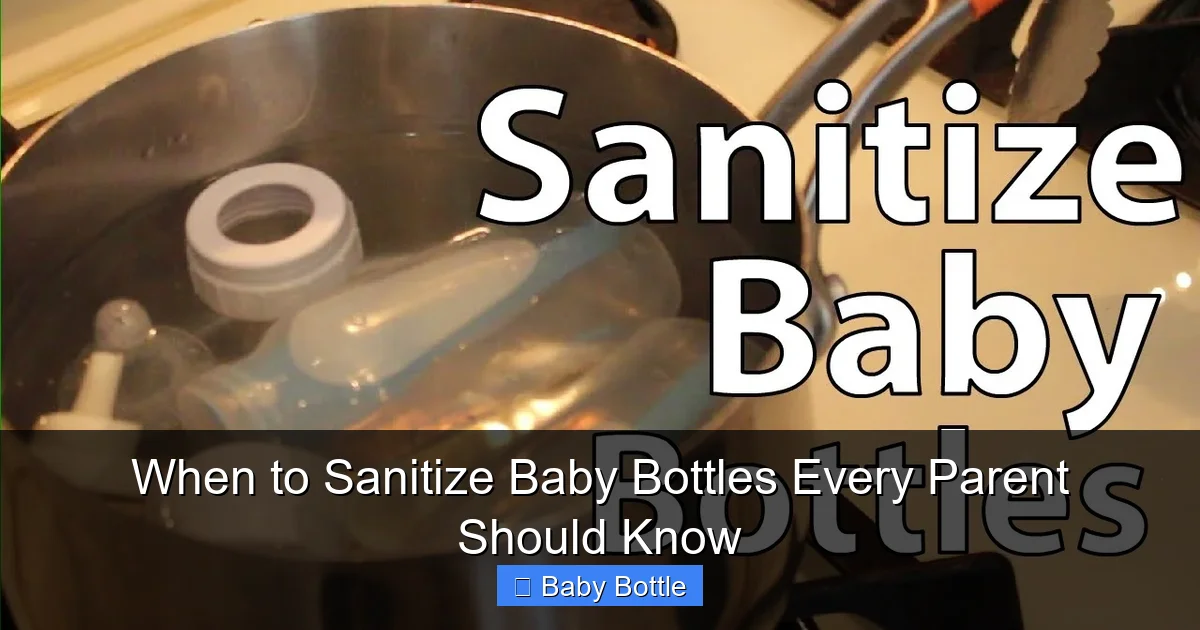
Method A — Boiling
Boiling is simple. It needs only a pot and stove.
- Fill a large pot with water.
- Put bottles, nipples, rings, and small parts into the water.
- Cover the pot.
- Bring to a rolling boil for 5 minutes.
- Turn off heat and leave parts in water for a few minutes.
- Use clean tongs to remove parts. Place on a clean towel to dry.
Boiling is a good way to know when to sanitize baby bottles with no special gear.
Method B — Electric steam sterilizer
Steam sterilizers are easy. They are quick and safe. Follow the device instructions.
- Place clean parts in the sterilizer.
- Add the required water.
- Run the full cycle.
- Keep the lid closed until you use the bottles.
Steam sterilizers answer the question of when to sanitize baby bottles with convenience.
Method C — Microwave steam sterilizer or steam bags
Use microwave steam bags or a microwave sterilizer. They are fast. They work well for travel.
- Place clean parts in the bag or microwave container.
- Add water as directed.
- Heat for the set time.
- Let cool, then remove carefully.
These methods help parents who need fast answers about when to sanitize baby bottles.
Method D — Dishwasher with sanitizing cycle
Many dishwashers have a sanitizing cycle. Use a top rack container to keep parts secure.
- Place parts in dishwasher basket on top rack.
- Use hot water and the sanitize cycle.
- Remove when cool and store clean.
This method is good for busy parents who wonder when to sanitize baby bottles with less work.
Method E — Chemical sanitizing (bleach solution)
Use this only if other options are not available. Follow CDC or product guidelines.
- Mix 1 teaspoon of unscented household bleach per gallon of cool water.
- Soak clean bottles and parts for 2 minutes.
- Rinse with sterile or boiled water if possible.
Chemical sanitizing can answer urgent questions of when to sanitize baby bottles in emergencies.
Step 4: Drying and storing after sanitizing
How you dry and store matters. Wet or covered items can grow germs.
Air dry
Place parts on a clean rack. Let them air dry completely. Do not use a towel to dry. Towels can add germs.
Cold storage
Once dry, assemble only if needed. If you assemble, store in a clean container. Use a covered, dry cup or a sealed box. Label date if needed.
Longer storage
If you store for more than 24 hours, consider re-sanitizing before use. This helps you know when to sanitize baby bottles in real life.
Step 5: Practical schedules and examples
Here are real-life plans you can use. They show clear examples of when to sanitize baby bottles.
Plan A — Newborn family
- Clean after each use.
- Sanitize once daily by boiling or steam.
- Sanitize after any illness or exposure.
Plan B — Working parents
- Clean after each use.
- Sanitize daily or every other day with dishwasher sanitize.
- Use microwave steam bags when traveling.
Plan C — Toddler at home
- Clean after each use.
- Sanitize only after illness or if the bottle gets dirty.
Tips to make it easier
- Sanitize a batch once a day. Rotate bottles for ready use.
- Label clean bottles with a marker or sticker.
- Store parts in a sealed container to avoid dust.
- Keep a spare set of bottles for travel or daycare.
- Use dishwasher-safe bottles to save time.
- Follow manufacturer instructions for nipples and parts.
These tips help answer the everyday question of when to sanitize baby bottles with less hassle.
Troubleshooting: common problems and fixes
Here are common issues and how to solve them. They focus on knowing when to sanitize baby bottles.
Problem: Cloudy bottles or white film
Cause: Mineral deposits from hard water or formula. Fix: Soak in a solution of vinegar and water (1:1) for 15 minutes. Rinse and then sanitize. If cloudiness returns, consider distilled water for formula or use a filter.
Problem: Persistent odor
Cause: Milk residue left in bottle. Fix: Clean immediately after use. Use a bottle brush. Sanitize by boiling or steam. Replace nipples if odor stays.
Problem: Bottle falls on the floor
Cause: Floor germs. Fix: Clean and sanitize before next use. If in public, use disposable liners and sanitize when you return home.
Problem: Nipple cracks or damage
Cause: Wear and tear. Fix: Replace damaged nipples right away. Do not try to repair. Replace parts per manufacturer guidelines.
Problem: Baby seems more fussy after feeds
Cause: Could be allergy, reflux, or bottle hygiene. Fix: Check cleaning and sanitizing routine. Sanitize more often if needed. If fussiness continues, consult your pediatrician.
Safety and product tips
- Check bottle and nipple age. Replace nipples every 2 months or sooner if worn.
- Follow manufacturer instructions for heat limits and dishwasher safety.
- If using steam sterilizers, use filtered water if your tap is hard.
- Keep sanitizers and bleach locked away from kids.
These safety tips make it easier to know when to sanitize baby bottles safely.
Special notes on breast milk and formula
Sanitizing matters whether you use breast milk or formula. For expressed breast milk, clean and sanitize bottles before first use. For formula, especially powdered formula, sanitize more when baby is young. For concern about bacteria in powdered formula, always follow manufacturer and pediatric guidance. These rules answer common questions about when to sanitize baby bottles for different feeding types.
Daycare and travel tips
If you send bottles to daycare, ask their policy. Ensure they know when to sanitize baby bottles and how. Pack clean spare bottles. For travel, use microwave steam bags or dispose of single-use liners. This keeps feeding safe on the go.
Signs you may need to sanitize more often
- Baby has frequent tummy upset.
- Household members are sick.
- Water quality is poor or uncertain.
- Bottle parts are frequently dropped or handled by many people.
When these signs appear, increase how often you sanitize. This helps you know when to sanitize baby bottles in changing situations.
Final checklist: quick reference
- Clean after each use.
- Sanitize before first use.
- Sanitize daily for newborns and preemies.
- Sanitize after illness or contamination.
- Use any safe method: boiling, steam, dishwasher, or microwave.
- Air dry and store dry.
Conclusion
Now you know clear answers for when to sanitize baby bottles. Start with cleaning after every use. Sanitize more for newborns and after illness. Use a method that fits your life. Keep parts dry and store them clean. Follow these steps and tips. Your baby will get safer feeds. You will feel calmer and more in control.
🎥 Related Video: How to sanitize/sterilize baby feeding bottles | sterilize feeding bottles without sterilizer
📺 Fussy Mommy Explores
