
Baby car seat safety is a non-negotiable part of parenting. This guide explains the life-saving physics behind car seats, details the legal and moral responsibilities of caregivers, and provides a clear, step-by-step framework for selecting, installing, and using your child’s seat correctly to ensure their maximum protection on every journey.
Key Takeaways
- It’s The Law, But It’s Also Physics: Car seats are legally required because they are scientifically engineered to absorb crash forces and distribute them away from a child’s vulnerable body, significantly reducing the risk of fatal injury.
- Correct Installation is Critical: A car seat that is not installed tightly and correctly can fail in a crash. Always follow both the car seat manual and your vehicle’s owner manual for installation instructions.
- Rear-Facing is Safest, For Longer: Keep your child in a rear-facing car seat for as long as possible, up to the height or weight limit of the seat. This position best supports their head, neck, and spine in a frontal collision.
- Harness Fit is Everything: A properly tightened harness with the chest clip at armpit level is crucial. The “pinch test” ensures it’s snug enough to prevent the child from being ejected or thrown within the seat.
- Every Transition is a Step Down in Safety: Moving to the next seat type (rear-facing to forward-facing, booster, seat belt) offers less protection. Delay each transition until your child maximizes the limits of their current seat.
- Your Example Matters: Consistently using a car seat, even for short trips, instills lifelong safety habits in your child and underscores that vehicle safety is never optional.
Why Baby Car Seat Safety Is Non Negotiable: Your Complete Guide
Welcome, parent or caregiver. If you’re reading this, you already know that keeping your child safe is your top job. One of the most important places to do that is in the car. You might have questions. Which seat is best? How do I install it? Why is it such a big deal? This guide is here to answer all of that and more. We will walk through the undeniable “why” behind car seat safety, the hard facts, and the simple steps you can take today. By the end, you’ll feel confident and equipped. You’ll know that buckling your little one into their seat is the single most important thing you do before you drive.
The Unshakeable “Why”: Understanding the Stakes
Let’s start with the core reason. A baby car seat is not just a convenient place for your child to sit. It is a meticulously engineered piece of safety equipment. To see it as optional is to misunderstand the fundamental dangers of traveling in a vehicle.
Visual guide about Why Baby Car Seat Safety Is Non Negotiable
Image source: milansafety.com
The Physics of a Crash: Force and Fragility
In a crash, everything inside the car keeps moving at the original speed until it hits something. This is Newton’s First Law of Motion. For an unrestrained 10-pound infant in a 30 mph crash, that infant effectively becomes a 300-pound force projectile. No adult’s arms are strong enough to hold onto that. A car seat is designed to cradle the child and, crucially, to absorb and redistribute those massive crash forces across the strongest parts of the child’s body and the seat’s structure. The hard shell, energy-absorbing foam, and reinforced straps work as a system to slow the child down more gently and keep them contained.
The Law and Your Liability
In every U.S. state and most countries worldwide, using a proper child restraint system is the law. Fines and penalties exist for a reason: to compel compliance for public safety. But beyond the ticket, there is profound moral and legal liability. Choosing not to use a seat, or using it incorrectly, is a conscious decision that can have devastating, irreversible consequences. The law sets the bare minimum standard; your care should aim far higher.
The Heartbreaking Statistics
The numbers don’t lie. According to the National Highway Traffic Safety Administration (NHTSA), car seats reduce the risk of fatal injury by 71% for infants and 54% for toddlers. Properly used, they are overwhelmingly effective. Conversely, motor vehicle crashes remain a leading cause of death for children. In many of these tragedies, the child was unrestrained or improperly restrained. This isn’t about fear. It’s about empowerment. You have the tool—the properly used car seat—to change these odds dramatically.
Your Step-by-Step Action Plan for Maximum Safety
Knowing why is step one. Now, let’s build your action plan. Follow these steps in order to ensure you’ve covered every base for your child’s car seat safety.
Visual guide about Why Baby Car Seat Safety Is Non Negotiable
Image source: motherandbaby.com.sg
Step 1: Choose the Right Seat for Your Child’s Stage
Car seats are staged by your child’s size, not just age. Always follow the seat’s specific height and weight limits, which offer more protection than age guidelines.
Rear-Facing Only (Infant) Seat
This is the first seat for most newborns. It has a handle and often a detachable base. Use it from birth until your child reaches the seat’s height or weight limit (often 30-35 lbs). The big safety rule: Keep them rear-facing as long as the seat allows. This position supports the head, neck, and spine.
Convertible Seat
This seat can be used rear-facing and then “converted” to forward-facing. It often has higher rear-facing limits, allowing you to keep your child rear-facing longer—which is safest. It’s a great long-term investment.
All-in-One Seat
This seat transitions from rear-facing to forward-facing to a high-back booster. It’s designed to last through all stages, but be sure to check its limits and fit at each phase.
Step 2: Master the Installation
A perfect seat installed poorly is dangerous. Your two bibles are: 1) The car seat manual and 2) Your vehicle’s owner manual (for the car seat installation section).
Where to Install
The safest spot is the back seat, always. The center rear seat is often the most protected from side-impact crashes, but only if you can get a tight install there. If not, the outboard rear seats are perfectly safe.
Installation Method: LATCH vs. Seat Belt
Both are equally safe when used correctly. Use one or the other, never both together unless the manual specifically states it’s allowed.
LATCH: Lower Anchors and Tethers for Children. This is a system of metal anchors in your vehicle’s seat crease and top tether anchors. It can be simpler but has a weight limit (check both car and vehicle manuals).
Seat Belt: You can always use the vehicle’s seat belt to install the seat. Ensure you lock the seat belt (usually by pulling it all the way out and letting it retract) and thread it through the correct path on the car seat.
The “Inch Test”
Once installed, grab the seat at the belt path (where the seat belt or LATCH strap goes through) and tug side-to-side and front-to-back. It should not move more than one inch in any direction. If it does, tighten more.
Step 3: Secure Your Child Correctly Every Time
How your child sits in the seat is just as important as how the seat is in the car.
Harness Fit is Key
- Height: For rear-facing, harness straps should be at or below the child’s shoulders. For forward-facing, at or above.
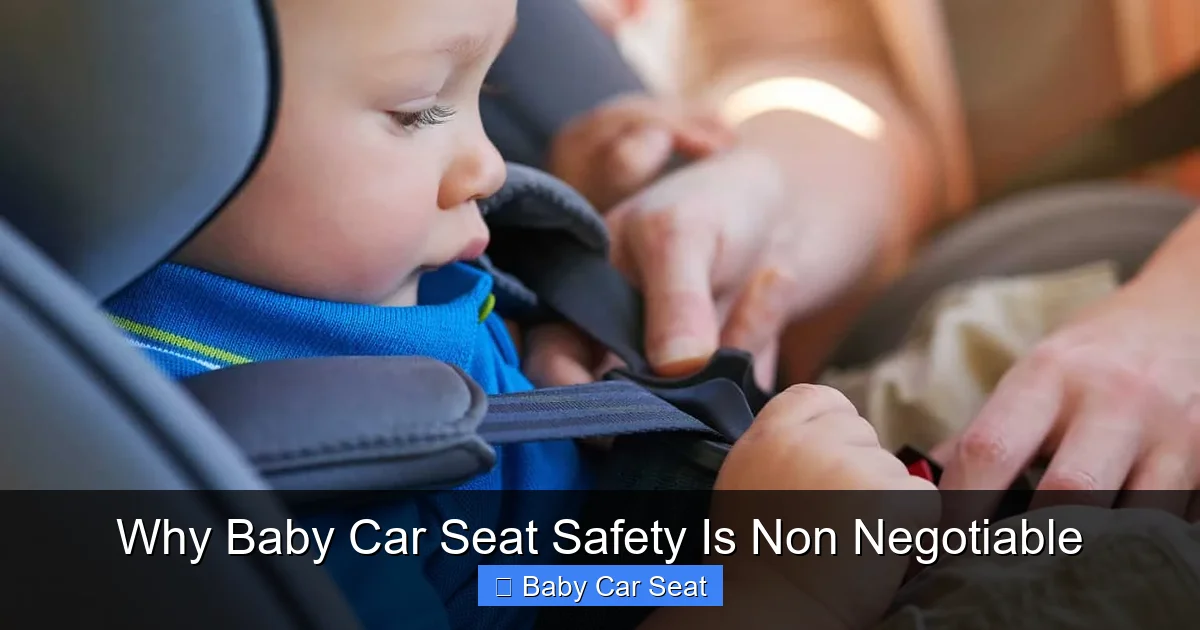
- Tightness: Perform the “pinch test.” Buckle and tighten the harness, then try to pinch the strap vertically at the child’s collarbone. If you can pinch any excess webbing, it’s too loose. The straps should be snug with no slack.
- Chest Clip: Position at armpit level. It’s called a chest clip for a reason—it keeps the harness straps properly positioned on the shoulders.
Bulk is the Enemy
Do not dress your child in puffy coats or snowsuits in the car seat. The padding compresses in a crash, creating dangerous slack. Instead, buckle them in a thin layer, then place a coat or blanket over the fastened harness.
Step 4: Know When to Transition (And When to Wait)
Moving to the next stage is a safety step-down. Don’t rush it.
- Rear-facing to Forward-facing: Only when your child exceeds the rear-facing height or weight limit of their convertible or all-in-one seat.
- Forward-facing to Booster: Only when they exceed the harness limits of their seat AND are mature enough to sit properly 100% of the time (no slouching, no playing with the seat belt).
- Booster to Seat Belt: Only when they pass the 5-Step Test (back against seat, knees bent at edge, lap belt low on hips, shoulder belt crosses chest/mid-shoulder, and they can sit like this for the whole trip). This is usually around 4’9″ tall and 10-12 years old.
Troubleshooting Common Car Seat Safety Problems
Even with the best intentions, issues pop up. Here’s how to solve them.
Visual guide about Why Baby Car Seat Safety Is Non Negotiable
Image source: jovikids.com
Problem: The seat install is tight, but the base is uneven on the vehicle seat.
Solution: Check if your vehicle seat is sloped. Many car seats allow the use of a tightly rolled towel or a pool noodle under the base (in the seat crease) to achieve the proper level angle. Only do this if your car seat manual permits it.
Problem: My child slouches or slumps to the side in their rear-facing seat.
Solution: This is common in newborns. Use tightly rolled receiving blankets placed on either side of the shoulders and hips (never behind the back or under/behind the harness) for support. Ensure the harness is snug.
Problem: The harness straps are always twisted.
Solution: Take the time to straighten them each time you buckle. Twisted straps have less surface area and can concentrate force in a crash. Develop a straightening habit.
The Final Word: Building a Culture of Safety
Making baby car seat safety non-negotiable is more than a checklist. It’s a mindset. It means buckling up every single time, for every single trip, no matter how short. It means politely insisting that anyone who drives your child follows the same rules. It means checking the installation monthly. It means being the calm but firm voice for your child’s protection.
You are not being overprotective. You are being a responsible parent or caregiver. The minor inconveniences—the extra minutes spent tightening a harness, the research before buying a seat, the refusal to make a “quick” trip without it—are nothing compared to the profound peace of mind and proven protection you provide. Your commitment today builds your child’s safety habit for a lifetime. Start strong. Stay consistent. Their safety is, and always will be, non-negotiable.
🎥 Related Video: Why Baby Car Seats are Necessary!👶🚗 #childsafety #loopie #carseat #babygear
📺 Loopie
Every day, we see accidents, sudden braking, potholes, overspeeding, but what we don’t see is how dangerous this is for children …
