Yes, you can collect your parents’ Social Security benefits after they pass away. But, specific conditions must be met.
Let’s dive into the details. Losing a parent is never easy, and financial concerns can add to the stress. Understanding Social Security survivor benefits can help ease this burden. These benefits provide financial support to surviving family members. But not everyone qualifies.
There are rules and conditions to meet. This blog will explain who is eligible, how much you might receive, and the steps to apply. Whether you’re a minor child, a dependent parent, or a spouse, knowing your rights can make a big difference. Stay with us as we guide you through this important information.
Eligibility Criteria
Understanding the eligibility criteria for collecting Social Security benefits after a parent’s death is crucial. You need to be aware of who qualifies and the necessary documentation. This information will help you navigate the process smoothly.
Who Qualifies?
Not everyone is eligible to collect a deceased parent’s Social Security benefits. The following individuals usually qualify:
- Surviving spouse – If they are 60 years or older.
- Surviving divorced spouse – If the marriage lasted 10 years or more.
- Children – If they are unmarried and under 18 years old.
- Disabled children – Regardless of age, if the disability started before 22.
- Dependent parents – If they are 62 or older.
Each category has specific requirements. Ensure you fall into one of these groups before proceeding.
Required Documentation
Gathering the right documents is essential. The Social Security Administration (SSA) requires:
- Death certificate – To prove the parent has passed away.
- Birth certificate – To establish your relationship with the deceased.
- Marriage certificate – If you are a surviving spouse.
- Divorce decree – If you are a surviving divorced spouse.
- Proof of disability – If you are a disabled child claiming benefits.
- Social Security numbers – For both you and the deceased.
Ensure all documents are original or certified copies. This speeds up the verification process.
Application Process
When a parent dies, you may be eligible to collect their Social Security benefits. Knowing the application process is essential. This guide will help you navigate the steps to apply for these benefits efficiently.
How To Apply
Applying for a deceased parent’s Social Security benefits requires following specific steps:
- Gather the necessary documents. You will need the parent’s death certificate, Social Security number, and proof of your relationship to them.
- Visit the Social Security Administration (SSA) website or your local SSA office. Online applications are not available for survivors’ benefits.
- Complete the application forms. A representative can assist you with this at the SSA office.
- Submit the application and required documents. Ensure all information is accurate to avoid delays.
Having the correct documents and completing the forms thoroughly will expedite the process.
Important Deadlines
Meeting deadlines is crucial when applying for Social Security survivors’ benefits:
- Apply within two years of the parent’s death. This will ensure you receive any back payments you are entitled to.
- For minor children or disabled adult children, apply as soon as possible. Delays can affect the amount of benefits received.
Understanding and adhering to these deadlines will help you maximize the benefits available to you.
| Step | Description |
|---|---|
| Gather Documents | Collect the death certificate, SSN, and proof of relationship. |
| Visit SSA Office | Go to the SSA website or local office for assistance. |
| Complete Forms | Fill out the application forms with accurate information. |
| Submit Application | Submit the forms and documents to the SSA. |
Applying for Social Security benefits after a parent’s death can be complex. Following these steps will help simplify the process.
Types Of Benefits
Understanding the types of benefits available after a parent’s death is crucial. These benefits can provide financial support during a difficult time. This section will cover two main types: Survivor Benefits and Spousal Benefits.
Survivor Benefits
Survivor benefits offer financial assistance to the family members of a deceased person. These benefits are available to children, dependent parents, and sometimes even grandchildren.
- Children can receive benefits until they turn 18, or 19 if still in high school.
- Disabled children may continue to receive benefits beyond 18.
- Dependent parents aged 62 or older may also qualify.
To claim survivor benefits, you must apply through the Social Security Administration. Gathering necessary documents, like the death certificate and birth certificates, is essential.
Spousal Benefits
Spousal benefits are another form of financial support. They are available to surviving spouses or ex-spouses who meet specific criteria.
- The surviving spouse must be at least 60 years old.
- If disabled, the age limit drops to 50.
- Ex-spouses can receive benefits if the marriage lasted at least 10 years.
Surviving spouses may also qualify for a one-time death benefit payment. This payment is typically $255 and can help cover immediate expenses.
It’s important to know that remarriage can affect eligibility. If the surviving spouse remarries before age 60, they usually lose eligibility for benefits.
| Type of Benefit | Eligibility | Age Limit |
|---|---|---|
| Survivor Benefits | Children, Dependent Parents | 18 or 19 for children, 62 for parents |
| Spousal Benefits | Surviving Spouse, Ex-spouse | 60 or 50 if disabled |
Both types of benefits offer crucial support during difficult times. Knowing your options can help you navigate the financial challenges that follow a parent’s death.

Credit: www.northwesternmutual.com
Impact On Your Finances
When your parents pass away, you might wonder about their Social Security benefits. Understanding the financial impact is crucial. This section will explore the tax implications and the effect on retirement plans.
Tax Implications
Collecting your parent’s Social Security benefits can affect your taxes. You need to be aware of this. Here are some key points:
- Social Security benefits may be taxable.
- Your overall income level determines the tax rate.
- Up to 85% of the benefits could be taxable.
It’s vital to consider the combined income. This includes your adjusted gross income, nontaxable interest, and half of your Social Security benefits.
| Combined Income | Taxable Amount |
|---|---|
| Less than $25,000 | None |
| $25,000 – $34,000 | Up to 50% |
| More than $34,000 | Up to 85% |
Effect On Retirement Plans
Receiving your parent’s Social Security can alter your retirement plans. Consider the following impacts:
- It might increase your retirement income.
- It could affect your savings strategy.
- Your eligibility for other benefits might change.
Adjusting your retirement plans is essential. Review your savings and investments.
Make sure you understand how these benefits integrate into your overall retirement strategy. Seek advice from a financial planner if needed.
Common Mistakes
Collecting your parents’ Social Security after they die can be complex. Many people make common mistakes that cause delays and errors. Avoid these pitfalls by understanding the key areas where mistakes often occur.
Avoiding Delays
One of the most common mistakes is waiting too long to report a death. Report the death as soon as possible to the Social Security Administration (SSA). Delays can cause missed payments and complications.
- Contact the SSA immediately after the death.
- Have all necessary documents ready, such as the death certificate.
- Follow up if you do not receive a confirmation.
Ensuring Accuracy
Accuracy is critical when dealing with Social Security benefits. Errors in paperwork can lead to delays and denials.
- Double-check all information before submission.
- Ensure the deceased’s Social Security Number is correct.
- Verify all personal details, such as birth dates and addresses.
Using incorrect information can cause significant issues. Ensure all forms are filled out completely and correctly.
By being aware of these common mistakes, you can streamline the process. This ensures timely and accurate collection of benefits.
Credit: money.cnn.com

Credit: sackettlaw.com
Frequently Asked Questions
Can I Collect My Parents’ Social Security After They Die?
Yes, you may be eligible for survivors benefits. These benefits can help with financial support.
How Do I Apply For Social Security Survivors Benefits?
You need to contact the Social Security Administration. They will guide you through the application process.
What Documents Are Needed For Survivors Benefits?
You’ll need your parent’s death certificate and your own ID. Additional documents may be required.
How Much Will I Receive In Survivors Benefits?
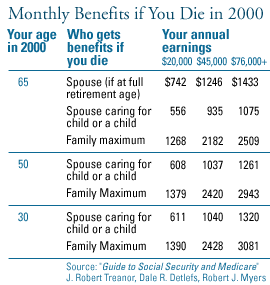
The amount depends on your parent’s earnings record. It usually ranges from 75% to 100% of their benefit.
Can Adult Children Receive Social Security Survivors Benefits?
Yes, but only in specific situations. For example, if you are disabled or a student under age 19.
Are Survivors Benefits Taxable?
Yes, survivors benefits can be taxable. It depends on your total income and filing status.
Conclusion
Understanding your rights with Social Security benefits is essential. You may receive benefits after a parent’s death. This can ease financial stress. Check eligibility requirements carefully. Contact the Social Security Administration for help. They provide clear guidance. Stay informed to make the best decisions.
Managing Social Security can be simple with the right knowledge. Remember, it’s about securing your future.