
Baby strollers do not have a printed expiration date, but they do have a functional lifespan. This guide will teach you how to inspect your stroller for critical signs of wear, understand manufacturer safety guidelines, and make an informed decision about its safety. Knowing when to retire a stroller is key to protecting your child.
Key Takeaways
- No Official Expiration: Strollers lack a stamped expiration date, but safety and wear create a de facto lifespan.
- Inspect Key Components: The frame, brakes, harness, and folding mechanisms are critical points of failure to check regularly.
- Material Degradation Matters: Plastic can become brittle and fabric can fade and weaken from sun and weather exposure over time.
- Consult the Manual: The manufacturer’s manual often states a recommended “useful life” or safety warnings for older models.
- Recall History is Crucial: Always check if your stroller model has been recalled for safety defects, regardless of its age.
- When in Doubt, Replace It: If you find significant wear, damage, or have serious safety concerns, err on the side of caution and get a new stroller.
- Proper Care Extends Life: Regular cleaning, safe storage, and following weight limits can maximize your stroller’s safe lifespan.
How to Tell if Your Baby Stroller Has Expired
As a parent, you check food expiration dates all the time. But what about your baby stroller? You might be using a trusted hand-me-down or a stroller that’s seen a few kids. The big question is: does a baby stroller have an expiration date? The short answer is no, not in the way milk does. But, every stroller has a functional lifespan. Safety wears out. This guide will walk you through, step-by-step, how to perform a complete safety audit on your stroller. You will learn what to look for, where to look, and how to decide if it’s time for a replacement.
Step 1: Understand the Concept of Stroller “Expiration”
Think of a stroller like car tires. They don’t have an expiry date stamped on them. But, over time and miles, the tread wears down. The rubber degrades. They become unsafe. A stroller is the same. Its “expiration” is based on material fatigue, safety standards, and wear and tear. A stroller that is 10 years old may have been used daily for three kids. It has been folded hundreds of times. It has been left in the sun. All of this stresses its parts. Your job is to find that stress before it fails.

Visual guide about How to Tell if Your Baby Stroller Has Expired
Image source: strollerboards.com
Why Old Strollers Can Become Unsafe
- Plastic Becomes Brittle: Plastic joints, wheels, and parts can crack with age and UV exposure.
- Metal Fatigue: The frame can develop weak points or small cracks from repeated stress.
- Safety Standards Evolve: Newer strollers must meet stricter safety regulations than models from 10-15 years ago.
- Recall Risks: Older models are more likely to have unresolved safety recall notices.
Step 2: Perform a Visual and Physical Inspection
Start with a clean, well-lit area. Take your stroller and go through each part slowly. Be thorough.

Visual guide about How to Tell if Your Baby Stroller Has Expired
Image source: 64.media.tumblr.com
Check the Frame and Structure
Look closely at all metal tubing and joints. Run your fingers along the frame. You are feeling for cracks, deep scratches, rust, or corrosion. Pay special attention to folding hinges and locking points. These are high-stress areas. Any sign of a crack or bend is a major red flag. Try to wobble the stroller side-to-side when it’s fully set up. There should be very little give. Excessive flexing means the frame is compromised.
Test the Brakes and Wheels
Engage the brake system. It should lock firmly and completely. The stroller should not roll at all on a slight incline. Listen for grinding sounds. Check the wheel axles. Wheels should spin freely without wobble. Inspect the tires for dry rot (cracking) or extreme wear. Inflatable tires should hold air. A failing brake is one of the most direct safety hazards.
Inspect the Harness and Seat Fabric
The five-point harness is non-negotiable. Check every buckle. They must click in and release smoothly. Tug hard on the straps. They should not be frayed, torn, or overly stretched. Look at the seat fabric and canopy. Is it faded or thin? Sun damage weakens fabric significantly. Can your child still be secured snugly? If the harness is unreliable, the stroller is unsafe.
Examine the Folding Mechanism
This is critical for pinch hazards and collapse risks. Operate the folding mechanism multiple times. It should lock open securely and audibly. It should fold smoothly without forcing. Check the safety lock that prevents accidental folding. If the mechanism is sticky, loose, or unreliable, the stroller is a danger.
Step 3: Research Your Specific Model
Your inspection is just one part. Now, you need to investigate the stroller’s history.
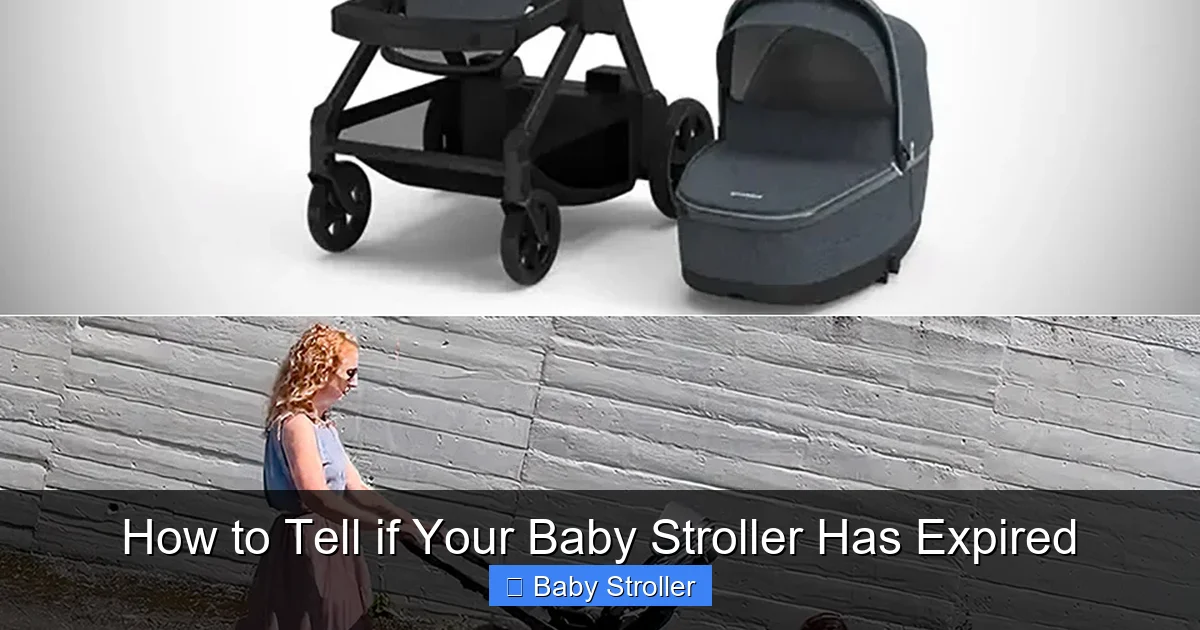
Visual guide about How to Tell if Your Baby Stroller Has Expired
Image source: techeblog.com
Find and Read the Manual
Locate your model’s user manual (often available online). Look for a section on “useful life” or “recommended product lifetime.” Some brands, like UPPAbaby, explicitly state a lifespan (e.g., “for use up to 7 years”). This is the closest thing to an official expiration date.
Check for Recalls Immediately
Visit the official website of the Consumer Product Safety Commission (CPSC) or the manufacturer. Search for your stroller’s model number and name. Recalls are serious. They address defects that can cause injury. If your stroller was recalled and never repaired, it is not safe to use.
Step 4: Consider the Stroller’s History and Usage
Ask yourself these questions. Be honest.
- How old is it? Strollers used heavily for over 5-7 years are in a higher risk category.
- How many children used it? More use equals more wear.
- How was it stored? Was it left in a damp garage or hot attic? Was it exposed to sun and rain? Environmental damage is cumulative.
- Was it in an accident? Even a minor tip-over can create hidden weak points in the frame.
- Are parts available? If a wheel or buckle breaks, can you get a genuine replacement? If not, the stroller is harder to keep safe.
Troubleshooting: What to Do If You Find Problems
You found an issue. Now what?
- Minor Issue (Loose screw, dirty brake): Tighten, clean, or lubricate according to the manual. Use only manufacturer-approved parts if replacing something small.
- Moderate Issue (Worn wheel, frayed strap): Contact the manufacturer. See if you can purchase an official replacement part. Installing it correctly is key.
- Major Issue (Cracked frame, faulty harness buckle, failed brake, recall defect): Stop using the stroller immediately. Do not attempt to repair structural or critical safety parts. It is time to replace the stroller. For recalled items, follow the manufacturer’s repair or replacement program.
Conclusion: Making the Final Call
So, does your baby stroller have an expiration date? Not a printed one. But it has a clear end of life. It arrives when safety is no longer guaranteed. After your thorough check, you are the expert on your stroller. If it passed all inspections, has no recalls, and you feel confident, it may have life left. But if you have any nagging doubt—if a joint seems loose, if the buckle sticks—listen to that instinct. Your child’s safety rides in that stroller. When in doubt, the safest choice is to retire it and find a stroller that meets current safety standards. That peace of mind is priceless.
🎥 Related Video: Yep, it’s true! Car seats expire. Check yours today to make sure your kiddo is riding safe 🚘
📺 Dayton Children’s Hospital
Yep, it’s true! Car seats expire. Check yours today to make sure your kiddo is riding safe → If the expiration date is printed on …
