
Understanding how long your baby should stay in a stroller is key for their comfort and development. This guide offers clear, age-based recommendations to help you plan safe outings. You’ll learn to recognize signs of fatigue and balance stroller time with active play.
How Long Should a Baby Stay in a Stroller
Hey there, super parent! If you’ve ever asked, “How long should my baby stay in a stroller?” you’re not alone. Strollers are awesome for getting around, but knowing the limits keeps your little one safe and content. In this guide, we’ll cover everything from age rules to comfort tips. You’ll learn how to make stroller time fun and healthy. Let’s get started!
Key Takeaways
- Age Matters: Younger babies need shorter stroller sessions, while toddlers can handle longer periods with breaks.
- Watch for Signs: Fussiness, crying, or physical discomfort indicate it’s time to take your baby out of the stroller.
- Safety First: Always use a five-point harness and ensure the stroller is on a flat surface when stationary.
- Development Balance: Limit stroller time to encourage crawling, walking, and exploration for healthy growth.
- Weather Considerations: Adjust stroller duration based on temperature to prevent overheating or chilling.
- Routine Integration: Plan stroller outings around nap times and feeding schedules for a happier baby.
Why Stroller Time Limits Matter
Strollers are handy, but too much time in one can affect your baby. Babies need to move to grow strong. Limiting stroller time helps them develop muscles. It also prevents discomfort. Think of the stroller as a short trip helper, not a all-day seat.
Health and Development Benefits
Free movement boosts motor skills like crawling and walking. Stroller time should be balanced with floor play. This way, your baby learns to explore.
Avoiding Physical Issues
Long stroller stays can cause flat head syndrome or poor posture. Babies have soft bones. Changing positions often avoids these problems.
Emotional Well-being
Babies crave interaction. In a stroller, they might feel lonely if you’re not engaging. Short rides with talk and smiles make outings joyful.
Factors Affecting How Long Baby Can Stay in Stroller
Several things influence stroller time. Consider these when planning your day.
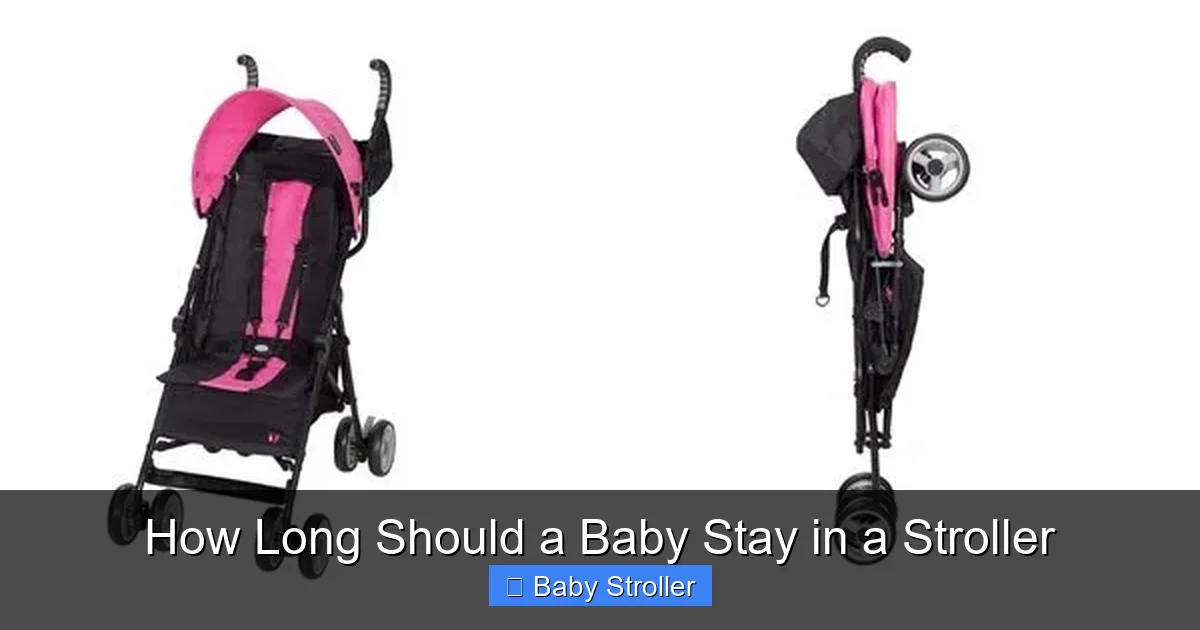
Visual guide about How Long Should a Baby Stay in a Stroller
Image source: strollerinsider.com
Baby’s Age and Development Stage
Newborns are delicate and need frequent breaks. Older babies are sturdier but still have limits. Always match stroller time to your baby’s stage.
Stroller Type and Setup
Some strollers recline fully for newborns. Others are upright for toddlers. Check the manual for age and weight limits. Adjust the harness for a snug fit.
Baby’s Mood and Health
A happy, healthy baby might enjoy a longer ride. A sick or tired baby won’t. Listen to your baby’s cues. Keep trips short if they’re grumpy.
Weather and Environment
Hot or cold weather shortens safe stroller time. Dress your baby in layers. Use sun shades or rain covers. Pick smooth paths for a comfy ride.
Purpose of the Outing
A quick errand is different from a day out. For long trips, plan breaks. This keeps your baby comfortable.
Age-by-Age Guidelines for Stroller Time
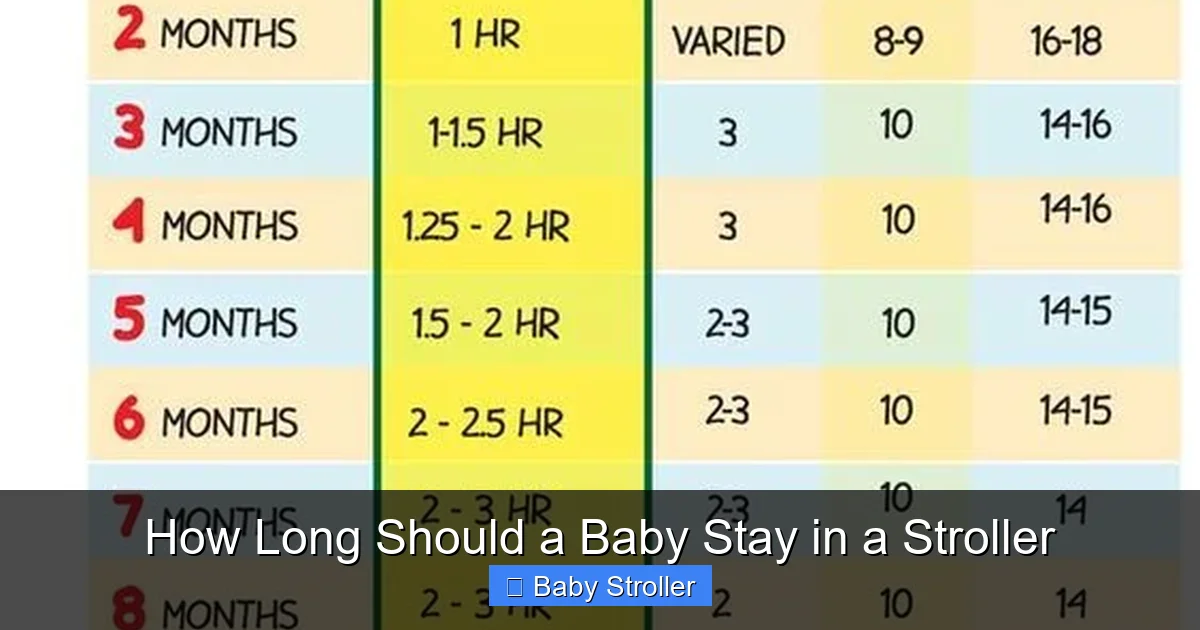
Here’s a simple guide based on age. Remember, every baby is unique. Use this as a starting point.
Visual guide about How Long Should a Baby Stay in a Stroller
Image source: i.pinimg.com
Newborns (0-3 Months)
Newborns should stay in a stroller for 30 minutes to an hour at most. They sleep a lot but need frequent feeds. Use a fully reclined stroller for back support. Take breaks every 30 minutes for cuddles or diaper changes.
Example: On a 45-minute walk, stop halfway to check on your baby. Offer a feed and a snuggle.
Infants (4-9 Months)
Infants can handle 1 to 2 hours in a stroller, but break it up every hour. They’re more alert and curious. Point out sights during stops. Let them touch safe toys.
Tip: Attach toys to the stroller for entertainment. Avoid overstimulation with too many items.
Toddlers (10 Months and Up)
Toddlers can stay in a stroller for 2-3 hours, but limit continuous sitting to 1-2 hours. They love to move, so encourage walking breaks. This helps build leg strength.
Example: At the park, let your toddler walk between play areas. Use the stroller for longer stretches.
Recognizing When Baby Has Had Enough
Your baby will show signs when they’re done with stroller time. Watch closely.
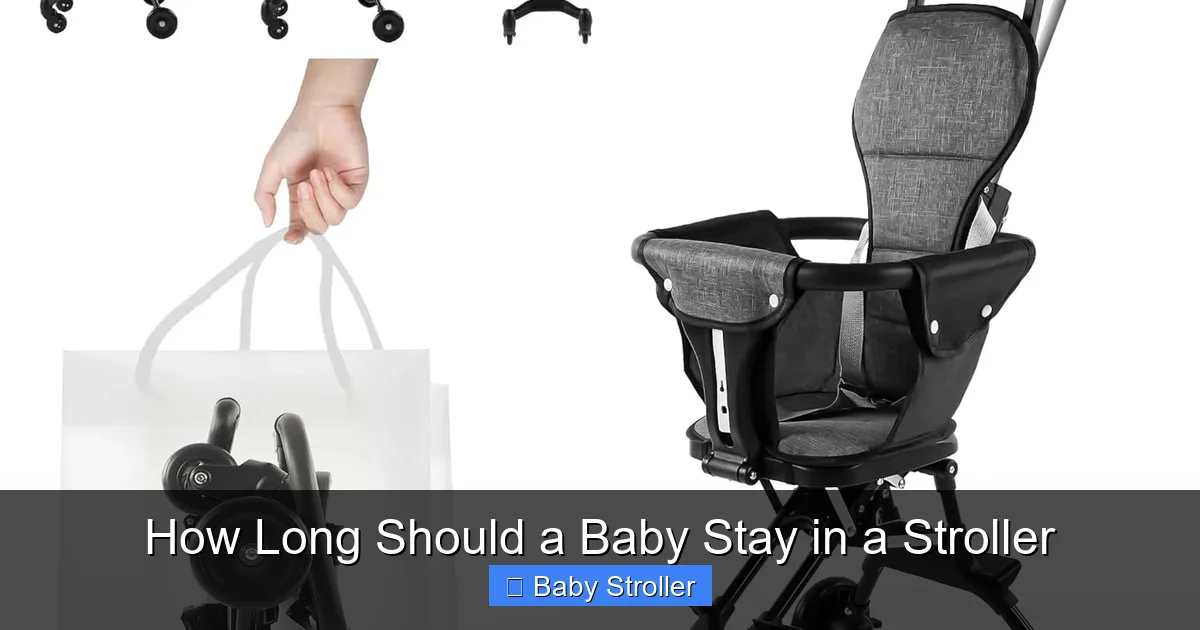
Visual guide about How Long Should a Baby Stay in a Stroller
Image source: m.media-amazon.com
Physical Signs
- Slouching or Sliding: If your baby slouches, they might be tired.
- Fussing or Crying: This is a clear signal to stop.
- Red Marks: Check for straps digging into skin.
- Sweating or Shivering: Adjust clothing or move to a better spot.
Behavioral Signs
- Loss of Interest: If they stop looking around, they might be bored.
- Attempts to Escape: Trying to climb out means they want freedom.
- Unusual Quietness: Sometimes, silence means discomfort.
Tips for Maximizing Stroller Safety and Comfort
Follow these tips to make stroller rides smooth and safe.
Proper Harness Use
Always use the five-point harness. Adjust it so you can fit two fingers between the straps and your baby. This keeps them secure without being too tight.
Frequent Breaks
Plan breaks every 30-60 minutes for young babies. Use breaks for feeding, diaper changes, or stretching. Let your baby move their arms and legs.
Stroller Positioning
Adjust the recline based on activity. For naps, recline fully. For sightseeing, keep it upright. Never leave the stroller on a slope when stopped.
Engage Your Baby
Talk to your baby during the ride. Point out trees, cars, or animals. Sing songs. This makes stroller time interactive and fun.
Check the Weather
Before heading out, check the forecast. Dress your baby in layers. In summer, use a sun hat and sunscreen. In winter, bundle up with cozy blankets.
Troubleshooting Common Stroller Issues
Sometimes, things don’t go as planned. Here’s how to handle common problems.
Baby Cries in the Stroller
First, check for hunger, a wet diaper, or temperature issues. If all are fine, try distracting with a toy or pacifier. Change your walking speed or direction. If crying continues, take a break.
Overheating or Chilling
Feel your baby’s neck or back to check temperature. If warm, remove a layer. If cold, add one. Use stroller fans or footmuffs as needed.
Refusal to Sit in Stroller
Some babies resist strollers. Start with short trips at home. Make it positive with toys and praise. Gradually increase distance. Ensure the stroller is comfy and fits well.
Stroller Not Maneuvering Well
If the stroller is hard to push, check the wheels. Clean them if dirty. Inflate tires if needed. A smooth ride is more comfortable for your baby.
Conclusion
So, how long should a baby stay in a stroller? It depends on age, mood, and situation. By following these guidelines, you can ensure safe and happy outings. Remember, the stroller is a tool to help you, not a substitute for interaction. Use it wisely, listen to your baby, and enjoy the journey together. Happy strolling!
🎥 Related Video: Don't Switch to a Stroller Until You Check For This
📺 Emma Hubbard
Sitting a baby up in a stroller before they’re ready presents some significant safety risks. It also leads to a baby who’s …
