
Are baby car seats allowed on airplanes? Yes, in many cases. This guide shows what to check, how to install, and how to travel smart. Follow simple steps and tips to keep your child safe and calm on flights.
Are baby car seats allowed on airplanes Travel Tips
Key Takeaways
- Point 1: Most airlines allow a certified car seat on board when you buy a seat for your child. Check rules before you travel.
- Point 2: Look for FAA or local certification labels. A certified seat is usually allowed on airplanes.
- Point 3: Use the car seat on the airplane for takeoff, landing, and turbulence. It offers the best restraint for infants and toddlers.
- Point 4: Measure your seat and check airplane seat width. Not all car seats fit every airplane seat.
- Point 5: Bring the manual, the right straps, and a travel plan. Gate-check options and storage tips help at the airport.
- Point 6: Know how to install with the airplane belt or LATCH where allowed. Practice before travel.
Introduction
This guide answers the big question: are baby car seats allowed on airplanes. It gives clear steps. You will learn how to check airline rules, pick the right car seat, install it, and handle problems. You will get travel tips and real examples. The tone is simple. The steps are easy.
Step 1: Know the basic rule
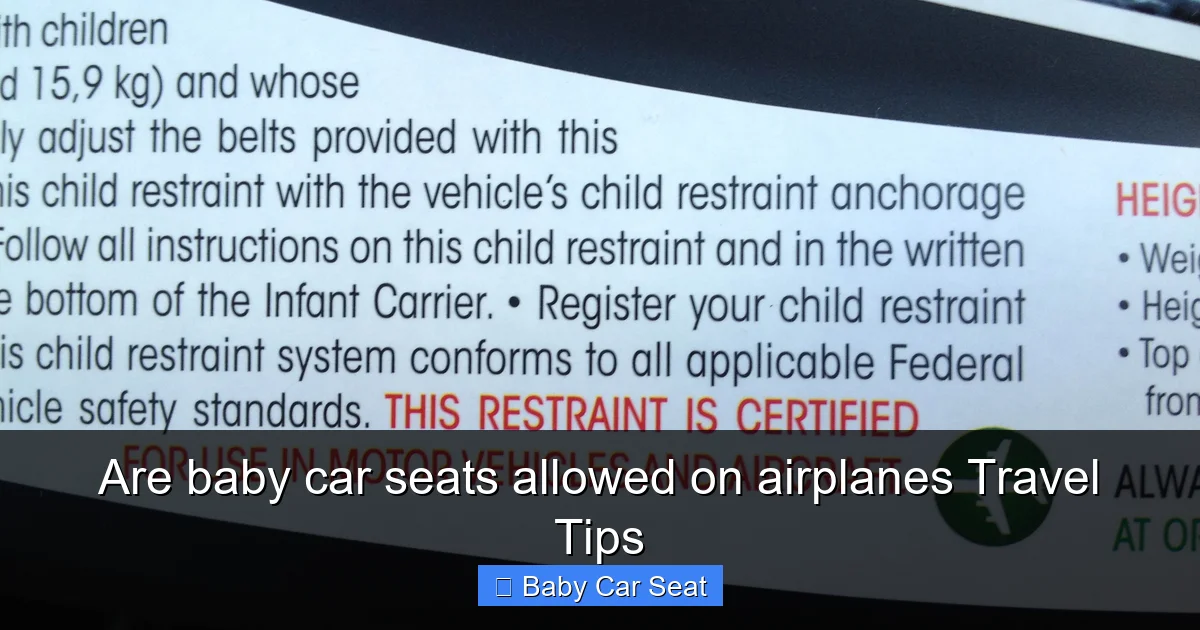
The first step is simple. Ask: are baby car seats allowed on airplanes? The basic rule is this: many airlines allow car seats if you buy a seat for your child. Seats must be certified for use on aircraft. Certification is often on the seat label.
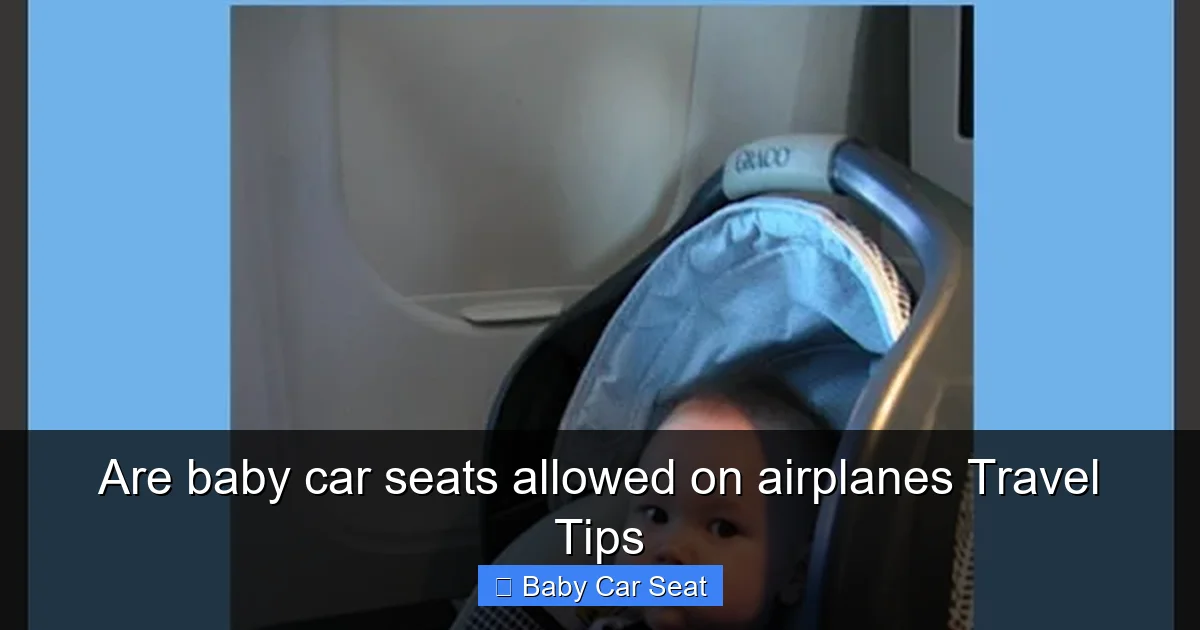
Visual guide about Are baby car seats allowed on airplanes Travel Tips
Image source: travelswithbaby.com
Look for certification
- Find the label that says FAA or country name. This shows the seat is tested.
- If the label is missing, most airlines will not allow it on the plane.
- Keep the manual. The manual often shows how to install on aircraft.
Age and size matters
Infants and toddlers have different needs. The rule about whether are baby car seats allowed on airplanes often depends on age and weight. Rear-facing seats are allowed, and forward-facing seats are allowed. Booster seats usually are not allowed for children under the minimum age on the plane.
Step 2: Call the airline before you book
Before you buy a ticket, call. Ask direct questions like: “Are baby car seats allowed on airplanes on this flight?” Get the answer in writing if possible. Different airlines and countries have different rules.
Visual guide about Are baby car seats allowed on airplanes Travel Tips
Image source: luckybabyworld.com
Sample questions to ask
- Can we bring a car seat for my child?
- Does the seat need an FAA or country certification?
- Will the seat fit on the aircraft seat?
- Is a ticket required for the child to use the car seat?
- Can I use LATCH on the airplane?
Why call early?
Call early to reserve a window seat or bulkhead seat if needed. Some airlines limit the number of car seats per row. If you know the policy, you can avoid surprises at the gate.
Step 3: Choose the right car seat
Not every car seat works well on a plane. Ask: are baby car seats allowed on airplanes with this model? Look for compact models if space is tight. Check fit, weight, and certification.
Visual guide about Are baby car seats allowed on airplanes Travel Tips
Image source: thecarseatlady.com
Types of seats
- Infant rear-facing seats: Good for babies. Many are FAA-certified.
- Convertible seats: Fit many ages. They can be rear- or forward-facing.
- Combination seats: Turn from harness to booster at a set weight.
- Portable and travel-friendly seats: Designed for flying. They are light and compact.
Fit test at home
Measure your car seat width. Measure your airplane seat width if possible. Try the car seat in a mock airplane seat if you can. This helps answer if are baby car seats allowed on airplanes with your specific seat and plane.
Step 4: Book the right seat on the plane
Where you sit matters. For safety, use a window or aisle seat that fits the car seat safely. The best seats are often the middle of the row or window seats. Ask the airline about the best spot. Make sure the seat allows a full install.
Best seat choices
- Window seat: Most stable for a car seat. No aisle interference.
- Bulkhead seat: More legroom, but sometimes armrests do not lift. This can block a car seat base.
- Middle of the row: Often safest if the car seat can be properly restrained.
Avoid these seats
- Exit row seats: Usually not allowed for children and car seats.
- Seats with built-in child restraints: These may not accept car seats.
Step 5: Check the airline and country rules again before travel
Rules can change. A week before travel, call the airline again. Confirm whether are baby car seats allowed on airplanes on your specific aircraft. Ask about gate checking and strollers too.
Paperwork and proof
Carry proof of certification. Bring the car seat manual and your booking confirmation. Keep a note of the airline’s policy or an email. This helps if gate staff have questions.
Step 6: How to install a car seat on an airplane
Installation must be correct. The plane seat belt is most often used. The question “are baby car seats allowed on airplanes” also means “are they usable correctly on airplanes?” Here are step-by-step instructions.
Install with the airplane seat belt
- Place the car seat on the aircraft seat in the correct direction. Rear-facing for infants if allowed.
- Thread the airplane seat belt through the car seat belt path. Use the path shown in the manual.
- Buckle the airplane belt and tighten it as much as possible. Pull the slack until the car seat is secure.
- Test by hands. The seat should not move more than one inch side to side or front to back.
Install with LATCH (if allowed)
Some airlines allow LATCH anchors on the plane. This is rare. If allowed, follow your manual. Call the airline to confirm if LATCH is usable. If you use LATCH, still secure the top tether if required.
Using a harness and shield
Use the car seat harness for your child. Fasten the harness snug and at the correct height. During takeoff, landing, and turbulence, keep the child strapped in the seat.
Step 7: Gate check and stowing the car seat
If you do not use the car seat on board, you can gate check it. Ask the gate agent for a gate-check tag. Gate-check means you leave the seat at the plane door and pick it up at the jet bridge on arrival.
Tips for gate-checking
- Protect the seat with a travel bag or cover.
- Remove loose parts like cup holders if possible.
- Label the seat with your name and contact info.
- Keep small items and the manual with you, not in the checked seat.
Checked baggage vs gate check
Checked baggage may subject the seat to rough handling. Gate check is safer. Still, some damage can occur. Use a padded cover for peace of mind.
Step 8: Onboard behavior and safety
During the flight, your child should remain in the car seat for takeoff, landing, and turbulence. Many airlines require restraint at these times. If you need to take the child out for a diaper change, do so only when allowed.
Feeding and sleeping tips
- Feed during climb and descent to ease ear pressure.
- Bring a familiar blanket or toy for sleep.
- Keep the harness snug but comfortable for naps.
Common examples and real scenarios
Example 1: A family flew domestic with a convertible seat. They had a ticket for their toddler. The airline allowed the seat because it had an FAA label. They installed with the aircraft belt. The toddler stayed secure for the whole flight.
Example 2: A parent used a travel-specific car seat on an international flight. They called the airline first. The seat fit in a window seat. Gate staff helped with a gate-check when the child slept during boarding. The family avoided checking the seat in baggage.
Troubleshooting: What to do when problems arise
You may face issues. Here are common problems and fixes related to “are baby car seats allowed on airplanes”.
Problem: Airline staff says the seat is not allowed
Fix: Show the certification label and the manual. Ask to speak with a supervisor. If possible, provide the airline policy or email that confirmed the seat. Be polite. If the staff still refuses, you can gate-check the seat.
Problem: The car seat does not fit the airplane seat
Fix: Try a different seat on the plane. Window seats often fit better. If nothing works, gate-check or check the seat. Consider renting a car seat at your destination.
Problem: The seat shifts too much after installation
Fix: Reinstall and tighten the belt. Use towels or rolled blankets on each side to reduce side-to-side movement if allowed. Check the manual for approved gap fillers.
Problem: You are denied use on an international flight
Fix: Some countries have different rules. Call the airline and the country’s aviation authority if needed. Consider booking a seat for the child and using a certified travel seat that fits the plane.
Tips to make travel easier
- Practice installing the car seat at home using the airplane belt to build confidence.
- Bring a thin strap or belt if your manual allows. Do not improvise unsafe fixes.
- Pack a change of clothes and essentials in a carry-on for quick access.
- Use a stroller or baby carrier for moving through the airport. Gate-check the stroller when you board.
- Bring extra padding like a small foam wedge if the manual says it is okay.
- Take photos of the installed seat. They help for a supervisor or for your record.
Legal and safety reminders
The key safety point is clear. If you ask “are baby car seats allowed on airplanes”, the safest answer is this: use a certified seat and book a ticket for your child. The car seat is the best restraint for young children on planes. Federal and national regulators set rules. Follow them.
FAA and other regulators
In the United States, the FAA allows car seats that are certified for aircraft use. Other countries have similar rules, but terms differ. Always check both the airline and the country rules.
Remember turbulence
Turbulence can be risky. A properly installed car seat keeps your child safe. Keep the child buckled during turbulence even if the seatbelt sign is off when you can.
Packing checklist
- Car seat with FAA or local certification label.
- Car seat manual.
- Seat cover or travel bag.
- Proof of airline permission or policy email.
- Extra straps if the manual allows them.
- Small toys, snacks, and extra diapers.
Conclusion
So, are baby car seats allowed on airplanes? Often yes. The key is to check rules, buy a seat for your child, and use a certified car seat. Call your airline, check fit, and practice installation. Gate-check when needed. Use a travel plan to avoid stress. With the right steps, you can travel safely with a car seat on a plane.
Traveling with a child takes planning. This guide helps you answer the main question: are baby car seats allowed on airplanes. Follow the steps, and you will have a safer and calmer trip.
🎥 Related Video: Britax Car Seat Travel Cart | The Ultimate Airport Hack for Traveling Families
📺 Britax Child Safety, Inc
Traveling with kids just got easier! The Britax Car Seat Travel Cart lets you wheel your car seat—and your child—through the …
