
Is baby car seat allowed in flight is a common question for parents. This guide explains rules, how to pick, book seats, install on board, and stay safe. Simple steps and tips make flying with a car seat easier and less stressful.
Is baby car seat allowed in flight What You Need to Know
Traveling with a baby raises many questions. One big question is: is baby car seat allowed in flight? This guide walks you through rules, booking, installation, and safety checks. You will learn how to pick the right seat, how to get approval, and how to use it on the plane. Read simple steps, tips, and common solutions.
Key Takeaways
- Point 1: Most U.S. and many international airlines allow car seats on planes, but policies vary.
- Point 2: The FAA and many authorities recommend using a certified car seat for children under 40 lbs.
- Point 3: You must check the car seat size, label, and certification before travel.
- Point 4: Book a window or bulkhead seat and reserve a ticket for the child to use the car seat.
- Point 5: Learn aircraft seatbelt routing and airline rules for installation before you fly.
- Point 6: Have a backup plan: harness devices, CARES harness, or prepared gate-check options.
- Point 7: Practice installing and buckling the car seat at home to save time and stress at the airport.
Introduction: What you will learn
This guide covers everything about is baby car seat allowed in flight. You will learn airline policies, FAA guidance, how to reserve a seat, how to install a seat, and what to do at the gate. You will also get travel tips and troubleshooting help. The goal is to make flying with a car seat easy and safe.
Step 1: Confirm the rules and policies
First, find out if your airline allows car seats. Airline rules differ. Some airlines allow them on every aircraft. Others restrict them on certain planes or seat rows. Always check before you go.
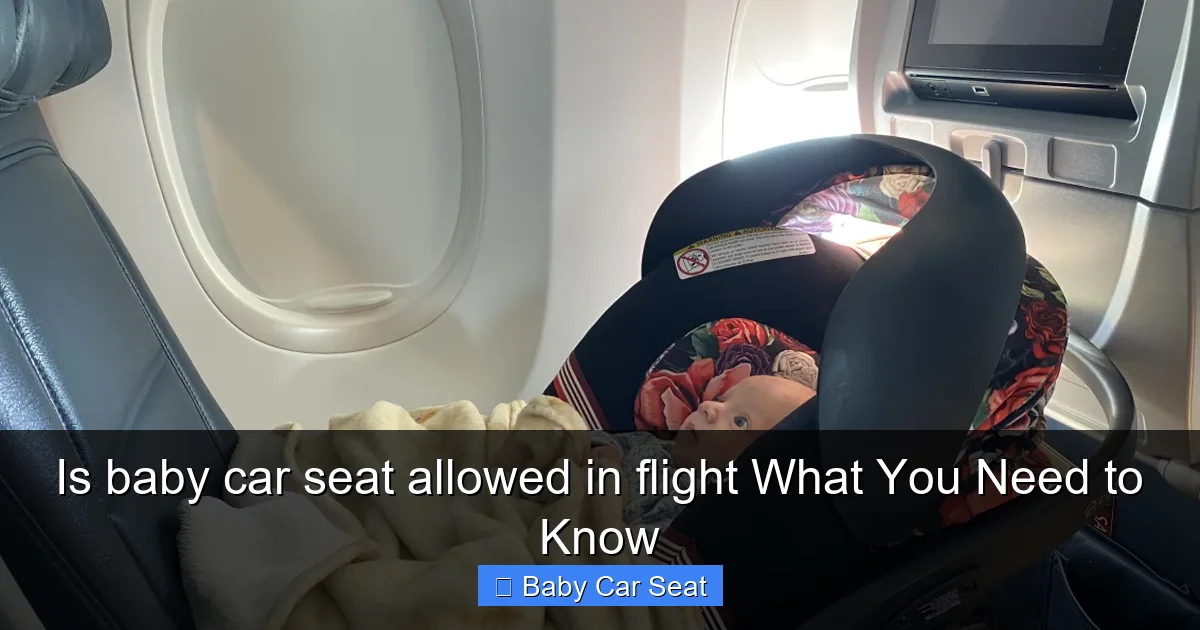
Visual guide about Is baby car seat allowed in flight What You Need to Know
Image source: annaeverywhere.com
Check the airline website
Search the airline site for “car seat,” “child restraint,” or “CRS” (Child Restraint System). Look for size limits and seat placement rules. Note any seat belt routing rules.
Call customer service
If the website is unclear, call the airline. Ask: “Is baby car seat allowed in flight?” Ask about approved seat rows and any extra fees.
Check country rules
Outside the U.S., rules change. Some countries use different weight limits. Verify local aviation rules. Ask the airline if you fly internationally.
Step 2: Know the official safety guidance
Next, learn the official safety guidance. This keeps your child safe. It also helps you pass security or airline checks.
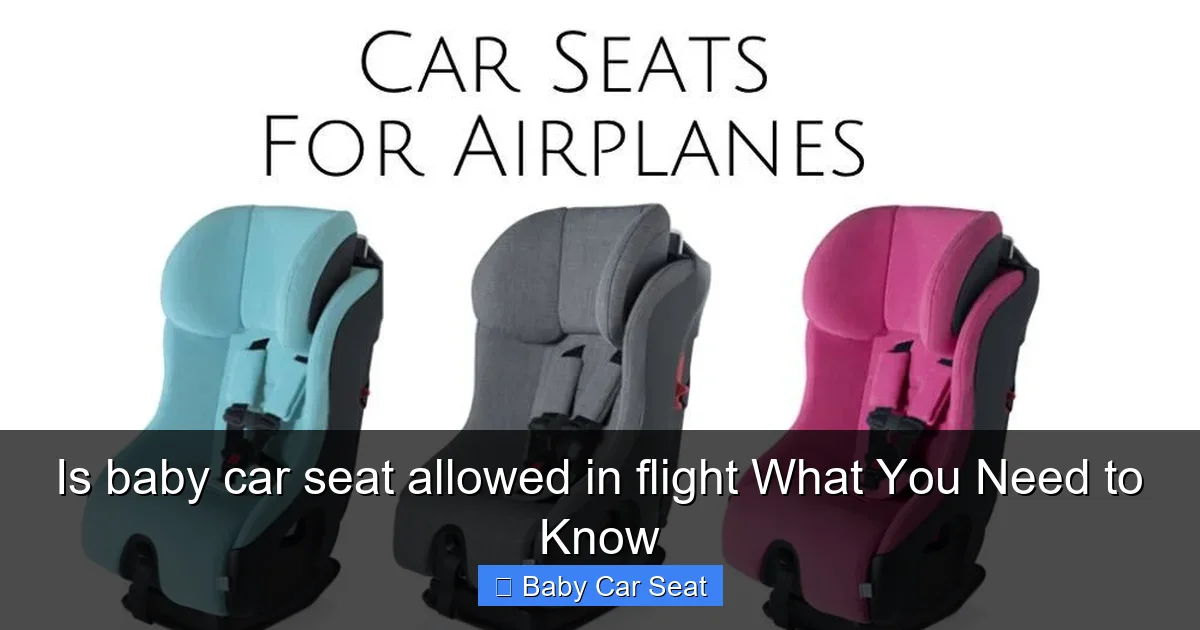
Visual guide about Is baby car seat allowed in flight What You Need to Know
Image source: pintsizepilot.com
FAA and equivalent agencies
In the U.S., the FAA recommends using a child safety seat on the plane for children in approved seats. Other countries have similar recommendations. The phrase “is baby car seat allowed in flight” often links to FAA guidance.
Certification labels
Car seats must show aircraft approval. Look for a label that says “This restraint is certified for use in motor vehicles and aircraft.” If the label is missing, the seat may not be allowed on board.
Step 3: Choose the right car seat
Pick a seat that fits the plane and your child. Some seats are larger and won’t fit in airplane rows. Be smart and measure first.
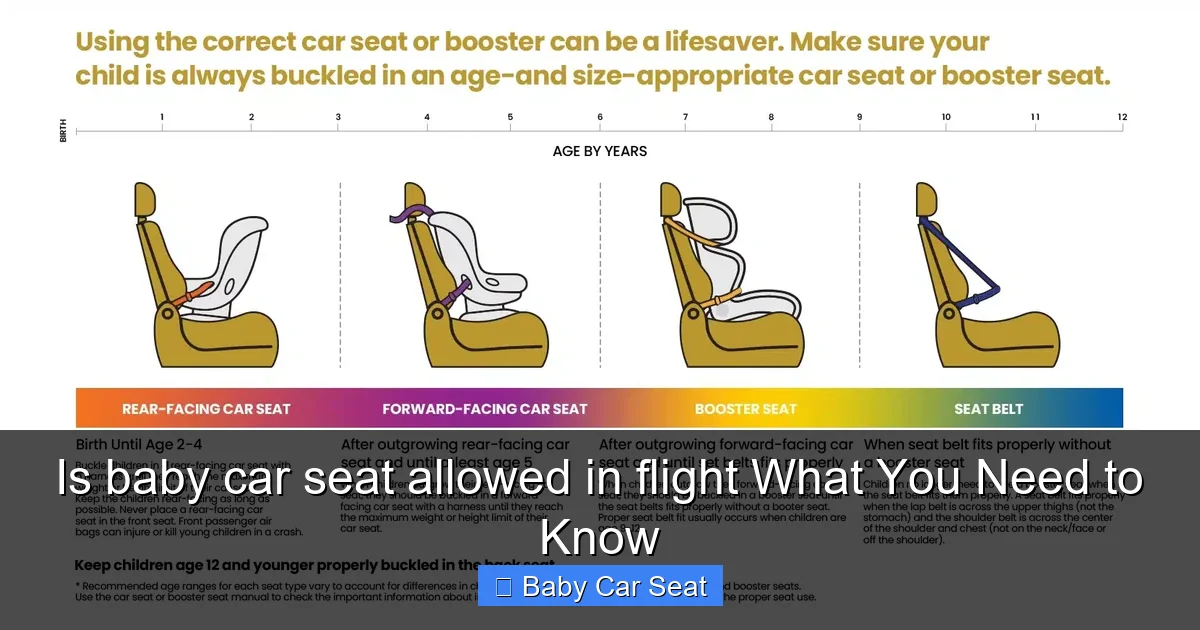
Visual guide about Is baby car seat allowed in flight What You Need to Know
Image source: chalakilaw.com
Size and shape
Measure the car seat width. Most narrow seats are 16-18 inches wide. Measure the plane’s seat width on the airline site or ask the airline. If the car seat is too wide, it won’t fit in the airplane seat.
Stages and weight limits
Use the car seat that matches your child’s age and weight. For infants, rear-facing seats work best. For toddlers, forward-facing seats with harnesses are safest. Check the seat manual for weight limits.
Travel-friendly models
Some car seats are lighter and designed for travel. Look for seats with easy carry straps. Convertible seats and infant carriers often work well.
Step 4: Book the right airplane seat
Booking the correct seat helps you install the car seat safely. Don’t assume seat assignments will work for car seats.
Reserve a seat for your child
To use a car seat, your child must have their own ticket and seat. Ask “is baby car seat allowed in flight” when booking. The airline will confirm which rows are allowed.
Best seats for car seats
Choose window seats or bulkhead seats. A window seat prevents the car seat from blocking access to the aisle. Bulkheads may offer more legroom. Avoid exit rows; car seats are not allowed there.
Avoid middle seats if possible
Middle seats are tight. Two adult passengers and a car seat squeeze the row. If you have a partner, put them on one side and the car seat on the window side.
Step 5: At the airport and boarding
Be ready at the gate. You will need time to install the seat. Bring the manual and the seat label. Security and gate agents may ask questions about “is baby car seat allowed in flight.”
Get an aisle or window seat
Confirm your seat again at check-in. Politely tell the agent you will use a car seat. They can help guide you to the right row.
Gate check option
If the car seat will not fit on board, you can gate-check it. This means you take it to the gate and the airline tags it. You get it back at the plane or at baggage claim. Gate-checking is common for bulky seats and strollers.
Arrive early
Arrive at the gate early. Extra time reduces stress. You will have a chance to ask questions and test the fit in the seat.
Step 6: Install the car seat on the plane
Installing a car seat on an airplane is a bit different from installing in a car. Follow these steps. Always keep the child in your lap until the seat is ready.
Read the car seat manual
Bring the manual and read the airplane installation section first. The manual will explain seat belt routing for airplanes.
Install with the airplane seat belt
Thread the airplane seat belt through the car seat as the manual shows. Lock the belt if your car seat has a locking clip. Pull the belt tight. The seat must not move more than one inch side-to-side or front-to-back at the belt path.
Use top tether if possible
Few planes offer top tether anchors. If your car seat needs a tether, the manual will explain how to use it on a plane. Most car seats are designed to be secure with only the lap belt on aviation flights.
Keep baby buckled during turbulence
Once installed, buckle your child into the car seat. Keep them secured whenever the seatbelt sign is on. This reduces risk during unexpected turbulence.
Step 7: Using alternative devices
Sometimes a full car seat is impractical. There are legal and safe alternatives. Know them before you fly.
CARES harness
The CARES harness is an FAA-approved harness for children between 22 and 44 pounds. It is lightweight and easy to pack. Some parents prefer it for plane travel.
Airplane-approved car seat covers and boosters
Booster seats are not recommended for young children on planes. Always check certification. A restraint must be certified for aircraft use.
Front-facing vs rear-facing in flight
On planes, forward-facing seats are common for installation. Rear-facing seats may be allowed if they fit the airplane seat and the manual permits it. Check both the seat manual and the airline.
Practical tips and examples
Here are real-world tips that make travel smoother when you ask “is baby car seat allowed in flight.”
- Example 1: A family flew with a 17-inch-wide convertible seat. They booked the window and installed the seat with the belt path snug. The child slept for the flight.
- Example 2: A mom used a CARES harness on a short flight. It worked well for her 3-year-old who weighed 30 lbs.
- Tip: Pack a lightweight seat cover or blanket. It keeps the seat clean and makes the child comfy.
- Tip: Label your car seat with your name. If gate-checked, it is easier to find.
- Tip: Practice installing at home. Time yourself. The faster you are, the easier it is at the gate.
Troubleshooting common issues
Problems can happen. Here are quick fixes for common issues when dealing with “is baby car seat allowed in flight.”
Gate agent says no
Stay calm. Ask which regulation or policy is the reason. Show the certification label. If needed, ask for a supervisor. Most times the issue is a simple misunderstanding.
Car seat too wide
If the seat is too wide for the row, ask the airline about seat changes. You may have to gate-check the seat. Consider a smaller travel seat for future flights.
Seat belt is too short
Some airplane belts feel short. Loop the belt through the car seat as the manual shows. If you cannot get a tight fit, find another seat or ask for help. Never ride with a loose car seat.
Baby won’t sit still
Bring snacks, toys, and familiar items. Try to time naps with the flight. Use a secure harness and remain calm. Calm parents help calm babies.
Packing and carrying tips
Plan how you will carry the seat through the airport. This makes moving easier and keeps the seat safe.
Use a travel bag
A padded travel bag protects the car seat. It also keeps straps from dragging. Some bags have wheels.
Gate check strategy
If you gate-check, use a protective cover. Keep small parts like the manual and adapter with you. Take photos of the seat before handing it over. This shows its condition in case of damage.
International travel considerations
Flying outside the U.S. adds steps. Rules vary by country and airline. Check local laws and airline policy. Certification labels might be different in some countries.
Local regulations
Some countries require different restraint types. Ask the airline about international regulations. Check to see if your car seat’s label lists compliance with local standards.
Adapters and multi-voltage gear
Some seats have accessories that need power. Carry any adapter you need. Most car seats do not need power, but accessories like inflators do.
Safety reminders
Safety is the priority. Always follow the car seat manual and airline rules. Keep your child secured when the seatbelt sign is on. Never put a car seat in an exit row. If in doubt, ask a flight attendant for help.
Conclusion
So, is baby car seat allowed in flight? In most cases, yes. But rules vary by airline and aircraft. Check policies, pick the right seat, reserve the right airplane seat, and install the seat correctly. Practice beforehand and bring backups like a CARES harness. Traveling with a car seat adds safety and peace of mind. With the right prep, flying with a car seat is easy and safe.
Final checklist before you fly
- Confirm airline policy and seat approval.
- Verify the car seat has an aircraft certification label.
- Book the correct seat for installation.
- Bring the car seat manual and ID labels.
- Pack a travel bag and a backup restraint option.
- Arrive early and ask gate staff for help if needed.
🎥 Related Video: Britax Car Seat Travel Cart | The Ultimate Airport Hack for Traveling Families
📺 Britax Child Safety, Inc
Traveling with kids just got easier! The Britax Car Seat Travel Cart lets you wheel your car seat—and your child—through the …
