
Choosing the right baby car seat for your newborn is one of your first and most important safety decisions. This guide will walk you through the two main types of seats—infant carriers and convertible seats—explaining the pros, cons, and key safety and comfort features to look for. You’ll learn how to ensure a proper fit and installation so you can drive with confidence from day one.
Ultimate Guide to Choosing a Newborn Baby Car Seat
Welcome, new parents! Preparing for your baby’s arrival is full of exciting choices. But few decisions feel as weighty as picking the right car seat. Your baby’s safety on the road depends on it. This guide will cut through the confusion. We will break down everything you need to know. You will learn about seat types, safety standards, and key features. Our goal is to help you choose the best baby car seat for your newborn with confidence. Let’s get started on this important journey.
Key Takeaways
- Infant Carriers Are The Standard Choice: Rear-facing-only seats with a handle are portable and often click into a travel system, offering great convenience for newborns.
- Convertible Seats Offer Long-Term Value: They can be used rear-facing for a newborn and then convert to forward-facing, lasting many years but lack portability.
- Safety Certification is Non-Negotiable: In the U.S., your seat must have a label stating it meets or exceeds Federal Motor Vehicle Safety Standard (FMVSS) 213.
- Proper Installation is Critical: A correctly installed seat should not move more than 1 inch side-to-side at the belt path. Always consult both your car seat and vehicle manuals.
- The Fit Must Be Snug: The harness should be at or below your newborn’s shoulders, with the chest clip at armpit level. The “pinch test” ensures tightness.
- Compatibility With Your Car is Key: Not all seats fit all vehicles. Test the seat in your car before buying, or ensure the retailer has a good return policy.
- Skip Secondhand Seats With Unknown Histories: A car seat that has been in a crash, is past its expiration date, or has missing parts may not protect your child.
Step 1: Understand the Two Main Types of Newborn Car Seats
First, you need to know your options. For newborns, you have two primary choices. Each has clear benefits and trade-offs. The right one depends on your lifestyle, budget, and preferences.
Option A: Infant Car Seat (Carrier)
This is the most popular choice for newborns. It is a small, rear-facing-only seat with a carrying handle.
- Pros:
- Portability: You can carry a sleeping baby without unbuckling them.
- Travel System Compatibility: It clicks into a matching stroller frame. This is a huge convenience.
- Perfect Fit for Newborns: They often include inserts and padding for tiny infants.
- Easy to Install Correctly: They typically use a simple base that stays in the car.
- Cons:
- Your Baby Will Outgrow It: Most have height/weight limits around 30-35 pounds. You will need a new seat in 12-18 months.
- Extra Cost: You will need to buy a convertible seat later.
Option B: Convertible Car Seat
This seat “converts” from rear-facing (for infants) to forward-facing (for toddlers).
- Pros:
- Long-Term Value: One seat can last from birth until your child is ready for a booster.
- Often Larger Rear-Facing Limits: Allows you to keep your child rear-facing longer, which is safest.
- Cons:
- Not Portable: The seat stays in the car. You must take the baby in and out each time.
- Bulky for Newborns: Some smaller newborns may not fit snugly without added inserts.
- Can Be Complex to Install: Installation must be perfect each time you rearrange it.
Our Tip: Most parents start with an infant carrier for sheer convenience in the first year. A convertible seat is a fantastic, cost-effective choice if you don’t mind the lack of portability.
Step 2: Decode Safety Standards and Labels
Safety is not a feature. It is the foundation. Here is what to look for.
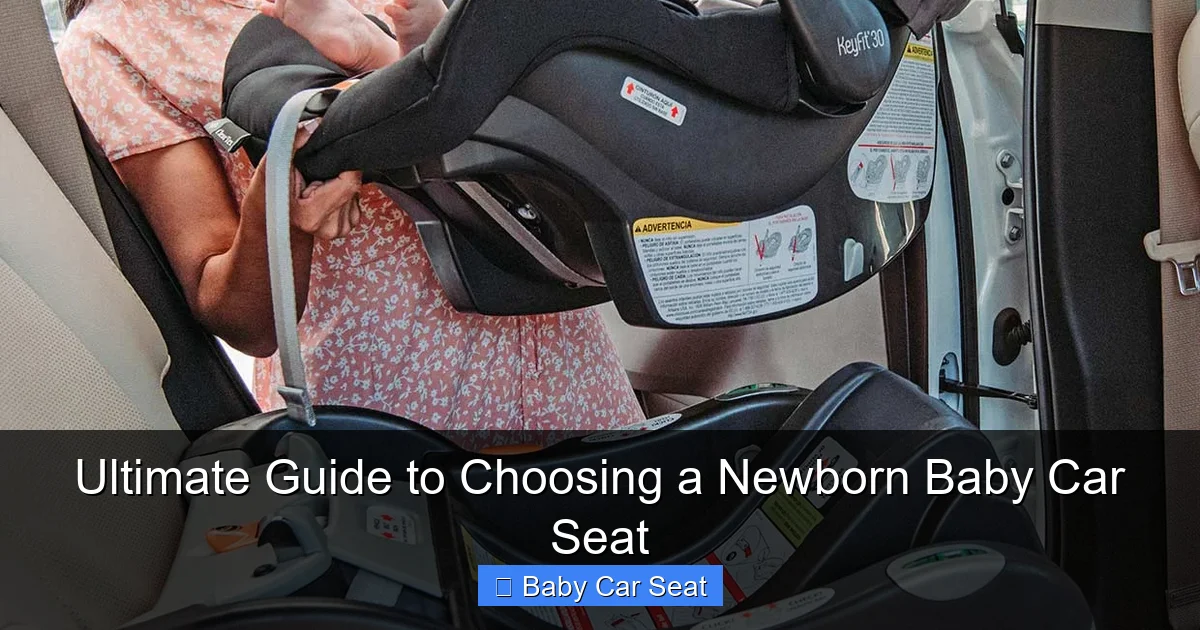
Visual guide about Ultimate Guide to Choosing a Newborn Baby Car Seat
Image source: chiccousa.com
- FMVSS 213 Certification: In the U.S., every legal car seat has a label stating it meets Federal Motor Vehicle Safety Standard 213. This is your first check.
- Expiration Date: Yes, car seats expire! Plastic degrades over time. Find the date stamped on the seat (often on the back or bottom). It is usually 6-10 years from manufacture.
- Registration Card: Fill out and mail the product registration card. This is the only way the manufacturer can contact you for safety recalls.
Step 3: Evaluate Must-Have Safety Features
Look for these key features that enhance protection and ease of use.

Visual guide about Ultimate Guide to Choosing a Newborn Baby Car Seat
Image source: norani.com
5-Point Harness
This is the standard and safest harness type. It has two shoulder straps, two waist straps, and one crotch strap. All five points come together at a buckle.
Side-Impact Protection
This is crucial. Look for deep head wings, energy-absorbing foam, or reinforced frames. These features shield your newborn’s head and neck in a side collision.
Easy-to-Adjust Harness
You will adjust the harness often as your baby grows. A front-adjust harness lets you tighten the straps from the front of the seat without re-threading.
Level Indicator
A built-in bubble level or indicator shows when your rear-facing seat is at the correct angle. A proper angle keeps your newborn’s airway open.
LATCH System
Lower Anchors and Tethers for Children (LATCH) is a system in vehicles and seats to make installation easier. It uses connectors that click into anchors in your car’s seat crease.
Step 4: Ensure a Perfect Fit for Your Newborn
A safe seat is one that fits your baby correctly. Follow this checklist.

Visual guide about Ultimate Guide to Choosing a Newborn Baby Car Seat
Image source: health.osu.edu
- Harness Height: For rear-facing, the harness straps should be at or below your baby’s shoulders.
- Chest Clip: Position it at armpit level. It holds the shoulder straps in place.
- Pinch Test: After buckling, pinch the harness strap at your baby’s collarbone. If you can pinch any excess webbing, it’s too loose. Tighten it.
- Newborn Inserts: Use only the padding that came with the seat. Aftermarket inserts are not crash-tested and can be unsafe.
- Head Support: Your baby’s head should not flop forward. Use the seat’s built-in support or approved inserts.
Step 5: Master Installation (The Most Important Step)
A car seat is only as safe as its installation. Here’s how to get it right.
Read Both Manuals
Read your car seat manual. Then, read your vehicle’s manual section on car seats. They are your best guides.
Choose Your Method: LATCH vs. Seat Belt
You can use either the LATCH system or your car’s seat belt to install the seat. Both are equally safe when done correctly. Use whichever gives you a tighter fit. Never use both at the same time unless the manual specifically allows it.
Get the Right Angle
Infants must ride semi-reclined. Use the seat’s built-in level indicator or adjuster. Your car’s seat cushion can affect the angle. You may need a tightly rolled towel (if the manual permits) or a pool noodle under the seat base to get it right.
The “Inch Test”
Once installed, grab the car seat at the belt path (where the seat belt or LATCH strap goes through). Try to move it side-to-side and front-to-back. It should not move more than 1 inch in any direction.
Get a Professional Check
Even experts get it wrong sometimes. Find a certified Child Passenger Safety Technician (CPST). They will check your installation for free. Search at NHTSA.gov.
Step 6: Consider Compatibility and Lifestyle
Think about how the seat fits into your daily life.
- Car Fit: Does it fit in your back seat? Does it leave room for other passengers? Install it before you commit.
- Travel System: If you want an infant carrier, do you love the matching stroller? Buying a travel system can save money.
- Weight: Can you comfortably carry the infant carrier (with a baby in it)? Some seats are over 10 pounds alone.
- Ease of Cleaning: Look for machine-washable seat pads. Babies are messy!
Troubleshooting Common Car Seat Problems
Problem: Seat moves more than 1 inch.
Solution: Put more weight into the seat as you tighten the belt or LATCH strap. Use your knee to press down on the seat. Really put your body into it. Re-check the “inch test.”
Problem: Baby seems slouched or head is flopping.
Solution: Check the recline angle. Adjust it to be more level according to the seat’s indicator. Ensure you are using all approved newborn inserts.
Problem: Harness straps are always twisted.
Solution: Straighten them every single time you buckle your baby in. It only takes a second and ensures even force distribution in a crash.
Problem: You can’t get the chest clip to stay at armpit level.
Solution: First, ensure the harness height is correct. If the straps are too high, the clip will ride up. Tighten the straps more to keep the clip in place.
Strong Conclusion: Your Path to a Safe First Ride
Choosing the best baby car seat for your newborn is a big task. But now you have the knowledge. Remember, start by picking between an infant carrier and a convertible seat. Always check for safety certification and key features like side-impact protection. The real magic happens with a perfect fit and a rock-solid installation. Take your time. Read the manuals. Do the pinch test and the inch test. When in doubt, ask a certified technician for help. This car seat is your baby’s first shield on the road. Making a careful, informed choice gives you peace of mind for every journey ahead. Drive safe, and enjoy those first rides with your little one.
🎥 Related Video: Infant Car Seats vs. Convertible Car Seats – Babylist
📺 Babylist
Confused about the difference between an infant and convertible car seat? Babylist Scout Laura breaks it down to help you …
