
Baby car seats face backwards because it is the single most effective way to protect an infant’s vulnerable head, neck, and spine in a frontal collision. This position allows the seat to cradle and absorb crash forces, drastically reducing injury risk. Experts now recommend keeping children rear-facing for as long as possible, often until age 4.
Key Takeaways
- Crash Physics is Key: Rear-facing seats allow a child’s back to absorb crash forces, protecting the fragile neck and spine.
- Developmental Need: A baby’s head is large and heavy, with a neck made of soft bone and ligaments, requiring the unique support of a rear-facing seat.
- It’s the Law of Best Practice: Laws set minimums, but safety experts universally advise keeping children rear-facing to the maximum height and weight limits of their seat.
- Side-Impact Superiority: In a side crash, a rear-facing seat provides crucial protection for the head and containment for the limbs.
- Longer is Safer: Transitioning to forward-facing at the legal minimum (often age 1) is not safest. Extended rear-facing until age 2-4 is the gold standard.
- Correct Installation is Crucial: A rear-facing seat’s life-saving potential is only realized if it is installed tightly and the child is harnessed correctly.
Why Do Baby Car Seats Face Backwards? The Complete Safety Guide
As a new or expecting parent, you’ve probably seen it. Tiny newborns tucked snugly into car seats that face the rear of the vehicle. You might wonder, “Why do baby car seats face backwards? Wouldn’t my baby prefer to see me and the world?” It’s a natural question. The answer, however, isn’t about view or preference. It’s a matter of physics, biology, and proven life-saving science. This guide will walk you through every key reason, translating expert safety data into simple, actionable knowledge. You’ll learn exactly how a rear-facing seat acts as a protective cocoon, why your child’s development demands it, and how to use this technology correctly for maximum safety.
The Core Science: Understanding Crash Forces
To grasp “why backwards,” you must first understand what happens in a crash. In a frontal collision—the most common and severe type—a moving vehicle stops suddenly. But everything inside it keeps moving forward at the original speed until it’s stopped by something. This is the force of impact.

Visual guide about Why Do Baby Car Seats Face Backwards Key Safety Reasons
Image source: kidshealthexperts.com
Forward-Facing vs. Rear-Facing in a Crash
Imagine a crash while your child is in a forward-facing seat. Their body is held back by the harness, but their heavy head is thrown forward. This puts immense strain on the neck and spine. For an infant, this can lead to severe internal decapitation or spinal cord injury.
Now, picture the same crash in a rear-facing seat. The entire seat cradles the child’s body. On impact, the child is pushed deeper into the seat’s shell. The crash forces are spread evenly across the child’s strongest parts: their back, shoulders, and head. The seat absorbs the energy, and the child’s vulnerable neck is spared from violent whiplash.
Think of it like catching an egg. If you throw an egg at a wall (forward-facing), it shatters. If you throw it into a soft, deep pillow (rear-facing), the pillow cradles and stops it safely. The rear-facing car seat is that pillow for your child.
Key Reason 1: Protecting the Vulnerable Head, Neck, and Spine
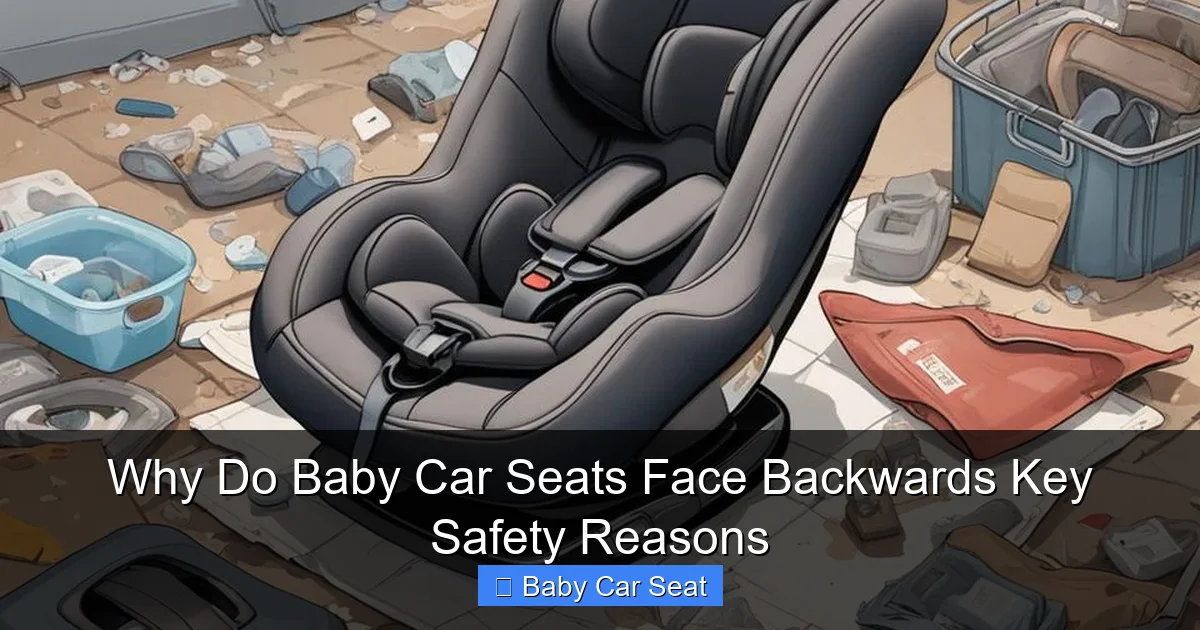
This is the most critical reason. A baby’s body is not simply a small version of an adult’s. It is structurally different in ways that make rear-facing travel essential.
Visual guide about Why Do Baby Car Seats Face Backwards Key Safety Reasons
Image source: tagvault.org
- Proportionally Giant Head: A newborn’s head makes up about 25% of their total body weight. For an adult, it’s only about 6%. This is a huge, heavy weight on top of a very unstable column.
- Underdeveloped Spine: An infant’s vertebrae are not solid bones. They are made of soft, separate pieces of cartilage (called ossification centers) that gradually fuse into bone over years. The ligaments and muscles that support the neck are also very weak.
- The Danger of Stretching: In a forward-facing crash, the head can be pulled away from the body, stretching the spinal cord. This stretching can cause paralysis or death. A rear-facing seat supports the head and prevents this stretch by cradling the whole body as one unit.
Key Reason 2: The Safety Evidence is Overwhelming
This isn’t just a theory. It’s evidence-based fact backed by decades of real-world data and research.
Visual guide about Why Do Baby Car Seats Face Backwards Key Safety Reasons
Image source: team-bhp.com
- Massive Risk Reduction: Studies, notably from the American Academy of Pediatrics (AAP), show that children under 2 are 75% less likely to die or suffer severe injury in a crash if they are rear-facing. That’s not a small improvement; it’s a monumental one.
- Real-World Performance: Crash test videos provide stark visual proof. You can see the dramatic difference in how a crash test dummy’s head and neck move in a forward-facing seat versus a rear-facing one. The rear-facing dummy remains calmly cradled.
- Global Consensus: From Sweden (where extended rear-facing has been the norm for decades with remarkable child traffic safety records) to pediatricians in the U.S., the global safety community agrees: rear-facing is safest.
Key Reason 3: It’s Not Just for Infants – The “Extended Rear-Facing” Revolution
Here’s the most important shift in modern car seat advice. Rear-facing is not just for newborns. The old rule was to turn a child forward at 1 year and 20 pounds. That is now considered an absolute minimum, not a goal.
The new gold standard is Extended Rear-Facing (ERF).
- What is ERF? It means keeping your child rear-facing for as long as possible, until they reach the maximum height or weight limit allowed by their convertible car seat. For most modern seats, this allows children to rear-face comfortably until they are 3, 4, or even older.
- Why ERF? A toddler’s spine is still ossifying. Their head is still proportionally larger. The same protective physics apply. A 3-year-old is far safer rear-facing in a crash than forward-facing. Always follow your specific car seat’s manual, not just the minimum legal age.
Key Reason 4: Enhanced Side-Impact Protection
While frontal crashes are most common, side-impact crashes (T-bones) are particularly dangerous. A rear-facing seat offers significant advantages here too.
In a side-impact crash, the car seat is positioned with its strong, energy-absorbing shell between the child and the point of impact. The child’s head, neck, and vital organs are contained within this protective shell. In a forward-facing seat during a side crash, the child’s head is much more exposed to intruding objects or the side window.
How to Implement Rear-Facing Safety: A Step-by-Step Guide
Knowing why is half the battle. Doing it correctly is the other half. Let’s break it down.
Step 1: Choose the Right Seat
You have two main options for a rear-facing seat:
- Infant-Only Seat: A portable carrier with a handle. It’s used only rear-facing and typically has a lower height/weight limit (often 30-35 lbs). It’s convenient for carrying a sleeping baby.
- Convertible Seat: This seat “converts” from rear-facing to forward-facing (and often to a booster). It has much higher rear-facing limits (often 40-50 lbs). It stays in the car. This is the best choice for long-term, extended rear-facing.
Tip: If your budget allows, a convertible seat with high rear-facing limits is the most cost-effective and safety-conscious long-term investment.
Step 2: Install the Seat Correctly
A poorly installed seat is unsafe, no matter its direction.
- Read Both Manuals: Read your car seat manual and your vehicle owner’s manual section on car seats.
- Use the Right Location: The safest spot is the back seat, in the center (if it has a seatbelt/LATCH that fits). If not, the outboard seats are fine.
- Achieve a Tight Fit: When you grab the seat at the belt path (where the seatbelt or LATCH strap goes through), it should not move side-to-side or front-to-back more than 1 inch.
- Correct Recline Angle: Infant seats have a recline indicator (often a line or bubble level). It must be level to keep a newborn’s airway open. Follow the manual precisely.
Step 3: Harness Your Child Properly
- Harness Height: For rear-facing, the harness straps should come from the seat shell at or just below the child’s shoulders.
- Harness Tightness: Perform the “pinch test.” Try to pinch the harness strap vertically at the child’s collarbone. If you can pinch any excess webbing, it’s too loose. The straps should be snug.
- Chest Clip Position: The chest clip must be positioned at armpit level. Never let it rest on the belly or neck.
- Bulky Clothing No-No: Do not put your child in a puffy winter coat in the seat. The harness can’t tighten properly over it. Instead, buckle them in a thin layer, then put the coat or a blanket over the secured harness.
Troubleshooting Common Concerns
Let’s address the worries parents often have.
- “My child’s legs are bent or touching the vehicle seat.” This is perfectly safe and comfortable for children. They sit cross-legged, prop their feet on the seatback, or dangle their legs. There is zero evidence of leg injury from this in a crash. Far safer than the risk of a spinal injury from forward-facing too soon.
- “My child gets car sick.” This can happen facing any direction. Ensure good ventilation, limit snacks before travel, and talk to your pediatrician. Don’t sacrifice critical safety for a potential problem.
- “My child cries and wants to see me.” Use a mirror designed for car seats (ensure it’s soft and securely attached). Talk and sing to them. As they get older, explain they are in the “super safe” spot. Their safety is non-negotiable.
When is it Time to Turn Forward-Facing?
The move should be dictated by your car seat’s limits, not a birthday. Your child is ready to turn forward-facing only when they meet ALL of these criteria:
- They have exceeded the maximum rear-facing height limit of their seat (head within 1 inch of the top of the shell).
- OR they have exceeded the maximum rear-facing weight limit of their seat.
- They are at least 2 years old (but older is better).
Once you turn the seat, remember to move the harness straps to the appropriate slots (at or above the shoulders for forward-facing) and follow the forward-facing installation rules in your manual.
Conclusion: Backwards is the Way Forward in Safety
So, why do baby car seats face backwards? It’s the brilliant, simple application of physics to biology. It cradles a child’s unique vulnerabilities, distributing crash forces across the strongest parts of their body and the sturdy shell of the seat. The move towards extended rear-facing is one of the most significant advances in child passenger safety. By choosing a seat with high limits, installing it rock-solid, harnessing your child snugly, and resisting the urge to turn them around too soon, you are giving your child the very best protection science can offer. It’s the first and one of the most important safety decisions you’ll make for them on the road. Keep them rear-facing. It’s the loving, evidence-based choice.
🎥 Related Video: How Easy Is ClickTight Installation? See Why Parents Love Britax Car Seats
📺 Britax Child Safety, Inc
Real Parent Review: @littleradadventures shows just how quick and secure a Britax ClickTight installation can be—rear-facing or …
