
The position of your baby car seat handle is a critical safety detail that depends on how you are using the seat. For safe travel in the vehicle, the handle must almost always be in the designated “down” or “stowed” position as per your manual. When using the infant seat as a carrier outside the car, the handle can be up. This guide walks you through every scenario step-by-step to ensure your baby’s safety.
Key Takeaways
- In the Car, Follow the Manual: When the car seat is installed in the vehicle, the handle position is governed by strict crash-testing rules. It must be placed exactly as the manufacturer instructs, which is typically down or stowed.
- It’s a Carrier Handle, Not a Car Handle: The primary function of the curved carry handle is for transporting your baby outside the vehicle. Its position in the car is for stability and safety during a crash.
- “Load Leg” and Anti-Rebound Bars Change the Rule: Many modern infant seats have a load leg or anti-rebound bar for stability. These features often require the handle to be in a specific “up” position to function correctly.
- Never Assume; Always Verify: Do not rely on general advice or what you did with a previous seat. You must check your specific car seat model’s instruction manual for the definitive rule.
- Correct Use Prevents Injury: An incorrectly positioned handle can become a projectile in a crash, fail to properly manage crash forces, or prevent a secure installation, putting your baby at serious risk.
- Base vs. Belt-Path Installation Matters: Some seats have different handle rules depending on whether you install using the base or the vehicle’s seat belt directly. Your manual will specify both scenarios.
Find Out If Your Baby Car Seat Handle Should Be Up or Down
Hello, new parent! Welcome to the world of tiny socks, sweet baby smells, and… car seat confusion. It’s okay. We’ve all been there. You’ve got this gorgeous infant car seat. It snaps into a base. It has a handy carry handle. But now you’re staring at that handle, wondering: “Should this be up or down when I’m driving?”
This is one of the most common questions we hear. It seems simple. Yet, getting it wrong is a serious safety issue. This guide will walk you through everything. We will make it crystal clear. You will learn the simple rules and the “why” behind them. Let’s turn that confusion into confidence.
Why the Handle Position Is a Big Deal for Safety
First, let’s talk about why this matters so much. Your infant car seat is a carefully engineered safety device. Every part has a job during a crash.
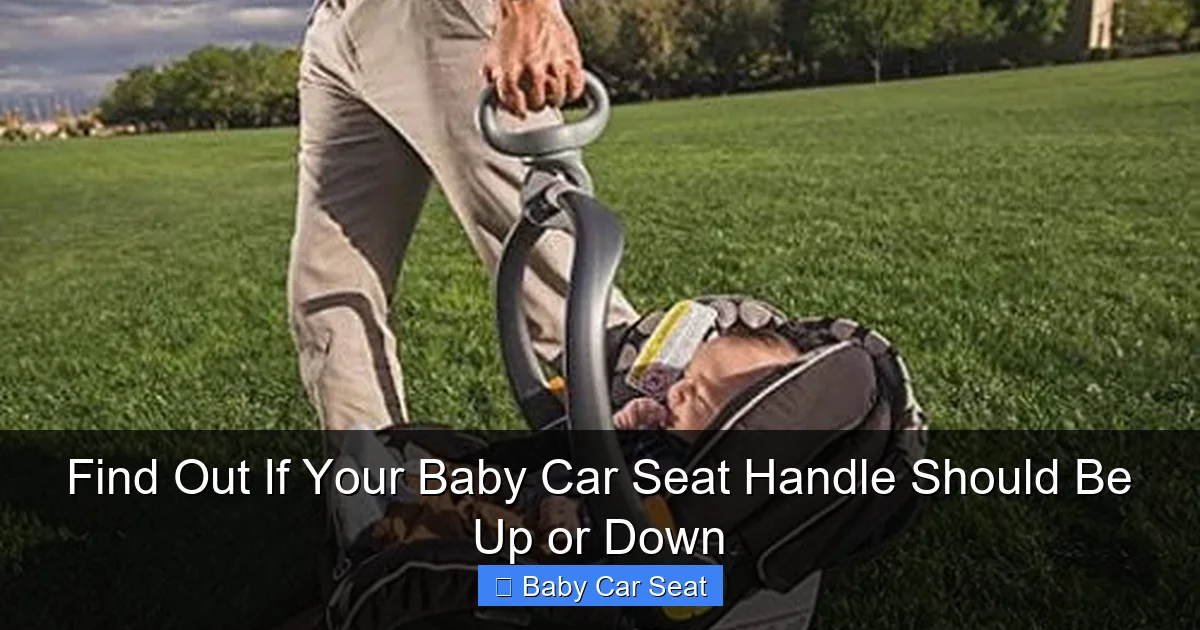
Visual guide about Find Out If Your Baby Car Seat Handle Should Be Up or Down
Image source: nappaawards.com
The shell is designed to cradle and protect. The harness keeps your baby secure. The handle? In many seats, it’s actually a structural part of the safety system.
When crash-tested, the seat is certified with the handle in a specific position. If the handle is somewhere else during a real crash, it can:
- Become a dangerous projectile: It could snap forward and injure your baby or others in the car.
- Compromise the seat’s integrity: It might not manage crash forces the way it was designed to.
- Prevent a tight installation: A handle in the wrong spot can keep the seat from sitting flush against the vehicle seat.
Think of it like a recipe. You must follow the instructions to get the safe, intended result.
The Golden Rule: Your Car Seat Manual is the Law
Before we go any further, I need you to make a promise. Promise you will find your car seat’s instruction manual. It’s probably in the box, under the seat, or in a closet. You can also find a digital copy on the manufacturer’s website.
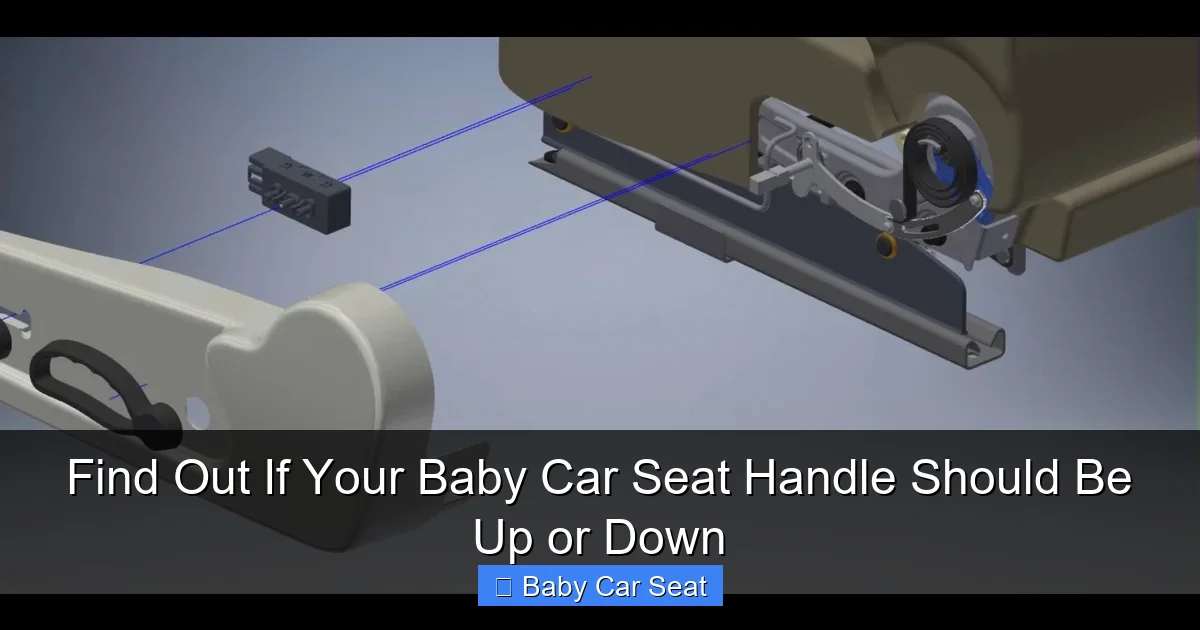
Visual guide about Find Out If Your Baby Car Seat Handle Should Be Up or Down
Image source: i.ytimg.com
Your car seat manual has the final answer. No blog, well-meaning friend, or store employee knows your specific model’s rules better than that book. Our guide gives you the principles. Your manual gives you the exact law for your seat. Always start and end there.
Step-by-Step: Determining the Correct Handle Position
Let’s break this down into two main scenarios. Is the car seat in the car or are you carrying it?
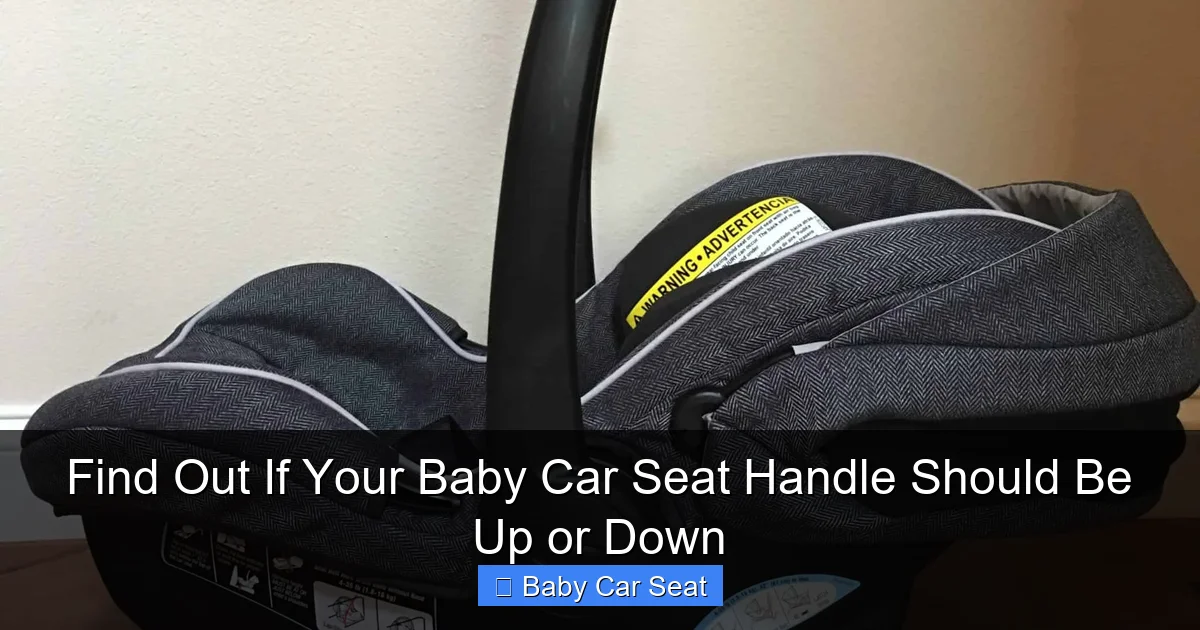
Visual guide about Find Out If Your Baby Car Seat Handle Should Be Up or Down
Image source: csftl.org
Scenario 1: The Car Seat is Installed in Your Vehicle
This is the most critical situation. Safety is the only priority here.
Step 1: Locate the “Car Position” Section. Grab your manual. Look for a section titled “Handle Position,” “Car Mode,” or “Travel Position.” It will have clear diagrams.
Step 2: Identify Your Seat’s Common Rules. Most infant seats fall into one of these categories:
- The “Almost Always Down” Rule: For many years, the standard was that the carry handle must be down and stowed behind the seat when driving. This is still true for many models. The handle clicks into a notch at the back of the shell.
- The “Up and Back” Rule: Many modern seats require the handle to be in the upward carry position, but rotated to the rear of the seat (pointing toward the back windshield). This is often marked with a “car mode” symbol on the handle itself.
- The “As a Load Leg” Rule: Some innovative seats use the handle as a load leg or anti-rebound bar. For these, the handle must be down and locked firmly against the vehicle floor. This transfers crash forces directly into the car’s frame.
Step 3: Check for Base vs. Seat Belt Installation. Some seats have different rules if you install using the included base versus using the vehicle’s seat belt directly. Your manual will spell this out. Do not skip this step!
Step 4: Perform a Final Check. Once installed, do the “inch test.” Grab the seat at the belt path and try to move it side-to-side and front-to-back. It should not move more than one inch. Ensure the handle is not interfering with a tight fit.
Scenario 2: Using the Car Seat as a Carrier
This one is simpler! When you unclick the seat from its base or the car, you are using it as a carrier.
Step 1: Engage the Carry Position. Simply lift the handle to the upright position designed for carrying. You will usually hear a click. Often, this is the same “up and back” position used for some car installations, but now you’ll lift it by the handle.
Step 2: Ensure It’s Locked. Always give the handle a gentle shake to confirm it’s securely locked in place before lifting the seat with your baby in it.
Step 3: Mind Your Surroundings. Be careful not to bump your baby’s seat against doorframes or counters when the handle is up.
Troubleshooting Common Handle Position Problems
Having issues? You’re not alone. Here are quick fixes for common problems.
Problem: The handle won’t stay in the “car mode” position.
Solution: Double-check that you are rotating it to the exact spot shown in the manual. There is usually a specific set of notches or a marked zone. If it’s loose, there may be a locking button or lever you haven’t engaged.
Problem: The handle gets in the way of the front seat.
Solution: This is a serious space issue. You may need to move the front seat forward or more upright. Never compromise the handle position to make room. If the seat cannot be installed correctly without the front seat pressing on the handle, you may need to try a different seating position in the car.
Problem: I lost my manual and can’t find the rule online.
Solution: Contact the manufacturer directly. Their customer service number is usually on a label on the side or bottom of the car seat. Have your model name and number ready. They can email you the correct page.
Special Features That Change the Rules
Modern car seats have amazing safety tech. Know if your seat has these features.
Load Legs
A load leg is a telescoping pole that extends from the front of the car seat base down to the vehicle floor. If your seat has one, it must be deployed and firmly touching the floor. The handle rule for these seats is almost always to be stowed down and out of the way.
Anti-Rebound Bars
This is a bar at the front of the seat (often part of the base) that prevents the seat from rotating upward in a rear-end crash. Like the load leg, it usually means the handle needs to be in the down/stowed position to not interfere.
A Quick Guide to Popular Car Seat Brands
While you MUST check your manual, here’s a general look at trends. This is not a substitute for your specific instructions!
- Chicco (KeyFit series): Traditionally requires the handle to be in the down position when in the car.
- Graco (SnugRide series): Many newer models use the “up and back” car position. Always look for the red “car mode” indicator on the handle.
- Britax and Nuna (with load legs): Typically require the handle to be down so the load leg can function.
- UPPAbaby (MESA): Uses the “up and back” position for car mode, clearly marked with a “C” on the handle hinge.
See? This is why the manual is key—rules vary even within brands!
Conclusion: Safety is Simple When You Know the Steps
You made it! The mystery of the baby car seat handle is solved. Remember, it all boils down to this: In the car, the handle is for safety, not convenience. Its job is to help protect your baby in a crash. Outside the car, its job is to help you carry your precious cargo.
The single most important thing you can do today is to find your manual. Read the handle section. Practice clicking it into the correct travel position. Do it until it becomes second nature. This small act is a huge part of keeping your baby safe on every single journey. You’ve got this, super parent. Now, go enjoy those snuggles, with total peace of mind on the road.
🎥 Related Video: I always securely latch the top tether on my children’s car seats. #dad #baby #carseat #auto
📺 Daily Original Vids
