
A properly installed car seat should not move side-to-side more than one inch at the belt path. This guide explains the critical difference between safe, minimal movement and dangerous looseness. You will learn how to check your installation, troubleshoot common problems, and ensure your child travels safely every time.
Key Takeaways
- Minimal Movement is Acceptable: A correctly installed car seat should not shift more than one inch side-to-side or front-to-back when tested at the belt path.
- The Inch Test is Crucial: This simple test is your primary tool for verifying a safe and secure car seat installation every single time.
- Installation Method Matters: Whether using the vehicle’s seat belt or LATCH system, following the manufacturer’s instructions for both the car seat and your vehicle is non-negotiable.
- Movement at the Top is Normal: Some flex in the back or head area of a rear-facing convertible seat is expected and not a sign of improper installation.
- Common Fixes Solve Most Issues: Problems like twisted straps, a misplaced locking clip, or an unbuckled car can often be easily corrected to eliminate excess movement.
- When in Doubt, Get Help: Certified Child Passenger Safety Technicians (CPSTs) provide free, invaluable assistance for installation checks and peace of mind.
Should Baby Car Seat Move Side to Side? What You Need to Know
As a parent, your child’s safety is your top priority. This is especially true in the car. A properly used car seat is the best defense in a crash. But many parents ask a common and critical question: should a baby car seat move side to side after I install it?
The short answer is: a very tiny bit, but not really. It can be confusing. You might push on the seat and see it wiggle. This guide will clear up the confusion. We will explain the official safety rule. You will learn how to check your seat the right way. We will also show you how to fix a loose seat step-by-step. By the end, you will know exactly what is safe and how to make sure your little one is protected.
The Golden Rule: The One-Inch Test
All car seat safety checks start with one simple rule. This is called the “one-inch test.” It is the standard used by safety experts worldwide.
Visual guide about Should Baby Car Seat Move Side to Side What You Need to Know
Image source: psychoautos.com
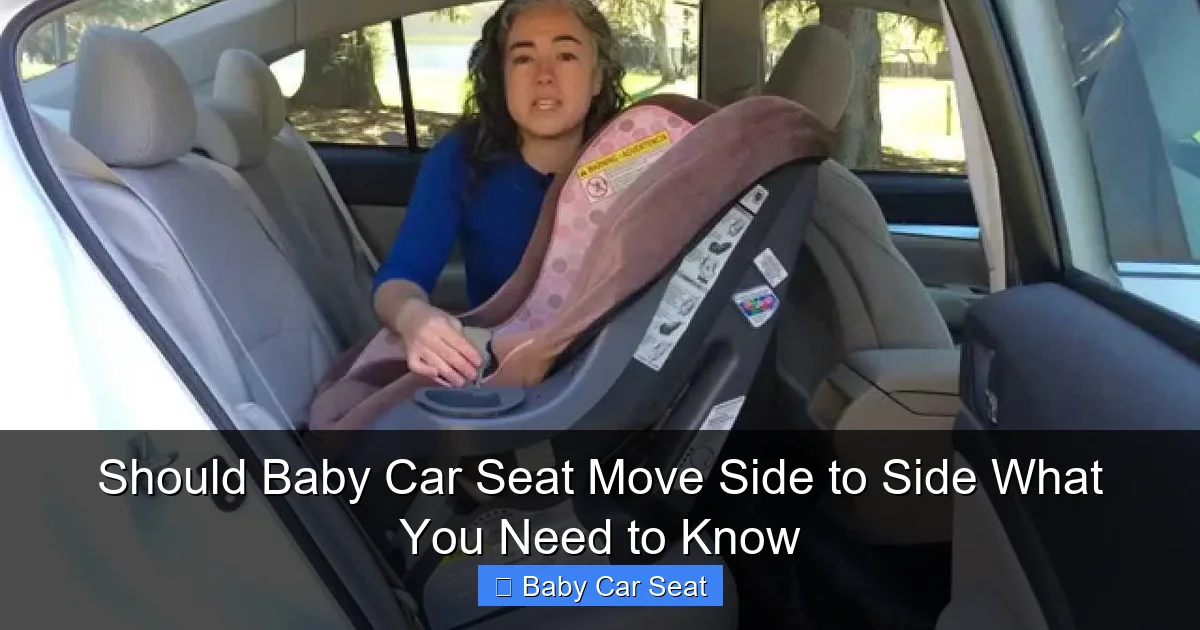
Here is what you need to do: Once the car seat is installed, hold it with your hands at the belt path. This is the spot where the vehicle seat belt or LATCH strap goes through the car seat. Now, try to move the seat side-to-side and front-to-back with firm pressure.
The rule: The car seat should not move more than one inch in any direction from the center. Picture the width of your finger. That’s about how much movement is okay. If the seat slides or shifts more than an inch, it is too loose. A loose seat is dangerous in a crash. The force of the impact can throw the seat and your child around.
Where You Test Matters: The Belt Path
This is a key detail. You must test the movement at the belt path. For rear-facing infant seats, the belt path is usually down near your child’s feet. For convertible seats, it changes based on whether the seat is rear or forward-facing. Check your manual.
Why does this spot matter? The belt path is where the seat connects to the car. It is the anchor point. Testing movement at the top or head of a rear-facing convertible seat will often show more flex. This is normal. The seat is designed to absorb some energy there. Always focus your test on the belt path area.
Step-by-Step: How to Properly Check Your Car Seat’s Fit
Follow these steps to perform a complete safety check. Do this every time you re-install the seat or once a month as part of your routine.
Visual guide about Should Baby Car Seat Move Side to Side What You Need to Know
Image source: kidsturncentral.com
Step 1: Review Your Manuals
Before you touch anything, get two manuals: your car seat manual and your vehicle owner’s manual. The car seat manual shows you how to install that specific model. The vehicle manual tells you the rules for using LATCH or seat belts in your particular car. Rules can vary. Never skip this step.
Step 2: Choose Your Installation Method
You have two main choices: the vehicle’s LATCH system (Lower Anchors and Tethers for Children) or the seat belt. Both are equally safe when used correctly.
- LATCH: This system uses metal anchors in the vehicle seat crack and a top tether (for forward-facing). It has a weight limit. Check both manuals for your child’s weight and the vehicle’s anchor locations.
- Seat Belt: You can always use the vehicle’s seat belt. Ensure it is a locking seat belt. If it isn’t, you must use a locking clip as directed by the car seat manual.
Step 3: Install with Your Full Weight
This is the secret to a tight install. After routing the belt or LATCH strap through the correct path:
- Kneel in the car seat. Yes, put your knee right in the seat where your child sits.
- Use your body weight to push the car seat down and back into the vehicle seat cushion.
- While keeping your weight in it, pull the strap or seat belt as tight as you can. You should not be able to pinch any slack in the strap.
- Buckle and lock the mechanism according to the instructions.
Step 4: Perform the One-Inch Test
Now, with the installation complete, go to the belt path. Grab the seat firmly there with both hands. Try to move it side-to-side. Then try front-to-back. Watch closely. If it moves more than one inch, you need to tighten it more or troubleshoot.
Why Your Car Seat Might Be Moving Too Much: Troubleshooting
If your seat fails the one-inch test, don’t panic. Common issues have simple fixes.
Visual guide about Should Baby Car Seat Move Side to Side What You Need to Know
Image source: babysmilerental.com
Problem: Twisted Straps or Seat Belt
A twisted strap cannot lay flat and get tight. Unbuckle the connection. Pull the strap all the way out. Let it retract slowly to remove twists. For LATCH straps, check from the hook to the adjuster. Make sure it’s flat.
Problem: Wrong Recline Angle
Rear-facing seats need a specific recline. Many have an indicator on the side. If the seat is too upright, it can rock on the vehicle seat. If it’s too reclined, it may not be braced properly. Adjust according to the manual, often using a rolled towel or pool noodle at the vehicle seat bite (where the back and bottom meet).
Problem: Incorrect Use of a Locking Clip
Locking clips are small H-shaped metal clips. You only need one if your vehicle seat belt does not lock on its own. It must be placed within one inch of the latchplate (the buckle tongue) on the seat belt. If it’s in the wrong place, the seat will be loose.
Problem: Car Seat on a Soft Surface
Never place a car seat on top of a fluffy winter coat or a cushy seat protector that didn’t come with the seat. These compress in a crash, creating deadly slack. Dress your child in thin layers and use only car-seat-approved accessories.
Problem: Vehicle Seat Contour or Crack
Sometimes the shape of your car’s seat causes problems. The car seat base might be straddling the vehicle seat crack, making it unstable. Try installing it in a different seating position. The center rear seat is often the safest, if it has a flat surface and proper belts/LATCH.
When to Seek Professional Help
You are not alone in this. If you’ve tried troubleshooting and the seat is still loose, or if you just want expert confirmation, seek help.
Look for a Certified Child Passenger Safety Technician (CPST). These are trained experts who will check your installation for free. They can spot issues you might miss. Many fire stations, hospitals, or police stations offer this service. You can find a local technician online through official safety websites.
Do not rely on well-meaning friends or family who say, “That’s good enough.” Car seat safety is precise. A CPST gives you true peace of mind.
Conclusion: Safety is in the Details
So, should a baby car seat move side to side? We learned that the correct answer hinges on the one-inch rule tested at the belt path. A tiny amount of movement is acceptable, but significant shifting is a red flag. Your diligence as a parent makes all the difference.
By understanding the proper installation method, performing the monthly one-inch test, and knowing how to troubleshoot common issues, you are creating the safest possible travel environment for your child. Remember, the car seat is a vital piece of safety equipment. Taking the time to ensure it is installed correctly is one of the most important things you can do. When in doubt, never hesitate to connect with a certified professional. Your child’s safety is worth that extra step.
🎥 Related Video: Saturn Zip 360 Rotating IsoFix Car Seat
📺 Jikel MENA
shorts Jikel Saturn Zip rotates 360 degrees which enables parents to harness and remove their children in the car seat in the …
