Parent material is the underlying geological material from which soil is formed. It influences soil properties and fertility.
Understanding parent material is key to soil science. It helps us grasp how soils develop and vary. Parent material can be rock, sediments, or organic matter. It shapes the soil’s texture, structure, and nutrient content. Farmers, gardeners, and environmentalists benefit from this knowledge.
They can make better decisions for planting, conservation, and land management. In this blog, we’ll explore what parent material is. We’ll look at its types, importance, and effects on soil. Let’s dive into this fascinating topic and see how parent material shapes our world.

Credit: slideplayer.com
Parent Material Basics
Understanding parent material is essential in soil science. It forms the foundation upon which soil develops. This section explores the basics of parent material, its definition, and its importance.
Definition
The term parent material refers to the original geological material. This material is the source from which soil forms. Parent material can be rock, organic material, or sediments. These materials break down over time. This process creates soil.
Importance
Parent material affects soil properties and fertility. It determines the texture, structure, and mineral content. Different parent materials produce different soil types. Understanding the parent material helps in soil management and agriculture.
Types Of Parent Material
When it comes to soil formation, understanding the types of parent material is crucial. Parent material affects the soil’s texture, nutrient content, and drainage properties. There are various types of parent material, each with unique characteristics. The two main categories are residual and transported parent materials. Let’s explore these types in detail.
Residual
Residual parent material forms in place from the weathering of rocks. These materials remain at the site where they originated. The soil’s characteristics depend on the type of rock from which it forms.
- Granite: Leads to sandy soils.
- Limestone: Results in clay-rich soils.
- Shale: Produces silty soils.
Residual soils often display features of the original rock. The soil’s fertility varies based on the mineral content of the parent rock. Understanding the type of rock helps in predicting soil behavior and suitability for various uses.
Transported
Transported parent material moves from its place of origin. Various agents like water, wind, ice, and gravity transport these materials. Different agents create different soil properties.
| Agent | Resulting Soil Type |
|---|---|
| Water | Alluvial soils |
| Wind | Loess soils |
| Ice | Glacial soils |
| Gravity | Colluvial soils |
Alluvial soils form near rivers and are often rich in nutrients. Loess soils, transported by wind, are typically very fertile. Glacial soils, deposited by melting ice, can be a mix of various particles. Colluvial soils, moved by gravity, often occur at the base of slopes and contain mixed materials.
Geological Influences
Parent material forms the foundation of soil. Its composition and properties are influenced by underlying geology. Understanding these geological influences is key to understanding soil characteristics.
Rock Types
The type of rock from which soil originates greatly affects its properties. Different rocks break down into different minerals.
There are three main types of rocks:
- Igneous – Formed from cooled magma or lava. Examples include granite and basalt.
- Sedimentary – Formed from compressed sediment. Examples include sandstone and limestone.
- Metamorphic – Formed from existing rocks under heat and pressure. Examples include marble and slate.
Each rock type contributes unique minerals to the soil. This influences soil fertility and texture.
Mineral Composition
The minerals in parent material determine soil nutrient content. Different minerals provide different nutrients.
Here is a table showing common minerals and the nutrients they provide:
| Mineral | Nutrient |
|---|---|
| Quartz | Silicon |
| Feldspar | Potassium |
| Calcite | Calcium |
| Olivine | Iron |
Soils with a mix of these minerals are more fertile. This diversity supports healthier plant growth.

Credit: blueskyorganics.com
Climate’s Role
Climate’s Role in shaping parent material is significant. The climate influences the weathering processes that break down rocks and organic materials, forming soil. By understanding the climate’s role, we gain insights into soil formation and its characteristics.
Weathering Processes
Weathering processes are crucial to soil formation. These processes break down rocks and minerals into smaller particles. There are two main types of weathering: physical weathering and chemical weathering.
- Physical weathering: This process involves the mechanical breakdown of rocks. Factors such as temperature changes, water, and wind contribute to physical weathering.
- Chemical weathering: This process involves the chemical alteration of minerals. Water, oxygen, and acids play a key role in chemical weathering.
Temperature Effects
Temperature has a direct impact on weathering processes. High temperatures can cause rocks to expand and contract, leading to cracks and breaks. Low temperatures, on the other hand, can cause water to freeze in cracks, leading to further breakdown of rocks.
| Temperature | Effect on Rocks |
|---|---|
| High | Expansion and contraction |
| Low | Freezing and thawing of water |
Both high and low temperatures contribute to the breakdown of parent material. This creates smaller particles that eventually form soil.
Biological Contributions
Biological contributions play a crucial role in the formation of parent material. These contributions come from living organisms and their decomposed remains. This section will explore how organic matter and microbial activity influence parent material.
Organic Matter
Organic matter consists of decomposed plant and animal remains. This matter enriches the soil and provides nutrients. The presence of organic matter improves soil structure. It also increases water retention and fertility. Below is a table showing the benefits of organic matter in soil:
| Benefits | Description |
|---|---|
| Improves Soil Structure | Helps in the formation of aggregates. |
| Increases Water Retention | Holds moisture for plant roots. |
| Enhances Nutrient Supply | Provides essential nutrients to plants. |
Microbial Activity
Microbial activity is essential for breaking down organic matter. Microbes, such as bacteria and fungi, decompose plant and animal material. This process releases nutrients into the soil. Microbial activity also helps in forming humus. Humus is a stable form of organic matter. It improves soil texture and fertility. Here are some key roles of microbial activity:
- Decomposes organic material.
- Releases nutrients into the soil.
- Forms humus, enhancing soil quality.
Both organic matter and microbial activity are vital for soil health. They contribute significantly to the formation of parent material. Understanding these biological contributions helps in better soil management.
Human Impact
Human activities significantly impact parent material. This impact shapes soil formation and quality. Understanding these impacts is crucial for sustainable soil management.
Land Use Changes
Land use changes alter the natural landscape. This can have a profound effect on parent material. Urbanization, deforestation, and agriculture are primary culprits.
- Urbanization: Converts natural lands to cities and roads.
- Deforestation: Removes trees, leading to soil erosion.
- Agriculture: Changes soil composition and structure.
Each of these activities can degrade parent material. They can also change the soil’s physical and chemical properties.
Soil Management Practices
Soil management practices can either harm or help parent material. It depends on how they are implemented. Sustainable practices are key to maintaining healthy soils.
- Conservation Tillage: Reduces soil erosion and preserves organic matter.
- Crop Rotation: Improves soil fertility and structure.
- Cover Cropping: Protects soil from erosion and adds nutrients.
Proper soil management enhances parent material quality. It also ensures long-term soil productivity.
| Practice | Impact on Parent Material |
|---|---|
| Conservation Tillage | Reduces erosion, preserves soil health |
| Crop Rotation | Enhances soil structure, boosts fertility |
| Cover Cropping | Prevents erosion, adds organic matter |
Adopting these practices can lead to healthier soils. They also help in sustainable land use.
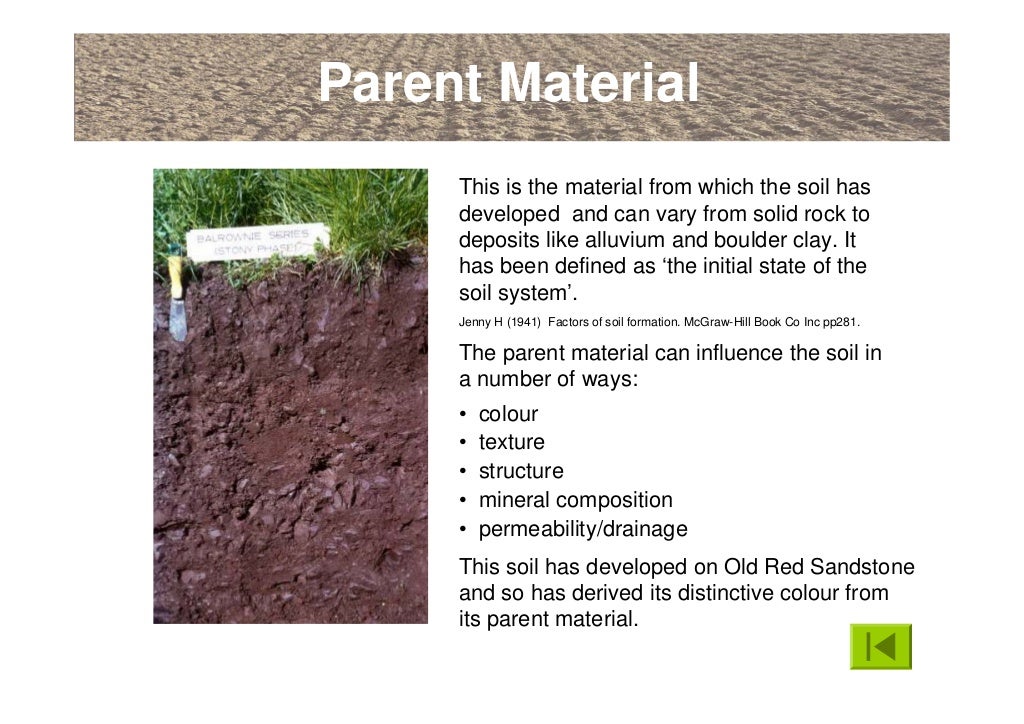
Credit: agronomy86565585.wordpress.com
Frequently Asked Questions
What Is Parent Material In Soil?
Parent material is the original matter that forms soil. It includes rocks and minerals.
How Does Parent Material Affect Soil?
Parent material impacts soil texture, structure, and nutrient content. It influences how soil supports plant growth.
What Types Of Parent Material Exist?
Common types include bedrock, glacial deposits, and river sediments. Each affects soil differently.
Can Parent Material Change Over Time?
Yes, it can weather and break down. This process forms new soil layers and changes soil properties.
Why Is Parent Material Important For Agriculture?
It determines soil fertility and drainage. This affects crop yield and farming success.
Conclusion
Parent material is crucial in soil formation. It influences soil properties. Understanding it helps in agriculture and gardening. Knowing your soil’s parent material can improve plant growth. This knowledge aids in better soil management. It also helps in environmental conservation.
Soil health depends on parent material. So, pay attention to it. This small step can make a big difference. Healthy soil means healthy plants. And healthy plants mean a better environment.