Losing a parent is one of life’s hardest moments. The pain feels overwhelming and unending.
Understanding how to cope with this profound loss is crucial for healing. Grieving is a personal journey, and everyone experiences it differently. This introduction will explore practical ways to manage your grief and find comfort. The goal is to help you navigate through this challenging time with some guidance and support.
Whether you are seeking solace in memories, leaning on loved ones, or finding new routines, there are steps you can take to ease the heartache. Let’s delve into how you can cope when a parent dies, providing you with insights and strategies to help you through this difficult period.
Emotional Responses
Losing a parent is one of the hardest experiences in life. The emotional impact can be overwhelming and varied. Understanding your feelings helps in the healing process.
Common Feelings
Grief can bring many emotions. Here are some common feelings:
- Sadness: Deep sorrow and longing for your parent.
- Anger: Frustration at the loss or circumstances around it.
- Guilt: Regret over things left unsaid or undone.
- Relief: Especially if the parent suffered long-term illness.
- Numbness: Feeling detached or unable to process the loss.
Dealing With Grief
Managing grief is essential to moving forward. Here are some ways to cope:
- Allow Yourself to Feel: Accept all your emotions. They are normal.
- Seek Support: Talk to friends, family, or a therapist.
- Create Rituals: Attend memorials, or create a personal tribute.
- Take Care of Yourself: Eat well, exercise, and get enough sleep.
- Join a Support Group: Connect with others who understand your pain.
Remember, there is no right or wrong way to grieve. Everyone’s journey is unique.

Credit: lifecare.org
Seeking Support
Dealing with the loss of a parent is overwhelming. Seeking support can make the process less lonely. Surrounding yourself with a support system helps in coping. This can involve talking to friends or getting professional help. Let’s explore these avenues further.
Talking To Friends
Friends offer a shoulder to lean on. They provide a sense of normalcy. Share your feelings with them. Opening up can relieve some of the burden. They may have experienced loss too. Their experiences can provide comfort and understanding.
Here are some tips for talking to friends:
- Be honest about your feelings.
- Ask for their time and patience.
- Don’t hesitate to seek their company.
Remember, friends want to help. Let them in.
Professional Help
Sometimes, talking to friends isn’t enough. Seeking professional help might be necessary. Therapists are trained to provide support. They can help you navigate your grief. They offer tools and strategies for coping.
Consider these benefits of professional help:
- Confidential space to express emotions.
- Structured guidance through grief stages.
- Personalized strategies to manage pain.
Finding the right therapist is crucial. Look for someone experienced in grief counseling. Don’t hesitate to change therapists if needed. Your comfort is paramount. Professional help provides a safe space to heal.
Self-care Practices
Losing a parent is one of the hardest experiences in life. During this time, self-care becomes crucial. Practicing self-care can help you cope better. It can also maintain your mental and physical health. Below are some effective self-care practices to consider.
Healthy Routines
Establishing healthy routines can provide structure and comfort. It helps to reduce stress. Consider the following:
- Regular Exercise: Exercise can boost your mood. Try to include at least 30 minutes of physical activity daily.
- Balanced Diet: Eating nutritious meals can improve your energy levels. Avoid processed foods and sugar.
- Sleep Schedule: Aim for 7-8 hours of sleep each night. Good sleep can help you handle grief better.
Mindfulness And Meditation
Mindfulness and meditation can be powerful tools. They help to calm your mind and reduce anxiety. Here are some tips:
- Deep Breathing: Practice deep breathing exercises. This can help to center your thoughts.
- Guided Meditation: Use apps or online videos for guided meditations. These can provide a sense of peace.
- Mindful Activities: Engage in activities that require focus, like painting or gardening. This can be very therapeutic.
Incorporating these practices into your daily life can make a significant difference. It can help you navigate through this challenging time.
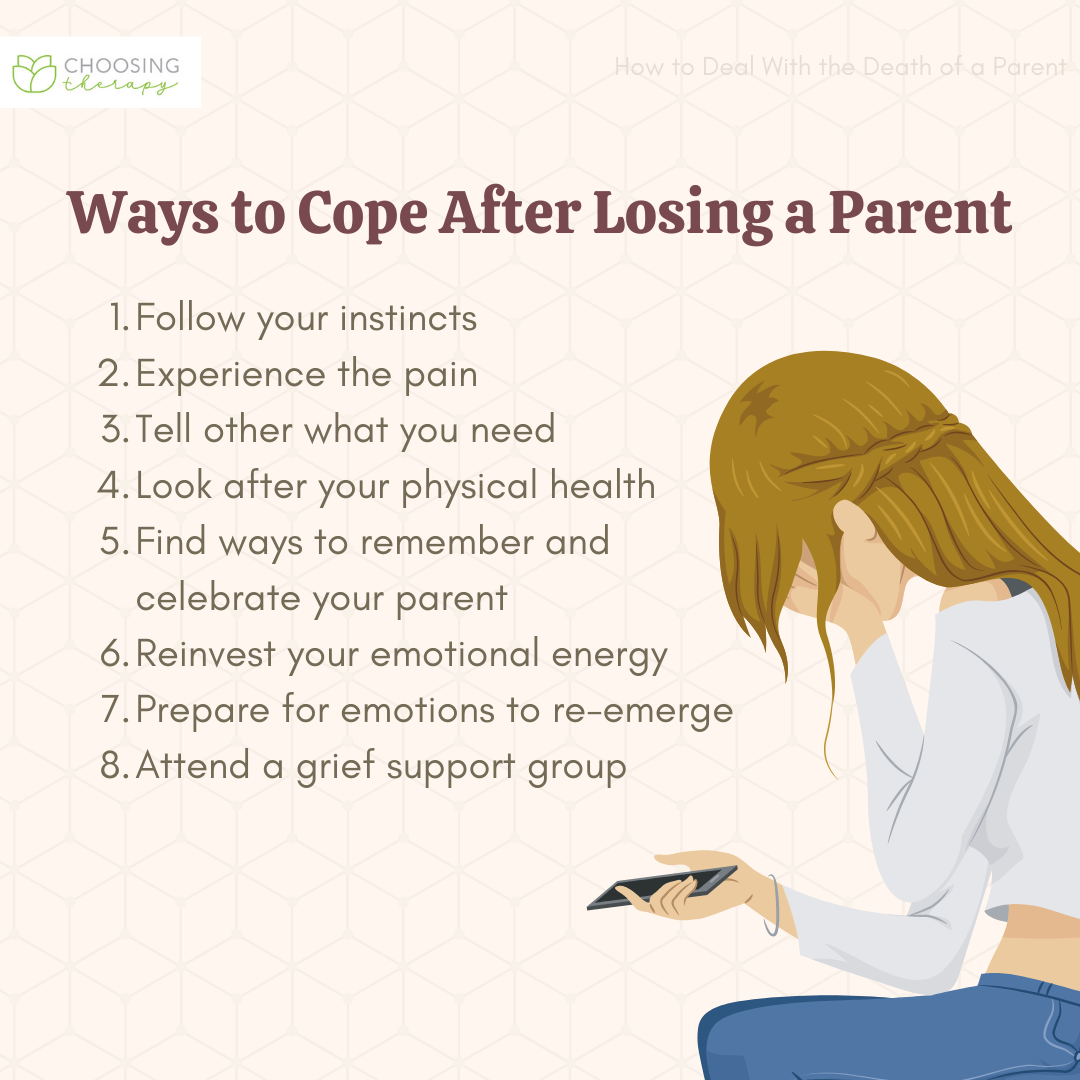
Credit: www.choosingtherapy.com
Honoring Memories
When a parent dies, honoring their memories can bring comfort. It helps keep their spirit alive and offers a way to cope. There are several ways to honor memories, including creating rituals and sharing stories.
Creating Rituals
Creating rituals can be a powerful way to remember a loved one. These rituals can be simple or elaborate, depending on what feels right.
- Lighting a candle on special dates
- Visiting their favorite places
- Preparing their favorite meal
These acts can create a sense of connection. They provide a space to reflect and honor the parent’s memory.
Sharing Stories
Sharing stories about the deceased can be healing. It helps keep their memory vivid and can bring a sense of joy.
Gather family and friends to share their favorite memories. This can be done in person or online.
- Organize a family gathering
- Create a memory book
- Start a blog or social media page
These stories can highlight the best moments. They remind everyone of the love and happiness shared.
Looking Forward
Experiencing the death of a parent is deeply painful. Yet, life continues. Moving forward can be daunting, but it is essential for healing. This section focuses on looking forward and finding a path to a new normal.
Setting New Goals
Setting new goals can help you find direction. Start small. Establish achievable targets. These could be daily or weekly tasks. Gradually, you can set more significant goals. This process helps regain a sense of purpose.
Consider different types of goals:
- Personal Goals: Exercise, healthy eating, or starting a new hobby.
- Professional Goals: Learning a new skill or seeking a promotion.
- Social Goals: Reconnecting with friends or joining a community group.
| Goal Type | Example |
|---|---|
| Personal | Start a new hobby like painting |
| Professional | Take an online course in your field |
| Social | Join a local book club |
Finding Purpose
Finding purpose after a loss is crucial. It may take time, but it is possible. Reflect on what brings you joy and fulfillment. This could be activities you enjoyed before or new interests.
Ways to find purpose include:
- Volunteering: Help others and feel connected to the community.
- Creative Outlets: Engage in art, writing, or music.
- Spiritual Practices: Join a faith group or meditation class.
Purpose can also come from honoring your parent’s memory. Create a tradition or project in their name. This can provide a meaningful way to keep their spirit alive.

Credit: www.amazon.com
Frequently Asked Questions
What Are The First Steps After A Parent Dies?
Notify family and friends. Contact a funeral home. Handle legal documents and arrangements.
How Can I Cope With The Grief?
Talk to friends or a therapist. Join a support group. Take care of yourself.
How Do I Handle The Funeral Arrangements?
Choose a funeral home. Plan the service. Notify guests. Consider cultural and religious practices.
What Legal Matters Must Be Addressed?
Obtain death certificates. Notify banks and insurance. Contact Social Security. Handle the will or estate.
How Do I Support My Siblings During This Time?
Be there for them. Listen and share feelings. Offer practical help. Suggest grief counseling.
Is It Normal To Feel Angry After A Parent Dies?
Yes, it’s normal. Grief includes many emotions: sadness, anger, guilt. Allow yourself to feel and process them.
Conclusion
Losing a parent is incredibly tough. Grief comes in waves. Allow yourself to feel. Seek support from friends and family. Share your feelings openly. Remember, it’s okay to cry. Healing takes time. Find comfort in cherished memories. Honor their legacy in small ways.
Focus on self-care daily. Everyone’s journey through loss is different. Patience with yourself is key. You are not alone in this.