Parents and eligible students sometimes need to inspect educational records. Understanding this process ensures transparency and trust.
Educational records hold essential information. They can influence a student’s academic journey. Knowing how to access these records is crucial for parents and students. It helps them stay informed and involved. In this blog post, we will explore the process of requesting an inspection.
We will discuss the steps, rights, and benefits involved. This guide aims to empower parents and students. It will help them navigate the educational system with confidence. Stay tuned as we dive into the details of requesting an inspection.
Credit: www.stuvia.com
Rights To Access Educational Records
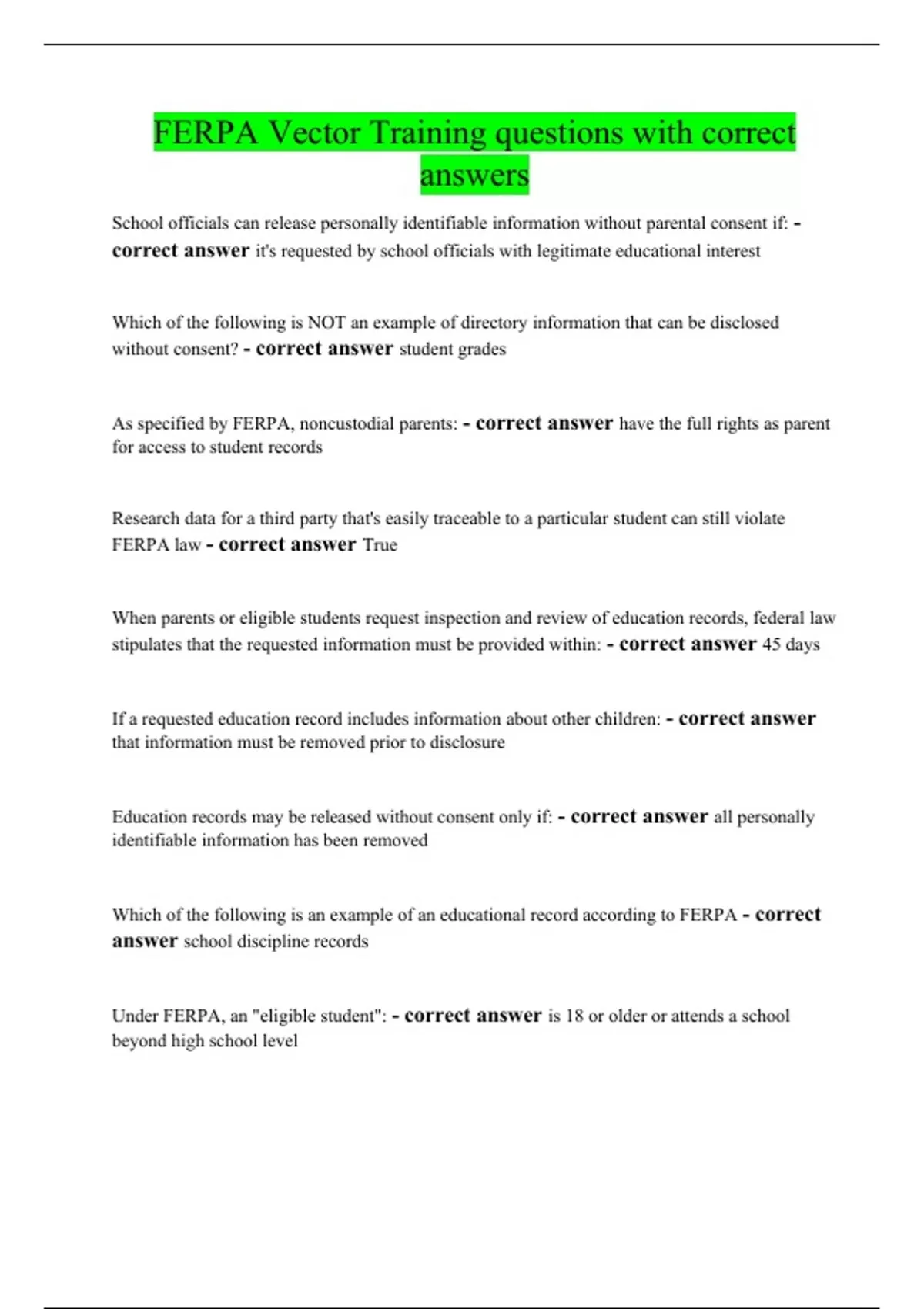
Parents and eligible students have the right to access educational records. These rights ensure transparency and trust within the educational system. Understanding these rights is crucial for managing your child’s or your own educational journey.
Who Can Request
Both parents and eligible students can request access to educational records. Eligible students are those who are 18 years or older. Schools must comply with these requests in a timely manner.
Types Of Records
Several types of records fall under educational records:
- Academic records: Grades, transcripts, and test scores.
- Attendance records: Days present, absent, and tardy.
- Behavioral records: Conduct reports and disciplinary actions.
- Health records: Immunization records and health screenings.
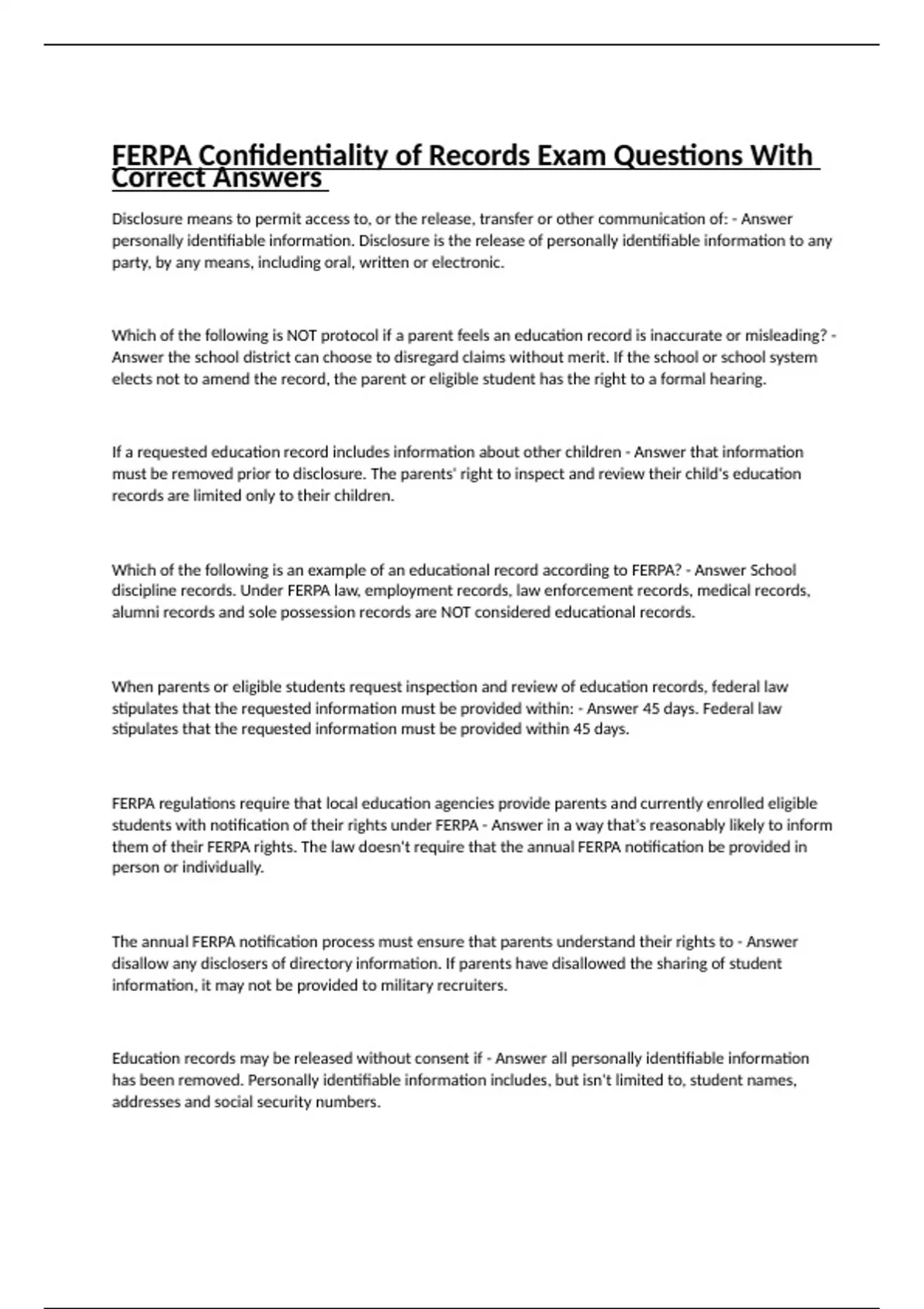
Each type of record plays a crucial role in a student’s academic history. Schools must maintain these records accurately and provide access upon request.
Credit: www.stuvia.com
Process Of Requesting Inspection
When parents or eligible students want to inspect educational records, it is essential to understand the process. This ensures smooth communication and timely access to important documents. Below is a detailed guide on how to submit a request and the expected response time.
Submitting A Request
To request an inspection, parents or eligible students must submit a formal request. This request can be made in writing or electronically, depending on the institution’s policies.
Steps to Submit a Request:
- Identify the records you want to inspect.
- Write a clear and concise request letter.
- Include your name, relationship to the student, and contact information.
- Submit the request to the school’s designated office or through the specified online portal.
Make sure to keep a copy of your request for your records.
Response Time
Schools are required to respond to inspection requests within a reasonable timeframe. Typically, this is within 45 days from the date of the request. This ensures that records are accessible without unnecessary delays.
If the request is urgent, indicate the urgency in your letter. Schools might expedite the process if they deem it necessary.
By following these steps, parents and eligible students can efficiently request and gain access to educational records. This process fosters transparency and ensures that necessary information is available when needed.
Understanding Consent Requirements
When parents or eligible students request to inspect educational records, understanding consent requirements is crucial. Consent ensures that personal information is protected. It also allows parents and students to control their data. In this section, we will explore the key aspects of consent requirements.
Written Consent
Written consent is a mandatory step before sharing educational records. It must be signed by the parent or eligible student. The consent should clearly state which records can be shared. It should also mention the purpose of sharing these records and who will receive them.
- Signed consent is required.
- Specific records to be shared must be listed.
- Purpose of sharing should be clear.
- Recipients of the information must be identified.
Exceptions To Consent
There are situations where written consent is not needed. These exceptions are defined by law to facilitate certain processes.
| Exception | Description |
|---|---|
| School officials | Access is allowed if officials have a legitimate educational interest. |
| Transfer of records | Records can be shared with another school where the student intends to enroll. |
| Judicial orders | Records may be shared in compliance with a court order or subpoena. |
| Health and safety emergencies | Information can be disclosed to protect the health or safety of students. |
Understanding these exceptions helps in knowing when consent is not required. It ensures transparency and compliance with legal standards.
Handling Third-party Disclosures
When parents or eligible students request to inspect their records, handling third-party disclosures is crucial. Maintaining privacy and following the law are key. Understanding authorized and unauthorized disclosures helps protect sensitive information.
Authorized Disclosures
Authorized disclosures are those permitted by law. Schools may disclose records to certain parties without consent. These parties include:
- School officials with legitimate educational interests.
- Other schools to which a student is transferring.
- Specified officials for audit or evaluation purposes.
- Appropriate parties in connection with financial aid.
- Organizations conducting certain studies for the school.
- Accrediting organizations.
- Parents of a dependent student as defined by the IRS.
- To comply with a judicial order or lawfully issued subpoena.
- Appropriate officials in cases of health and safety emergencies.
These disclosures ensure the student’s information is shared responsibly. Schools must document these disclosures for transparency.
Unauthorized Disclosures
Unauthorized disclosures occur when information is shared without proper consent. These can result in serious consequences for the school and individuals involved.
Some examples of unauthorized disclosures include:
- Sharing student records with non-authorized personnel.
- Releasing information without a valid subpoena or court order.
- Providing access to personal data to unauthorized third parties.
Preventing unauthorized disclosures involves strict adherence to privacy laws. Schools should train staff on handling student information properly.
Resolving Disputes
Resolving disputes between parents or eligible students and educational institutions is vital. It ensures transparency and maintains trust. The process involves steps that help address and settle disagreements effectively.
Filing Complaints
Parents or eligible students may file complaints if they believe their rights have been violated. Complaints can be filed with the educational institution or relevant authorities. Ensure you have all necessary documentation and information.
- Gather all relevant documents.
- Write a clear and concise complaint letter.
- Submit the complaint to the appropriate department.
Mediation And Resolution
Mediation helps resolve disputes without going to court. A neutral mediator works with both parties to reach a mutual agreement. This process is often quicker and less formal.
| Step | Description |
|---|---|
| Request Mediation | Contact the institution to request mediation services. |
| Attend Mediation | Both parties attend the mediation session. |
| Reach Agreement | Work towards a solution that satisfies both parties. |
If mediation fails, other resolution methods include arbitration or legal action. These methods are more formal and may take longer.

Credit: epic.org
Maintaining Confidentiality
When parents or eligible students request to inspect educational records, maintaining confidentiality is crucial. Educational institutions must protect sensitive information. This ensures the privacy of students and their families. This section will explore how schools can maintain confidentiality during these inspections.
Data Protection
Data protection is essential in safeguarding student information. Schools must use secure methods to store and share data. This includes:
- Encryption of digital records
- Secure physical storage for paper records
- Regular audits of data access
Using these methods helps prevent unauthorized access. It also ensures that data remains secure during inspections.
Privacy Policies
Privacy policies play a significant role in maintaining confidentiality. Schools should have clear and comprehensive policies. These policies must outline how data is managed and protected. Key elements of a strong privacy policy include:
- Details on data collection and storage
- Guidelines for data sharing
- Procedures for data access and inspection
These policies should be communicated to parents and students. This ensures everyone understands their rights and responsibilities.
| Action | Purpose |
|---|---|
| Encrypting records | Prevent unauthorized access |
| Conducting audits | Ensure compliance with policies |
| Communicating policies | Inform stakeholders of their rights |
By implementing these measures, schools can effectively maintain confidentiality. This protects the privacy of students and their families during record inspections.
Frequently Asked Questions
What Is An Inspection Request?
Parents or eligible students can ask to see the student’s education records.
How Do You Request An Inspection?
Submit a written request to the school. State which records you want to inspect.
Who Can Request To Inspect Student Records?
Parents and eligible students, typically those over 18 or attending postsecondary institutions.
How Long Does The School Have To Respond?
Schools must respond within 45 days of receiving the request.
Are There Any Records Parents Can’t Inspect?
Yes. Parents can’t see confidential letters, recommendations, or records containing other students’ information.
Conclusion
Requesting inspection of records is a right parents and students have. It’s crucial to understand the process. This ensures transparency and trust in educational institutions. Knowing your rights helps in making informed decisions. Always stay informed and proactive. Regular inspections can prevent misunderstandings.
They also promote a better educational environment. So, don’t hesitate to exercise this right. It’s an important step for accountability. Keep communication open with schools. This benefits everyone involved.