
Determining when your baby can use a stroller seat is vital for their safety and comfort. This guide explains that most babies are ready around 6 months, once they can sit up unassisted with good head control. You’ll learn how to assess readiness, follow safety protocols, and ensure a smooth transition.
Key Takeaways
- Age is a Guideline, Not a Rule: While 6 months is common, always check your baby’s individual developmental milestones.
- Neck and Head Control are Essential: Your baby must have strong neck muscles to sit safely in a stroller seat.
- Consult Your Stroller Manual: Manufacturer guidelines vary, so always refer to your specific stroller’s instructions.
- Use a Reclining Seat for New Sitters: A fully reclined or semi-reclined position provides better support for younger babies.
- Safety First with Harnesses: Always use the five-point harness to secure your baby properly in the stroller seat.
- Monitor for Discomfort: Watch for signs like slouching or fussiness, which may indicate your baby isn’t ready.
- Transition Gradually: Start with short trips and increase duration as your baby gets used to the stroller seat.
Introduction: Your Journey to Stroller Seat Safety
Hello, amazing parents! One of the most common questions you’ll ask is, “when can baby use stroller seat?” It’s a big step. Your baby’s safety and comfort come first. This guide is here to help. We’ll walk through baby development, safety tips, and practical steps. You’ll feel confident knowing the right time. Let’s dive in!
Understanding Baby Development and Stroller Readiness
Babies grow at their own pace. Knowing their milestones is key. The stroller seat requires specific skills. We’ll break it down.

Visual guide about When Can Baby Use Stroller Seat Your Ultimate Guide
Image source: seatcoverguide.com
The Importance of Neck and Head Control
Neck control is crucial. Your baby needs to hold their head up steadily. This usually starts around 3-4 months. Without it, a stroller seat can be risky. The head might flop forward. This can block airways. Always ensure strong neck muscles before trying the seat.
Sitting Up Unassisted: The Key Milestone
Sitting up alone is the big sign. Most babies do this around 6 months. They can balance without toppling over. This means their core muscles are strong. It’s a green light for the stroller seat. Practice on the floor first. Watch for steady posture. If they slump, wait a bit longer.
Age Guidelines: What the Experts Say
Age gives a rough idea. But it’s not set in stone. Let’s look at general advice.
Visual guide about When Can Baby Use Stroller Seat Your Ultimate Guide
Image source: images-na.ssl-images-amazon.com
General Age Recommendations
Many experts say 6 months is safe. This is when babies often sit up. Some might be ready at 5 months. Others may need until 7 or 8 months. Always pair age with milestones. Remember, when can baby use stroller seat depends on development, not just birth date.
Variations Based on Stroller Type
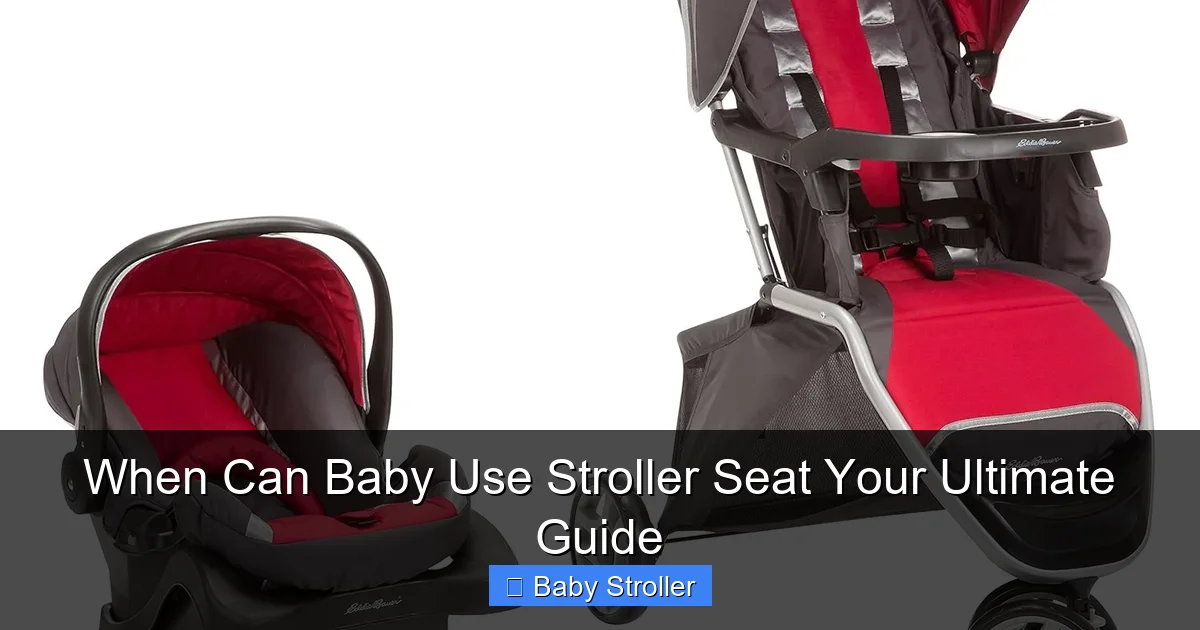
Strollers differ. Travel systems might allow earlier use. Convertible strollers have bassinets for newborns. Read the manual. Some seats recline fully for younger babies. Others are upright only. Check the weight and age limits. They are there for safety.
Safety Checks Before Using the Stroller Seat
Safety is non-negotiable. Do these checks every time. They ensure your baby’s well-being.
Visual guide about When Can Baby Use Stroller Seat Your Ultimate Guide
Image source: thestrollersite.com
Checking Stroller Specifications
Look at your stroller’s label. It should list minimum age and weight. Most seats need at least 15 pounds. Also, check the seat’s recline range. A full recline is best for new sitters. Ensure the stroller is in good condition. No broken parts or loose screws.
Proper Harness Use
Use the five-point harness always. It has two shoulder straps, two waist straps, and one crotch strap. Buckle it snugly. You should fit only two fingers between straps and your baby. The harness keeps your baby secure. Never skip this step.
Seat Recline and Support
Adjust the seat recline. For babies new to sitting, use the fullest recline. This gives back support. As they grow, you can raise it. Add a rolled towel or insert if needed. But ensure it doesn’t create a gap. The seat should cradle your baby comfortably.
Step-by-Step: Transitioning Your Baby to the Stroller Seat
Ready to try? Follow these steps. They make the process smooth and safe.
Step 1: Assess Your Baby’s Readiness
Watch for signs. Can your baby sit in a high chair without slumping? Do they hold their head up during tummy time? If yes, they might be ready. Do a quick test. Sit them on a firm surface. If they stay upright for a few minutes, it’s a good sign. Consult your pediatrician if unsure.
Step 2: Prepare the Stroller
Set up the stroller indoors first. Recline the seat fully. Attach the harness. Make sure it’s clean and padded. Do a practice run without your baby. Check the brakes and wheels. Everything should work smoothly.
Step 3: First Trial Runs
Place your baby in the seat gently. Secure the harness. Start with short sessions, like 5-10 minutes. Stay indoors where it’s safe. Talk to your baby. Keep them calm. This helps them associate the seat with positive experiences.
Step 4: Monitor and Adjust
Watch your baby closely. Are they comfortable? Look for red marks from straps. Listen for fussing. If they seem unhappy, take a break. Adjust the recline or padding. Gradually increase outdoor trips. Start with smooth paths. Avoid bumpy roads at first.
Troubleshooting Common Issues
Problems can pop up. Here’s how to fix them.
Baby Slouching or Sliding
If your baby slouches, they might not be ready. Go back to a more reclined position. Use a support insert. Ensure the harness is tight enough. Sliding can mean the seat is too big. Check if your stroller has a newborn insert. It adds cushioning for smaller babies.
Fussiness and Discomfort
Fussiness is common. Your baby might be hungry or tired. Try stroller time after naps or feeds. Add a favorite toy. Sing songs. If they still cry, stop and comfort them. It might be too early. Wait a week and try again.
Weather and Environmental Concerns
Heat and cold affect babies. Use a sunshade or rain cover. Dress your baby appropriately. Never leave them unattended. In hot weather, check for overheating. Feel their neck. If sweaty, cool them down. In cold, bundle up but avoid bulky clothes under harnesses.
Choosing the Right Stroller for Your Baby’s Stage
Picking a stroller matters. It can make the transition easier.
From Bassinet to Seat: Convertible Strollers
Convertible strollers are versatile. They come with a bassinet for newborns. Then, you switch to a seat later. This is great for growing families. You don’t need two products. Look for models with easy conversions. They often have adjustable recline for the seat.
Travel Systems and Their Benefits
Travel systems include a car seat and stroller. The car seat clicks into the stroller frame. This is handy for infants. But note, car seats are for travel only. For long walks, use the stroller seat when your baby is ready. Travel systems help you move from car to stroller without disturbing sleep.
Conclusion: Embrace the Milestone with Confidence
Knowing when can baby use stroller seat is a key parenting skill. It blends observation with safety. Remember, every baby is unique. Trust their pace. Use this guide as your roadmap. Check milestones, follow safety steps, and enjoy those walks. Your baby will love exploring the world with you. Stay safe and have fun!
🎥 Related Video: What our bassinet does that a car seat can’t. We use it daily. Totally worth it. #bassinet #doona
📺 Carine Delacroix
Stroller + bassinet https://amzn.to/3Hvg9MU Stroller (new model) https://amzn.to/3WsWlxu Bassinet only …
