
Keeping your baby in a rear-facing car seat is the single most effective way to protect them in a crash. This comprehensive guide explains the simple science behind this safety rule, detailing how a rear-facing seat cradles a child’s vulnerable head, neck, and spine. You’ll learn how to choose, install, and use a rear-facing seat correctly to give your little one the best possible protection on every journey.
Key Takeaways
- Rear-Facing is a Non-Negotiable Safety Standard: It supports a child’s heavy head and fragile spine during the violent forces of a crash, preventing severe internal decapitation and spinal cord injuries.
- It’s About Development, Not Just Age: A child’s skeleton is not fully mature until around age 6. The rear-facing position is crucial for as long as your child’s car seat allows, ideally until at least age 4.
- Follow Your Seat’s Limits, Not Just the Law: Always adhere to the manufacturer’s maximum height and weight limits for the rear-facing position. These are your most important guidelines.
- Correct Installation is Key: A seat that is not tightly installed or with a poorly positioned harness cannot provide optimal protection. The “inch test” and “pinch test” are essential checks.
- Bulk is Dangerous: Never place a child in a car seat while wearing a puffy coat or snowsuit. The compression in a crash creates dangerous slack in the harness straps.
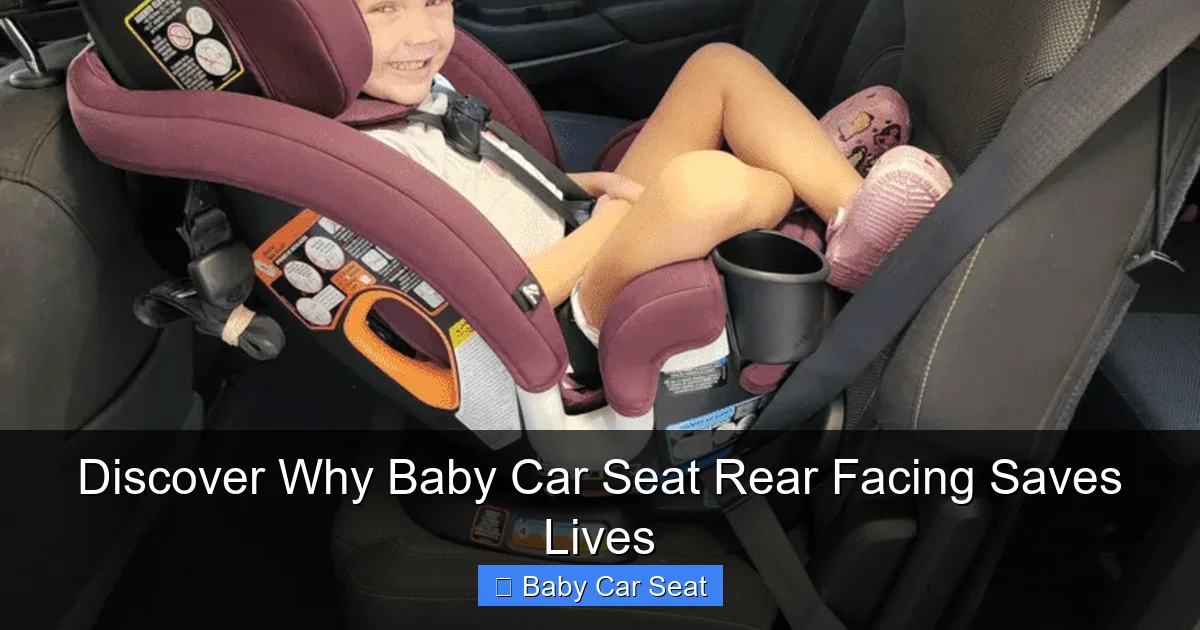
- Their Legs Are Safe: Children are extremely flexible and comfortable sitting cross-legged or with legs up the seat back. A leg injury is far less severe than a spinal injury.
- You Are Their Best Advocate: Resist social pressure to turn the seat forward-facing early. Your informed choice is a life-saving one.
Discover Why Baby Car Seat Rear Facing Saves Lives: Your Complete Guide
Welcome, parents and caregivers. You want the very best for your child. You research the safest cribs and the healthiest foods. But one of the most important safety decisions you’ll make happens every single time you get in the car: which way your child’s car seat faces.
This isn’t just a matter of preference or convenience. It’s a matter of basic physics and human biology. In this guide, you will learn exactly why a rear-facing car seat is the gold standard in child passenger safety. We’ll move beyond the simple “because it’s safer” and show you the how and why. You’ll gain the knowledge and confidence to make the best choices, install the seat correctly, and ignore common myths. Let’s get started on this journey to ultimate protection.
The Lifesaving Science: Why Rear-Facing Works
To understand why rear-facing is so critical, we need to imagine what happens in a crash. A collision creates massive forces. In a frontal crash (the most common and severe type), everything flies forward toward the point of impact.

Visual guide about Discover Why Baby Car Seat Rear Facing Saves Lives
Image source: accessorieszoo.com
The Physics of Protection
In a forward-facing seat during a frontal crash, your child’s body is held back by the harness, but their heavy head is thrown forward. A young child’s head makes up about 25% of their body weight (compared to 6% for an adult). This creates an immense amount of stress on the neck and spine.
In a rear-facing seat, the entire shell of the car seat cradles your child’s head, neck, and back. During that same frontal crash, the child is pushed into the seat. The forces are spread evenly across the strongest parts of their body—the back, shoulders, and head. The seat absorbs the energy, not the child’s fragile body.
The Anatomy of a Child
It’s not just about physics. It’s about biology. A baby is not a mini-adult. Their skeletal system is still developing.
- The Vertebrae: A child’s spinal bones (vertebrae) are connected by stretchier ligaments and are not fully fused. They are more like pieces of a puzzle held together by soft cartilage.
- The Foramen Magnum: This is the hole at the base of the skull where the spinal cord connects. In a young child, it is not fully developed and aligned like an adult’s.
This combination means a child’s spinal cord is more vulnerable to stretching and tearing. The medical term for this catastrophic injury is “internal decapitation.” A rear-facing seat prevents this by supporting the head and limiting the neck’s movement.
How Long Should Your Child Stay Rear-Facing?
This is the most common question, and the answer has evolved. The old guideline was “1 year and 20 pounds.” That is now considered absolutely outdated and dangerously minimal.
Visual guide about Discover Why Baby Car Seat Rear Facing Saves Lives
Image source: csftl.org
The New Gold Standard
The current recommendation from the American Academy of Pediatrics (AAP) and safety experts worldwide is simple: Keep your child rear-facing for as long as possible, up to the maximum height and weight limit allowed by your car seat manufacturer.
Many modern convertible seats accommodate children rear-facing up to 40, 45, or even 50 pounds. This means most children can and should remain rear-facing until they are 3, 4, or even 5 years old.
Your Two Main Guides
- Your Car Seat Manual: This is your bible. Find the maximum rear-facing limits for your specific model. Do not exceed them.
- Your Child’s Proportions: Your child must have at least 1 inch of hard shell above their head when rear-facing. If the top of their head reaches the top of the seat shell, it’s time to switch the seat to its next mode (likely forward-facing).
Choosing and Installing Your Rear-Facing Seat
Knowing why is half the battle. The other half is proper execution.
Visual guide about Discover Why Baby Car Seat Rear Facing Saves Lives
Image source: riverbabygroup.com
Step 1: Choose the Right Seat
You have two main options for a newborn:
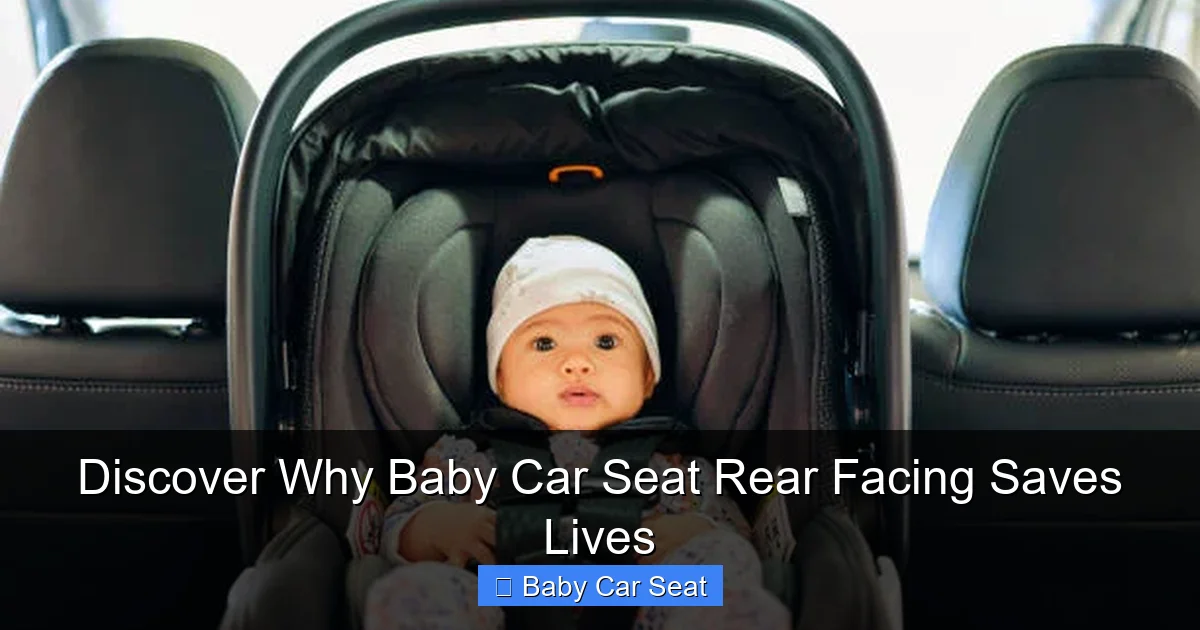
- Infant-Only Seat: Portable with a handle, used only rear-facing. Good for babies up to 30-35 pounds. It clicks into a base installed in the car.
- Convertible Seat: Can be used rear-facing and forward-facing. It stays in the car. It often has higher rear-facing limits, making it a longer-term investment.
Tip: If your budget allows, a convertible seat with high rear-facing limits is a fantastic value and promotes keeping your child rear-facing longer.
Step 2: Install the Seat Correctly
Even the best seat is useless if installed wrong. Follow these sub-steps meticulously.
Find the Right Spot
The safest place is the back seat, in the center, if it has a seatbelt or LATCH system that can achieve a tight fit. If not, any rear seat position is safe.
Use LATCH OR Seat Belt (Correctly!)
You can use one system, not both together (unless the manual specifically states it’s allowed).
- LATCH: This system uses lower anchors and a top tether (for forward-facing). For rear-facing, you use the lower anchors and do not use the top tether (unless your manual says to). Ensure the connectors are clicked tightly onto the anchors.
- Seat Belt: Thread the belt through the rear-facing belt path as shown in your manual. Lock the seat belt (usually by pulling it all the way out until it clicks).
Get It Tight and At the Right Angle
Once the seat is installed, grab it at the belt path (where the seat belt or LATCH strap goes through) and pull and push. It should not move more than 1 inch side-to-side or front-to-back. This is the “inch test.”
Most rear-facing seats for infants require a recline angle to keep the baby’s head from flopping forward. Use the built-in angle indicator or adjuster. For older babies and toddlers, a more upright angle is often acceptable and saves space.
Step 3: Buckle Your Child In Safely
Installation is one thing. Harnessing is another.
- Harness Height: For rear-facing, the harness straps should come from at or just below your child’s shoulders.
- Harness Snugness: Tighten the harness until you cannot pinch any slack in the strap at the child’s collarbone. This is the “pinch test.”
- Chest Clip: Position the chest clip at armpit level. It’s a pre-crash positioner, not a restraint.
Troubleshooting Common Concerns and Myths
Even with the best intentions, doubts can creep in. Let’s solve them.
“My Child’s Legs Are Too Long/Bent!”
This is the number one concern. It is not a safety issue. Children are incredibly flexible. They sit cross-legged, prop their feet on the seat back, or dangle them over the sides. A broken leg is a treatable injury. A spinal cord injury is life-altering. Safety over comfort.
“My Child Hates the Car/Seems Uncomfortable”
First, ensure they are not too hot, hungry, or need a diaper change. Check the harness isn’t too tight or twisted. Sometimes, a more upright recline angle (if allowed) helps. Use soft, car-safe toys for distraction. Never turn them forward-facing as a solution to fussiness. Their safety is not negotiable.
“It’s Hard to See Them or Hand Them Things”
Use a mirror designed for car seats that attaches safely to the vehicle headrest. For handing items, it’s okay to briefly turn around when the car is safely parked. Your focus while driving should be on the road.
“My Family/Friends Pressure Me to Turn Them Around”
You are the parent. You have the latest information. A simple, confident statement works: “The latest safety research shows rear-facing is safest until they max out the seat’s limits. We’re following our pediatrician’s advice.” Share this article with them!
Moving Forward: The Next Steps Safely
When your child finally reaches the rear-facing limits of their seat, it’s time to transition. Switch the convertible seat to its forward-facing mode, using the top tether every single time. The top tether is crucial—it limits the forward head movement that causes injury.
Remember, forward-facing with a harness comes next, followed by a booster seat, and finally the adult seat belt. Each step is a step down in protection, so stay in each stage for as long as your child fits the requirements.
Conclusion: Your Choice, Their Protection
Choosing to keep your baby car seat rear facing is one of the most profound acts of protection you can perform as a parent. It’s a decision grounded not in fear, but in the clear, undeniable science of physics and human development. By understanding the why, you can confidently navigate the how—selecting the right seat, installing it with precision, and buckling your child in safely for every ride.
You may face questions or doubts from others, but you now hold the knowledge that this practice saves lives and prevents devastating injuries. Your commitment to rear-facing for as long as possible is a gift of safety that your child will carry with them, long after they’ve outgrown the seat itself. Drive safely.
🎥 Related Video: How Easy Is ClickTight Installation? See Why Parents Love Britax Car Seats
📺 Britax Child Safety, Inc
Real Parent Review: @littleradadventures shows just how quick and secure a Britax ClickTight installation can be—rear-facing or …
